

Eyes Over Puget Sound: Surface Conditions Report – October 6, 2015
Puget Sound is starting to normalize in response to fall conditions with cooler air temperatures, rain, and recovering river flows. We are seeing fewer algal blooms, jellyfish, and macro-algae as salinities become more normal. Yet warm waters persist and El Nino and the Blob are likely to affect Puget Sound throughout the winter. The Nisqually River fared better through the drought than other rivers and best management practices have been improving its water quality. EOPS and ferry monitoring gain recognition with a national award for innovation!
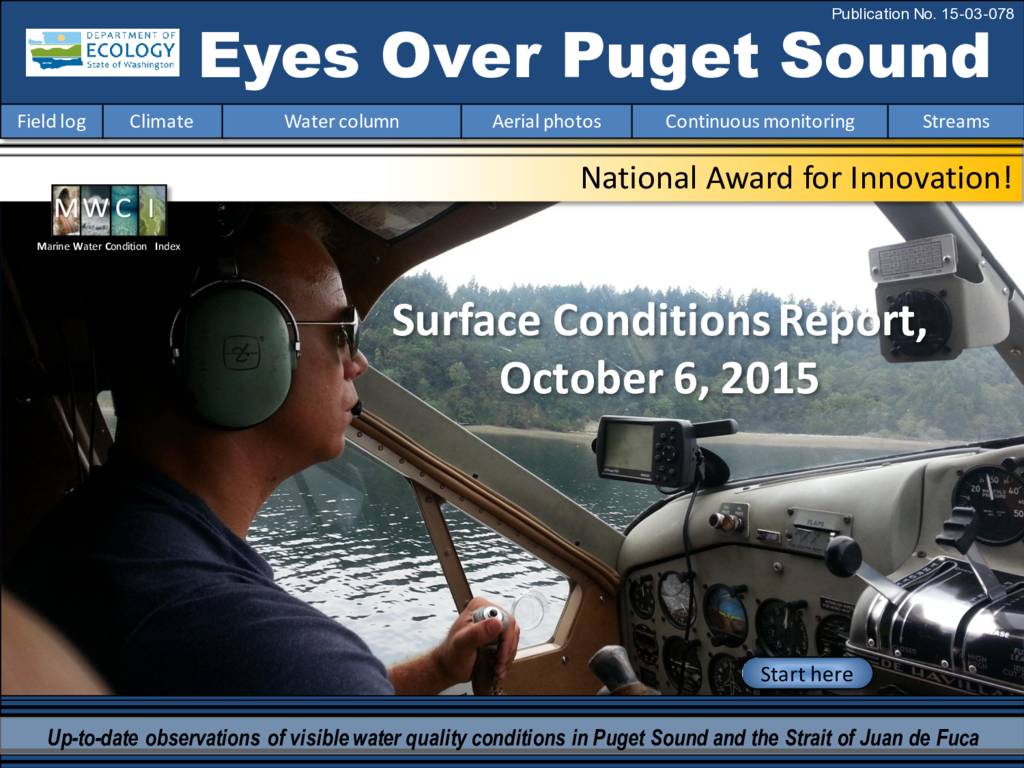
| Title | Eyes Over Puget Sound: Surface Conditions Report – October 6, 2015 | ||||
| |||||
| VIEW NOW: | Eyes Over Puget Sound: Surface Conditions Report – October 6, 2015 (Number of pages: 30) (Publication Size: 7580KB)
| ||||
| Author(s) | Krembs, C. | ||||
| Description | Puget Sound is starting to normalize in response to fall conditions with cooler air temperatures, rain, and recovering river flows. We are seeing fewer algal blooms, jellyfish, and macro-algae as salinities become more normal. Yet warm waters persist and El Nino and the Blob are likely to affect Puget Sound throughout the winter. The Nisqually River fared better through the drought than other rivers and best management practices have been improving its water quality. EOPS and ferry monitoring gain recognition with a national award for innovation! | ||||
| REQUEST A COPY | The mission of the Department of Ecology is to protect, preserve, and enhance Washington’s environment. To help us meet that goal, please consider the environment before you print or request a copy. Accessibility Options Persons with hearing loss can call 711 for Washington Relay Service Persons with a speech disability can call 877-833-6341 | ||||
| Contact | Christopher Krembs at 360-407-6675 or ckre461@ecy.wa.gov | ||||
| Keywords | marine waters, Hood Canal, Puget Sound, dissolved oxygen |
Article Type
Reports
WA Ecology
External Publication Date