Concerns over the potential arrival of the European green crab have inspired a small army of volunteers. A search is underway for early signs of an invasion.
The Puget Sound Model was designed and built in the early 1950s at the University of Washington School of Oceanography as a research and teaching tool for understanding Puget Sound circulation patterns.
The largest of the toothed whales, this species has a disproportionately large head, especially in males, that dominates the body. Skin posterior to the head appears corrugated or shriveled. Color is gray with a lighter area on belly and forehead; skin is white around the mouth. These whales have a distinct dorsal hump, usually rounded or obtuse, about two-thirds of the way behind their snout. I...
This 2014 Puget Sound Institue report shows baseline data, surveyed from Hood Canal residents, of four subjective indicators: accessing locally harvested products, experiencing positive emotions, working with community members to solve natural resource issues, and knowledge gained from different communication sources.
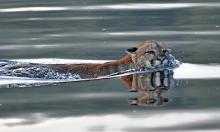
Biologists are intrigued by the prospect of island-hopping cougars in the Salish Sea. Could swimming ability lead to improved genetic diversity among the big cats?
Almost twenty years ago, volunteer biologists began an intensive survey for invasive species in the marine waters of Puget Sound. In a little over a week of hunting, they found 39 such species, including 11 never before seen in the region.
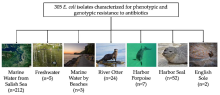
A 2021 study published in the journal Antibiotics suggests that animals may be potential sentinels for antibiotic-resistant and extraintestinal pathogenic E. coli in the Salish Sea ecosystem.
By Alexandria Vingino, Marilyn C. Roberts, Michelle Wainstein, James West, Stephanie A. Norman, Dyanna Lambourn, Jeffery Lahti, Ryan Ruiz, Marisa D’Angeli, Scott J. Weissman and Peter Rabinowitz
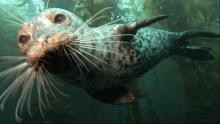
Harbor seals and harbor porpoises in the Salish Sea are showing a relatively high presence of antibiotic-resistant bacteria. A 2021 paper in the journal Oceans suggests that these findings may indicate a wider problem among other species in the region.
By Stephanie A. Norman, Dyanna M. Lambourn, Jessica L. Huggins, Joseph K. Gaydos, Sandra Dubpernell, Susan Berta, Jennifer K. Olson, Victoria Souze, Alysha Evans, Betsy Carlson, Mandi Johnson, Rachel Mayer, Cathy King et al.