A 2017 report from the Puget Sound Ecosystem Monitoring Program presents an overview of selected recent monitoring and research activities focused on toxic contaminants in the Salish Sea.
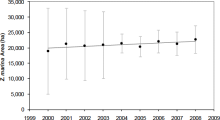
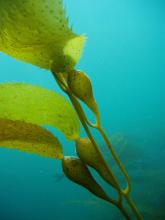
BackgroundEelgrass (Zostera marina L.) is an aquatic flowering plant common in tidelands and shallow waters along much of Puget Sound’s shoreline. The species is restricted to soft-sediment habitats. Sexual reproduction occurs through seed production. Vegetative spread occurs via growth of below-ground rhizomes, which can result in the formation of large, dense beds. Eelgrass is widel...
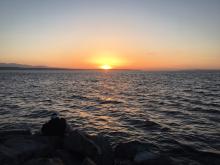
Puget Sound's shorelines are "liminal landscapes" that can inspire senses of "escape, transformation, and human creativity," according to a 2021 paper in GeoJournal. That may have regional policy implications as coastal researchers increasingly recognize the need to incorporate community inclusion and 'sense of place' in management decisions. The paper includes findings from a 12-county survey aimed at gauging residents’ sense of place for Puget Sound’s liminal shorelines.
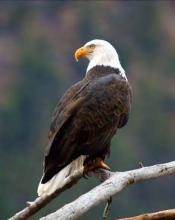
Photo courtesy of the U.S. Fish and Wildlife Service.
Background
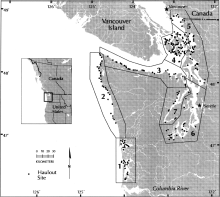
Harbor seals (Phoca vitulina) are found throughout temperate and arctic waters of the northern hemisphere, and inhabit coastal and estuarine waters along the eastern Pacific Ocean from Baja California north to the Gulf of Alaska and Bering Sea (Carretta et al. 2004, Carretta et al. 2007) . Harbor seals are fo...
This article originally appeared in the State of Washington Bat Conservation Plan. Further information is available from the Washington Department of Fish and Wildlife.
This article was originally published by the Washington Department of Fish and Wildlife as part of its annual report Threatened and Endangered Wildlife in Washington.
By Washington Department of Fish and Wildlife. Species accounts were compiled by Derek Stinson, Gary Wiles, Gerald Hayes, Jeff Lewis, Lisa Hallock, Steve Desimone, and Joe Buchanan.
This article was originally published by the Washington Department of Fish and Wildlife as part of its annual report Threatened and Endangered Wildlife in Washington.
Washington State's ocean acidification initiative began with the launch of Governer Christine Gregoire's Blue Ribbon Panel on Ocean Acidification in December 2011. The initiative is the first of its kind in the country, and a report commissioned by the Global Ocean Health Program was released in November 2012. The report is a first step towards assessing and improving the tools at hand.
This is the Puget Sound Water Quality Action Team's third report on key indicators of Puget Sound's Health. We prepared the report in response to the Washington State Legislature's request to evaluate efforts to protect Puget Sound. The report includes updated information on the 17 indicators presented in 2000 as well as information on two new indicators.