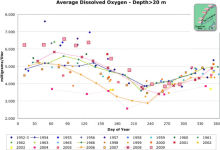
Hypoxia, defined as dissolved oxygen (DO) concentrations less than 2 mg / L, has become widespread throughout estuaries and semi-enclosed seas throughout the world (Diaz 2001).
Steller sea lions use Puget Sound as a feeding area from autumn through spring when they are not breeding in British Columbia and Alaska during summer. While the Western Stock of the species is considered Endangered under the US Endangered Species Act (ESA), the Eastern Stock, which occurs in Puget Sound, is increasing in numbers and not listed under the ESA.
BackgroundHypoxia, defined as dissolved oxygen (DO) concentrations less than 2 mg / L, has become widespread throughout estuaries and semi-enclosed seas throughout the world (Diaz 2001). While hypoxia may be permanent or intermittent, it is most commonly manifested as a seasonal disturbance, appearing in mid- to late summer after vertical stratification prevents replenishment of deep ...
Human well-being is a broad concept, one that includes many aspects of our everyday lives. It encompasses material well-being, relationships with family and friends, and emotional and physical health. It includes work and recreation, how one feels about one's community, and personal safety. Precisely defining human well-being is difficult, however. Although it can be described, it l...
1. Background
What are ecosystem indicators and why are they useful?
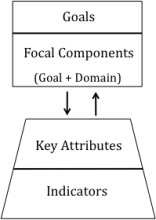
Ecosystem indicators are quantitative biological, chemical, physical, social, or economic measurements that serve as proxies of the conditions of attributes of natural and socio-economic systems (Environmental Protection Agency 2008, Kurtz et al. 2001, Landres et al. 1988, Fleishman and Murph...
This article was originally published by the Washington Department of Fish and Wildlife as part of its annual report Threatened and Endangered Wildlife in Washington.
By Washington Department of Fish and Wildlife. Species accounts were compiled by Derek Stinson, Gary Wiles, Gerald Hayes, Jeff Lewis, Lisa Hallock, Steve Desimone, and Joe Buchanan.
Puget Sound serves as the ultimate drainage destination for many rivers that carry fresh water from the Olympic and Cascade mountain ranges to the ocean. When this freshwater mixes with the ocean’s saltwater it creates biologically rich environments known as estuaries. These estuaries provide critical habitat for young salmon, migratory birds, and many other species including forage f...
Harbor seals were hunted from the 1870s to 1970s until they were protected in the United States by the 1972 Marine Mammal Protection Act and in Canada under the 1970 Marine Mammal Regulations in the Fisheries Act. The inland Washington harbor seal stock is estimated to be over 12,000, while the Strait of Georgia sustains approximately 39,000 harbor seals. Key threats include human disturbance, habitat degradation, loss of prey, and interaction with fishing gear and boats.
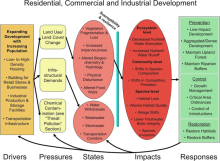
Perhaps the single greatest source of transformation in the Salish Sea terrestrial ecosystem is the conversion of lowland forests to a mosaic of residential, commercial and industrial lands created for human use. The state population, currently at over 6 million people, doubled over the last 40 years and is predicted to reach 8 million by 2030 (WOFM 2010). The highest population den...