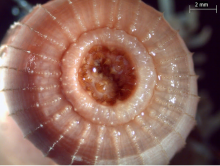
Priapula are a small phylum of small, worm-like animals found in Puget Sound. They occur in most seas, both tropical and polar, at a variety of depths, from shallow coastal waters to as far down as 7,200 meters.
By Dany Burgess & Angela Eagleston of the Washington State Department of Ecology
The Puget Sound Nearshore Ecosystem Restoration Project (PSNERP) works to assess the health of Puget Sound nearshore environments and provides strategies for their protection and restoration.
By Puget Sound Nearshore Ecosystem Restoration Project
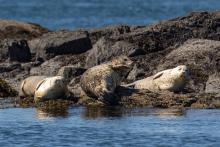
A 2020 article in the journal Frontiers in Marine Science looks at harbor seal stranding and necropsy findings in the San Juan Islands to assess age-related stranding trends and causes of mortality. The harbor seal (Phoca vitulina richardii) population in the Salish Sea has been at equilibrium since the mid-1990s. This stable population of marine mammals resides relatively close to shore near a large human population and offers a novel opportunity to evaluate whether disease acts in a density-dependent manner to limit population growth.
By Elizabeth A. Ashley, Jennifer K. Olson, Tessa E. Adler, Stephen Raverty4, Eric M. Anderson, Steven Jeffries and Joseph K. Gaydos
A 2017 report from the Puget Sound Ecosystem Monitoring Program presents an overview of selected recent monitoring and research activities focused on toxic contaminants in the Salish Sea.
Fall’s chill is in the air (finally!), leaves are turning colors, and skeletons and spider webs are popping up in yards all over town. Meanwhile, under the mud of Puget Sound, there’s a strange critter that stays in its ethereal costume all year long – the burrowing ghost shrimp.
With their square heads and antennae that look a bit like pointy ears, it makes sense why the catworms, or marine segmented worms in the family Nephtyidae, would be named after cats. But their antennae are more like a cat’s sensory whiskers than ears, allowing them to feel their way through the mud as they crawl and burrow. Nephtyids are strong diggers, and can even hold their own in the water, rapidly wiggling their smooth, pale bodies in order to swim.
The Pathogens Prevention Reduction and Control agreement between the Environmental Protection Agency and the Washington State Department of Health focuses on the prevention and reduction of pathogen pollution in Puget Sound through the management of human and animal waste. The primary objectives of the agreement include restoring shellfish growing areas, avoiding shellfish closures, and protecting people from disease.
This is the Puget Sound Water Quality Action Team's third report on key indicators of Puget Sound's Health. We prepared the report in response to the Washington State Legislature's request to evaluate efforts to protect Puget Sound. The report includes updated information on the 17 indicators presented in 2000 as well as information on two new indicators.
Thousands of different compounds are produced and used as part of our daily lives. Examples include pharmaceuticals (NSAIDs, birth control pills, etc), personal care products (sun screen agents, scents, preservatives, etc), food additives (artificial sweeteners) and compounds used in industrial and commercial applications (flame retardants, antibiotics, etc). Advances in analytical methods have allowed the detection of many of these compounds in the environment.
The Lummi tribe is one of the largest in Washington State, with over 5,000 members.
Lummi Tribe Area of Concern:
The Lummi Tribe focuses their restoration efforts in the Nooksack Watershed (WRIA 1). Funding shortages have slowed progress, but major components of the restoration plan include construction of logjams in the Nooksack river, which historically had high instream wood abunda...