This article was originally published by the Washington Department of Fish and Wildlife as part of its annual report Threatened and Endangered Wildlife in Washington.
By Washington Department of Fish and Wildlife. Species accounts were compiled by Derek Stinson, Gary Wiles, Gerald Hayes, Jeff Lewis, Lisa Hallock, Steve Desimone, and Joe Buchanan.
Getting bigger faster can help save juvenile Chinook salmon from a gauntlet of hungry predators ranging from birds and marine mammals to larger fish. We continue our series on the Salish Sea Marine Survival Project with a look at what helps salmon grow and prepare for life in the open ocean.
Volunteer researchers are tracking the plastic and other debris washing up on Puget Sound's beaches. They hope the data can be used to protect sea creatures from the growing amounts of trash littering the world's oceans. [A version of this article first appeared in the COASST blog.]
Puget Sound serves as the ultimate drainage destination for many rivers that carry fresh water from the Olympic and Cascade mountain ranges to the ocean. When this freshwater mixes with the ocean’s saltwater it creates biologically rich environments known as estuaries. These estuaries provide critical habitat for young salmon, migratory birds, and many other species including forage f...
Bull trout appear to be thriving in nearly every section of the Elwha River. Populations there have at least doubled in the years since dam removal, signaling good news for a species that has struggled throughout the West. We bring you part six of our series 'Returning home: The Elwha's genetic legacy.'
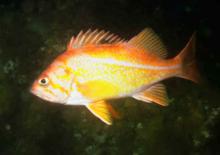
Brown Rockfish (Sebastes auriculatus). Image courtesy of NOAA.BackgroundRockfish are bony fish in the Scorpaenid family, primarily in the genus Sebastes. Approximately 28 species of rockfish are reported from Puget Sound (Palsson et al. 2009), spanning a range of life-history types, habitats, and ecological niches. This diversity makes rockfish challenging to manage as a group and con...
As wildlife managers work to recover Puget Sound’s diminished Chinook population, a proposed white paper is expected to review the impacts of some of the salmon's chief predators. The study would include a section on potential management of seals and sea lions, prompting open discussion of a long taboo subject: Could officials seek to revise the Marine Mammal Protection Act — or even conduct lethal or non-lethal removal of seals and sea lions in some cases? Such actions are hypothetical, but we look at some of the ongoing discussions around the issue as prompted by a new resolution from the Puget Sound Leadership Council.
Migration patterns have apparently reawakened for the Elwha River's wild steelhead. Studies show that the fish may have retained much of their genetic drive despite 100 years of being trapped behind dams. We continue our series 'Returning home: The Elwha's genetic legacy' with part two of seven.
A report from the Washington Coastal Resilience Project provides an updated assessment of projected sea level change for coastal Washington State and its relationship to coastal hazards such as flooding and erosion.
By Miller, I.M., Morgan, H., Mauger, G., Newton, T., Weldon, R., Schmidt, D., Welch, M., Grossman, E.
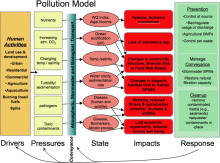
In its broadest sense pollution is often thought of as the introduction of unwanted or undesirable substances or conditions into the natural environment. Virtually all pollution types described in this section are unintended consequences of the daily activities of humans – driving cars, heating homes, growing food, building shelter, generating waste, manufacturing goods and so on. A D...