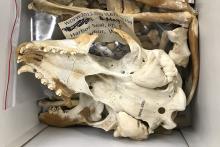
Tiny bone samples show that seals alter their diets as conditions change. The findings could help scientists understand whether seals are contributing to local salmon declines.
While not true marine mammals, river otters do use and rely on marine resources. The expansion of their populations since the early 1900s is a true conservation success story. Ecosystem recovery efforts and river otter reintroductions restored otter populations to much of their historic range. River otters often live in small social groups that include mother and offspring or other unrelated adults.
An EPA-funded study of oil spill risks in Puget Sound forms the basis of new legislation to regulate vessel traffic in the region. We break down some of the numbers from the study and look at where the risks may be greatest.
For critically endangered animal populations, experts worry that a highly infectious disease could be the final nail in the coffin, forcing the species into extinction. That’s one reason why federal authorities approved the development and deployment of a new vaccine to ward off the deadly morbillivirus among Hawaiian monk seals. The vaccination program raises the possibility of using vaccines to prevent disease among Puget Sound's southern resident killer whales, but no specific steps have been taken so far.
Fecal bacteria are found in the feces of humans and other homeothermic animals. They are monitored in recreational waters because they are good indicators of harmful pathogens that are more difficult to measure.
By Tim Essington, Terrie Klinger, Tish Conway-Cranos, Joe Buchanan, Andy James, Jessi Kershner, Ilon Logan, and Jim West for the Puget Sound Science Update
This report discusses lessons learned from the task of choosing near term actions (NTAs), activities and initiatives for achieving recovery targets for Puget Sound Vital Sign indicators. It focuses on efforts by Local Integrating Organizations in Island County, including Whidbey and Camano Islands.
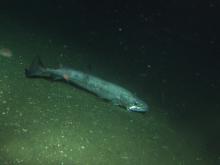
BackgroundBentho-pelagic fish utilize both demersal (bottom) habitats and shallower portion of the water column, often as part of diel migrations whereby fish feed in shallow water at night and move to deeper water to form schools during the day. Four currently or historically important species of bentho-pelagic fish in Puget Sound are the Pacific hake (Merluccius productus), the Paci...
Bluntnose sixgill sharks are among the largest sharks in the world, reaching lengths of almost 16 feet. Research shows that Puget Sound may be an important place for sixgills to give birth and raise their young. We continue with part three of our series on Puget Sound's sharks.
Puget Sound's glaciers are melting rapidly due to climate change. The North Cascades mountains have lost about 56% of their glacial ice while estimates show that glaciers in the Olympics could be gone within the next 50 years. Scientists say salmon and other species could be hard hit as the region loses its “giant storage tank” of ice.
A 2014 report explains the development of a comprehensive land use plan that is based on the ecological values and functions of the Gorst Creek Watershed in southeast Kitsap County.