The Puget Sound ecosystem is shaped by its physical environment. This article looks at Puget Sound's geologic history as well as dynamic factors such as the flow of its rivers and currents.
Here we provide a limited synthesis of stream gauge data to examine trends in freshwater flows with respect to annual and daily flows, timing of flow, low flows and flows relative to instream flow guidelines. This is intended to supplement a review of published information, but we caution that a full analysis of these data and appropriate vetting of methods and interpretations is ne...
There are at least 28 species of rockfish in the Salish Sea, but their populations have declined in the past several decades. The proceedings from a 2011 rockfish recovery workshop in Seattle are now available.
By Summary description by Encyclopedia of Puget Sound; the summary links to conference proceedings prepared by NOAA, the SeaDoc Society, and the Washington Department of Fish and Wildlife
Forage fish represent a critical link in the Puget Sound food web and help to sustain key species like salmon, marine mammals and sea birds. But the region’s forage fish may be vulnerable on a variety of fronts, according to a new study panel report from the University of Washington Puget Sound Institute. Download the panel's summary and proposed research plan.
By Tessa Francis, Marc Mangel, Doug Hay, Paul Hershberger, Dayv Lowry, Alec MacCall, Ole Shelton, Megsie Siple
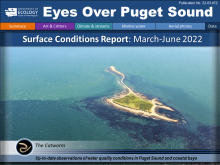
Low air temperatures, rain, and late snow accumulation pushed back the discharge of meltwater to Puget Sound this season. The water temperature in Puget Sound was mostly at expected levels, but cooler in South Sound by May. Central Sound saw more oxygenated conditions. This year, La Niña weather made flying for aerial photography challenging, but by June, sunny days made up for it, revealing a high number of schooling fish, unusually low tides, and a glimpse of macroalgae to come. Internal waves in Central Basin and Puget Sound, and the beauty of Puget Sound from the air, are a reminder of the unique place we live in.
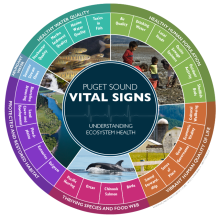
By the end of 2010, the PSP Science Panel’s efforts had reached the stage where an independent review by the WSAS (Washington State Academy of Sciences) was timely and useful to help guide its future indicator development efforts.
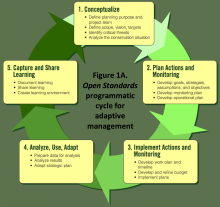
A "learn and adjust" strategy known as adaptive management plays a central role in state and federal Puget Sound recovery efforts. It is an approach that is gaining traction for ecosystem management worldwide. A December 2016 article from the Puget Sound Institute provides an overview of the concept and how it is being applied locally.
We have published a yearly round-up of stories from our magazine Salish Sea Currents. The 2020 edition focuses on the impact of climate change on the Salish Sea and includes a special section on the effect of global warming on infectious diseases in the ecosystem.
The Toxics in Fish Implementation Strategy is a recovery plan that will guide funding and activities to reduce the impacts of toxics contaminants on marine fish and the humans that consume them. A final version of the plan was published in May 2021.