

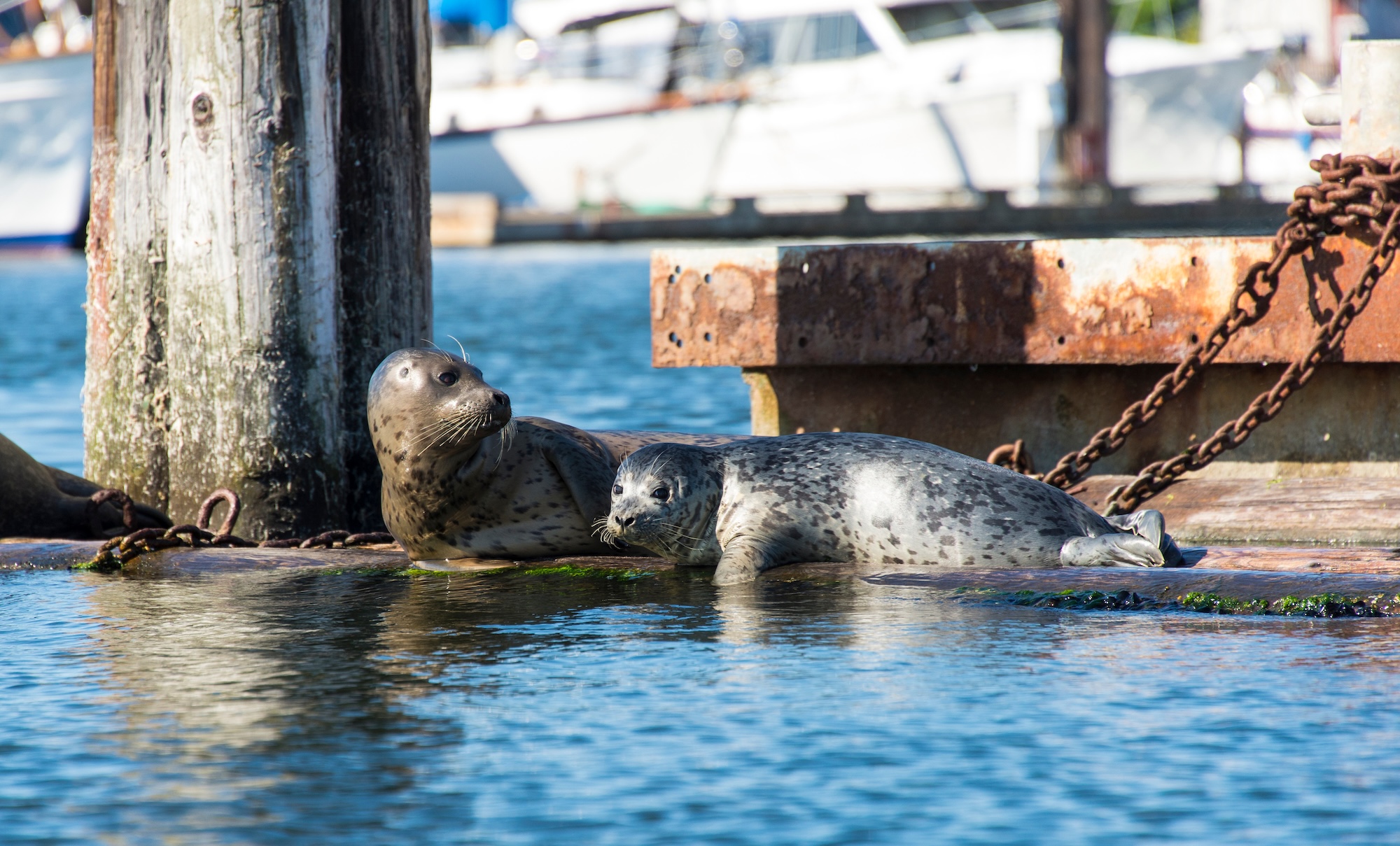
To kill or not to kill? Harbor seals in Puget Sound have been found to be taking a major bite out of some significant salmon and steelhead runs and even hindering efforts to restore endangered populations, according to experts seeking a legal avenue to remedy the problem. That is setting up an intense conflict with some environmental groups and animal welfare advocates as scientists study the issue.
Legislation recently introduced in Congress would allow a federal agency to issue permits for the “lethal removal” of seals and sea lions, known collectively as pinnipeds. These animals appear to be consuming excessive numbers of Puget Sound Chinook and steelhead, both listed as threatened under the Endangered Species Act, some experts say.
Such permits would allow state or tribal authorities to shoot harbor seals, California sea lions or Steller sea lions as part of a plan to be spelled out by NOAA to defend at-risk salmonid populations from predation. Any use of firearms would be carried out only by trained marksmen under strict protocols, according to Nate Pamplin, director of external affairs for the Washington Department of Fish and Wildlife.
From a wildlife management point of view, removing an over-abundance of predators in certain areas may be necessary at times to protect and restore endangered populations that are struggling to survive, Pamplin said. Most removal actions — from coyotes to crows in Washington state — are limited in scope and don’t require an act of Congress. On the other hand, marine mammals of all kinds are protected by federal law, the 1972 Marine Mammal Protection Act.
“I don’t see this bill as an avenue for widespread removals,” Pamplin said during a congressional hearing on the new legislation, HR 9621, “but in those areas where we see interventions are necessary, we would have the ability to proceed.”
Congress has granted wildlife agencies the authority to trap and remove troublesome California sea lions in limited locations — such as portions of the Columbia River and Seattle’s Ballard Locks. The typical process has involved trapping problem animals, followed by chemical euthanasia. But shooting seals in Puget Sound raises the stakes to a new level.
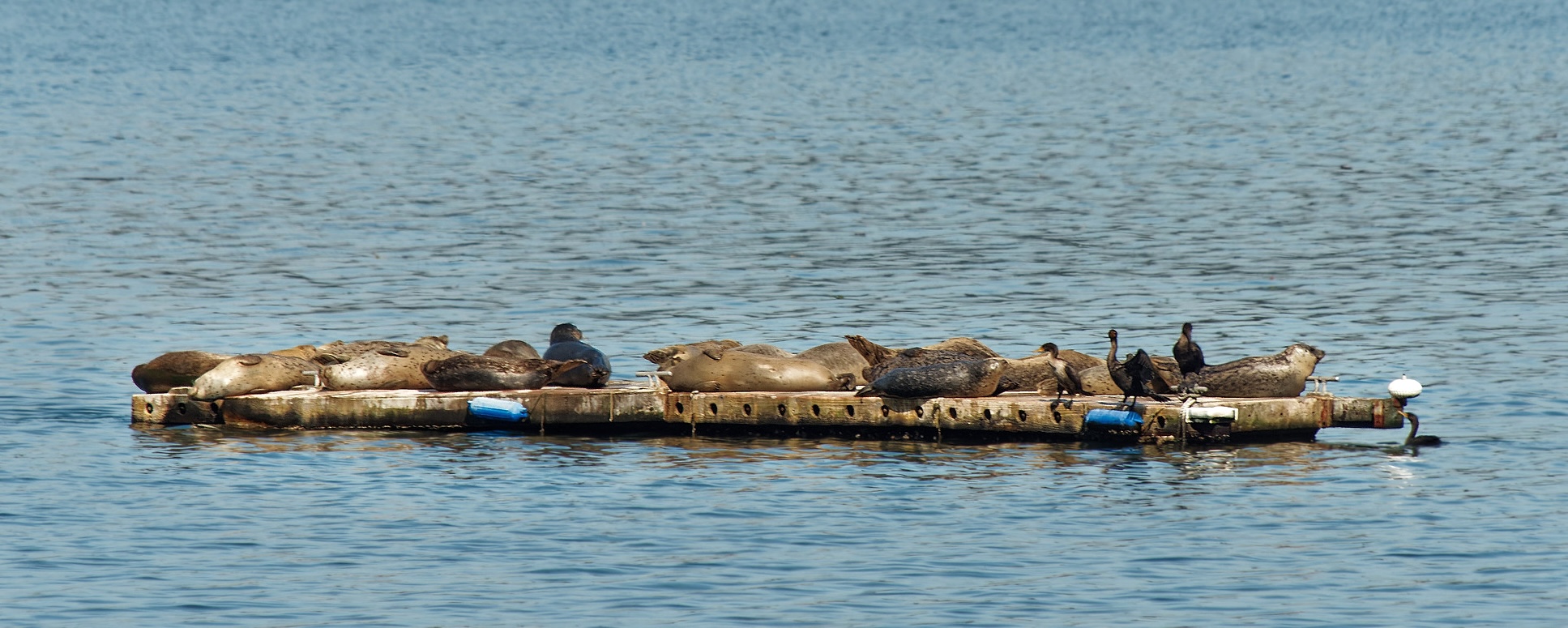
Sponsors of the bill are U.S. Reps. Michael Baumgartner, R-Spokane, and Emily Randall, D-Bremerton. Proponents say they recognize the challenge of explaining why limited killing of seals is needed in some areas of Puget Sound, but they maintain that the problem has never been more critical.
“We need to take action now, because allowing pinniped predation to continue unregulated is an existential threat to already depressed salmon stocks,” said Ed Johnstone, chairman of the Northwest Indian Fisheries Commission in his regular column in “Northwest Treaty Tribes” magazine. “We are looking at a future without salmon, which would have cascading impacts disrupting ecosystem function, resiliency and the food supply."
Opponents, meanwhile, are gearing up to defeat the bill. Led by numerous environmental groups and animal-welfare advocates, critics contend that killing seals and sea lions is a misguided proposition likely to be counter-productive, given the complexity of the Puget Sound food web. Dissenters of the bill, including some scientists, argue that adequate attention has not been given to the real problems affecting salmon: degraded habitat, poor water quality and over-harvest.
“One of the concerns I have about this legislation is that it will sap the political will for meaningful change,” said Michael Jasny, marine mammal director for the Natural Resources Defense Council. “You will drive a wedge between allies who stand in favor of salmon restoration. People really love these animals. By and large, harbor seals do very little salmon predation.”
Contributing to the debate is an 81-page report of the seal-predation issue funded by the Washington Legislature, which assigned the project to the Washington State Academy of Sciences. Written by a nine-member committee of experts, the 2022 report describes what is known about pinniped predation as well as many critical uncertainties yet to be resolved. The report’s final recommendation is to conduct a carefully monitored study that would involve the lethal removal of pinnipeds to better understand the ecological effects of such actions.
Long-term challenges
The latest estimate of the total number of harbor seals in greater Puget Sound is about 21,200 in 2023, compared with about 2,500 (pdf) when the Marine Mammal Protection Act went into effect in 1972. That’s more than an eightfold increase, equivalent to an average growth rate of just over 4 percent per year.
The ability of harbor seals to thrive and grow is often attributed to their ability to adapt to changing conditions, including available food supplies. Seals in Puget Sound are considered generalists, eating not only adult and juvenile salmonids but more than 60 species of fish, along with squid, octopus and other invertebrates. In fact, at the population level, salmon and steelhead make up only a small percentage, thought to be roughly 5 percent, of what the seals eat, according to recent estimates.
The problem, experts say, is that seals can cause severe effects on a salmon run where the numbers of fish are already depleted — even if the seals are taking only a small portion of the remaining population.
While concerns about predation by harbor seals have grown through the years, it seems these marine mammals have always been loved by some people and hated by others. And so the ongoing debate involves not just science but how people feel about seals and other marine mammals.
Early commercial fishermen in Puget Sound complained that harbor seals would steal salmon right out of their nets, while reducing the harvest value and causing other damage. The Washington Legislature first initiated a bounty program in 1903, but it was intermittent through the years, depending on state funding. From 1943 until the program ended in 1960, an estimated 17,000 harbor seals were killed in Washington waters, including the outer coast. That number is based on about 10,300 harbor seal scalps turned in for bounty payments and an assumption that 40 percent of all the seals killed — nearly 7,000 animals — were never recovered, according to a 1973 study.
For thousands of years before settlers arrived in the 1800s, Native peoples hunted seals for their meat and oil, sometimes storing the oil in seal bladders, according to ethnographic accounts. Seal skins also were fashioned into clothing, including capes. Some researchers believe this hunting helped to limit seal populations in Puget Sound, but the extent of that effect remains unknown.
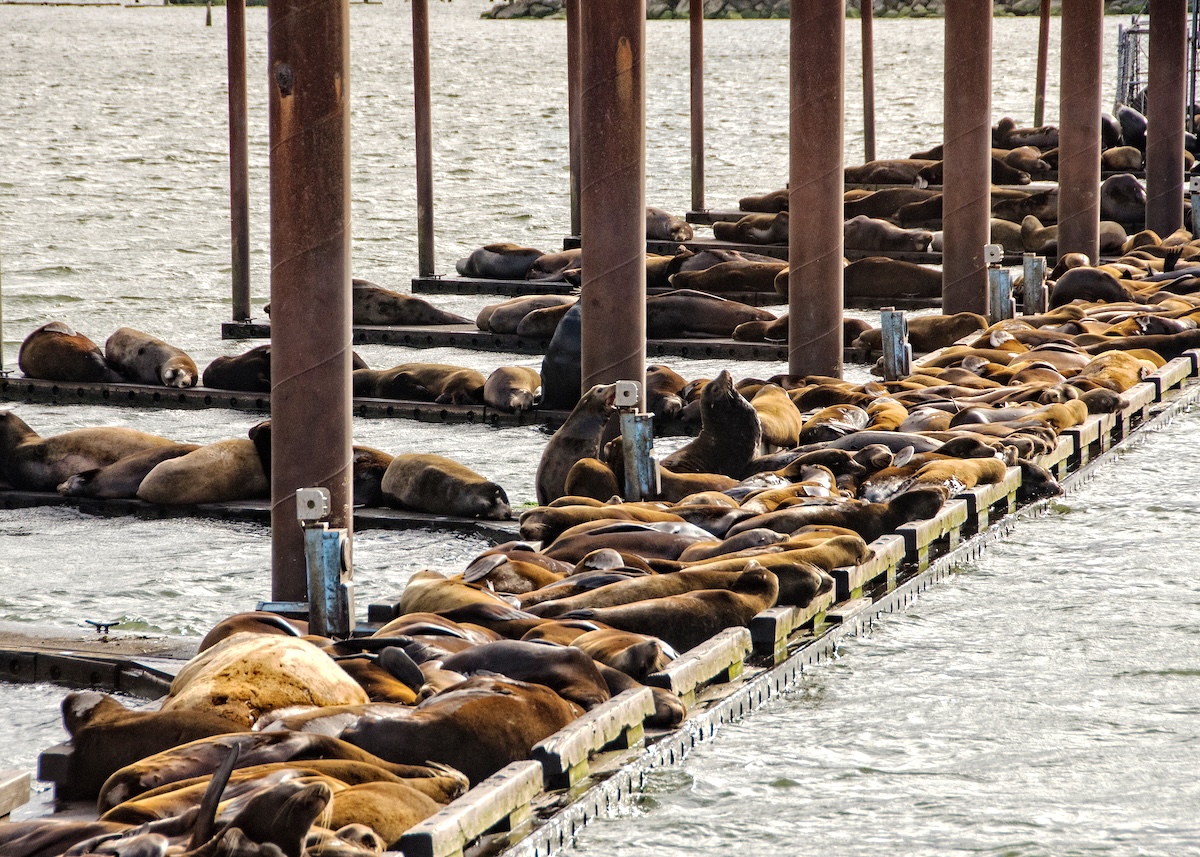
After passage of the Marine Mammal Protection Act in 1972, it wasn’t long before commercial fishing interests began pressuring federal and state lawmakers to amend the law to protect salmon and steelhead by killing seals and sea lions. Congress relaxed protections for these predators beginning in 1994 by allowing agencies to apply for removal permits. The 1994 amendment required that agencies identify individual problem animals and the significant harm they were causing before lethal or nonlethal removal would be permitted.
In 2018, Congress allowed state agencies and tribes working in the Columbia to presume that sea lions found in certain upstream areas were consuming depleted fish populations. That opened the door to removal of these marine mammals with an annual limit placed on the number that could be killed. Since the amendment went into effect in 2020, 240 California and Steller sea lions were captured and euthanized in the Columbia River, as of the end of last year, according to NOAA’s annual report.
This year’s proposed legislation would create a new permitting system for killing seals and sea lions within Puget Sound and the outer coast of Washington. Federally recognized treaty tribes, as well as state agencies, would be allowed to apply for permits for lethal removal under a new section of the law that bypasses several existing limitations.
Steelhead in the Nisqually
The Nisqually River, which flows out of the Nisqually Glacier on the south face of Mount Rainier, was once home to large runs of Chinook, coho, chum and pink salmon, along with migratory steelhead trout. Those days are gone, but the Nisqually Tribe has led an extensive collaborative effort to restore habitat in the Nisqually River, its tributaries and its estuary, which lies at the extreme south end of Puget Sound.
Although habitat restoration holds the potential to produce more fish, tribal biologists say harbor seals are gobbling up large numbers of small, out-migrating salmonids with effects on the overall population. Studies over the past 20 years show that young steelhead are vulnerable to predation — particularly by seals — in the Nisqually River and estuary and along their 170-mile migratory journey to the sea.
The winter steelhead run — considered part of the threatened Puget Sound population — is a remnant of its historical size. As recently as the 1980s, the size of the run was estimated at 6,000 to 8,000 returning fish each year. But after the population crashed in the 1990s, runsize fell below 1,000.
David Troutt, natural resources director for the Nisqually Tribe, could barely contain his frustration during testimony before the Puget Sound Partnership’s Leadership Council in June. The council, which oversees Puget Sound ecosystem recovery, had been considering seal and sea lion predation and eventually agreed to support changes to the Marine Mammal Protection Act.
“This is one of the issues that, if I still had hair, it would absolutely be on fire,” Troutt told the council. “Let me say clearly: Without dealing with pinniped predation, it will be impossible to recover Chinook salmon in Puget Sound. We simply can’t get there.”
As for the steelhead, Troutt said the Nisqually River contains better habitat than it has had for 100 years, yet the native steelhead population has remained at an “abysmal level” for more than 30 years. The tribe has not fished for steelhead for 30 years, he added, despite treaty provisions that guarantee an ongoing right to fish.
“This is, in my opinion, the number one critical issue that we’re facing right now in terms of salmon recovery and treaty rights,” Troutt said, “and if we don’t deal with it, we simply are not going to be successful.”
Research in the Nisqually estuary includes tracking the movements of young steelhead. Tiny acoustic tags, embedded in the fish, emit a high-frequency signal unique to each fish that can be picked up by receivers placed closely around the estuary and dispersed along the migration route to the Pacific Ocean.
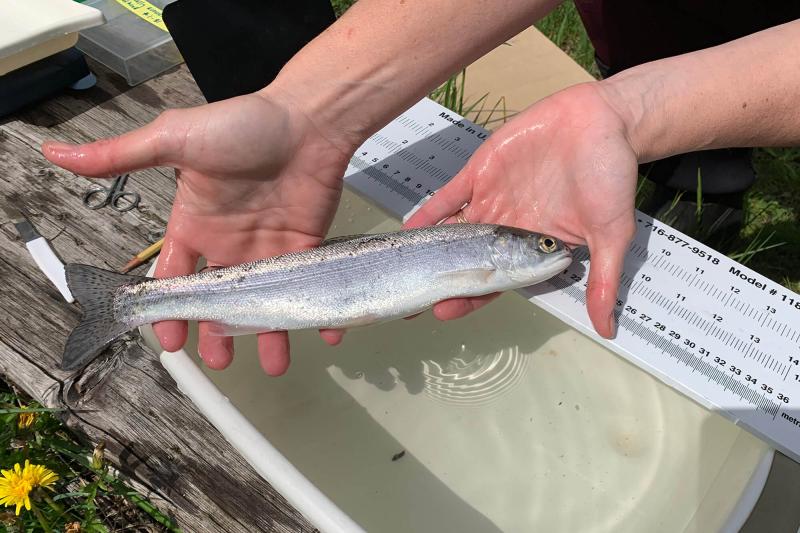
When a tagged steelhead is eaten by a seal, tracking data show a new pattern. The fish seems to be diverted from its direct path out of the estuary. Instead, the tag (now in the seal) lays down an irregular track with back-and-forth movements. Temperature sensors reflect a shift to a warm-blooded animal. When excreted by the seal, the tag stops moving. Other predators, such as birds, show different patterns.
From 2014 to 2019 plus 2021, harbor seals consumed between 11 and 25 percent of the out-migrating steelhead each year before they left the Nisqually estuary, according to a 2024 study led by Megan Moore, a research fisheries biologist with NOAA’s Northwest Fisheries Science Center. Harbor seal predation was responsible for about 90 percent of the young steelhead deaths in the Nisqually estuary, Moore noted, referring to unpublished data.
Beyond the estuary, young steelhead still face danger as they travel a gauntlet of predators, including seals and other marine mammals, birds and larger fish. Their movements are picked up by receiver arrays placed across the Tacoma Narrows, north of Bainbridge Island in Central Puget Sound, in Admiralty Inlet, and across the Strait of Juan de Fuca west of Port Angeles. Researchers can track the steelhead from one receiver to the next. If they go missing, there is a good chance that they were eaten by an unknown predator.
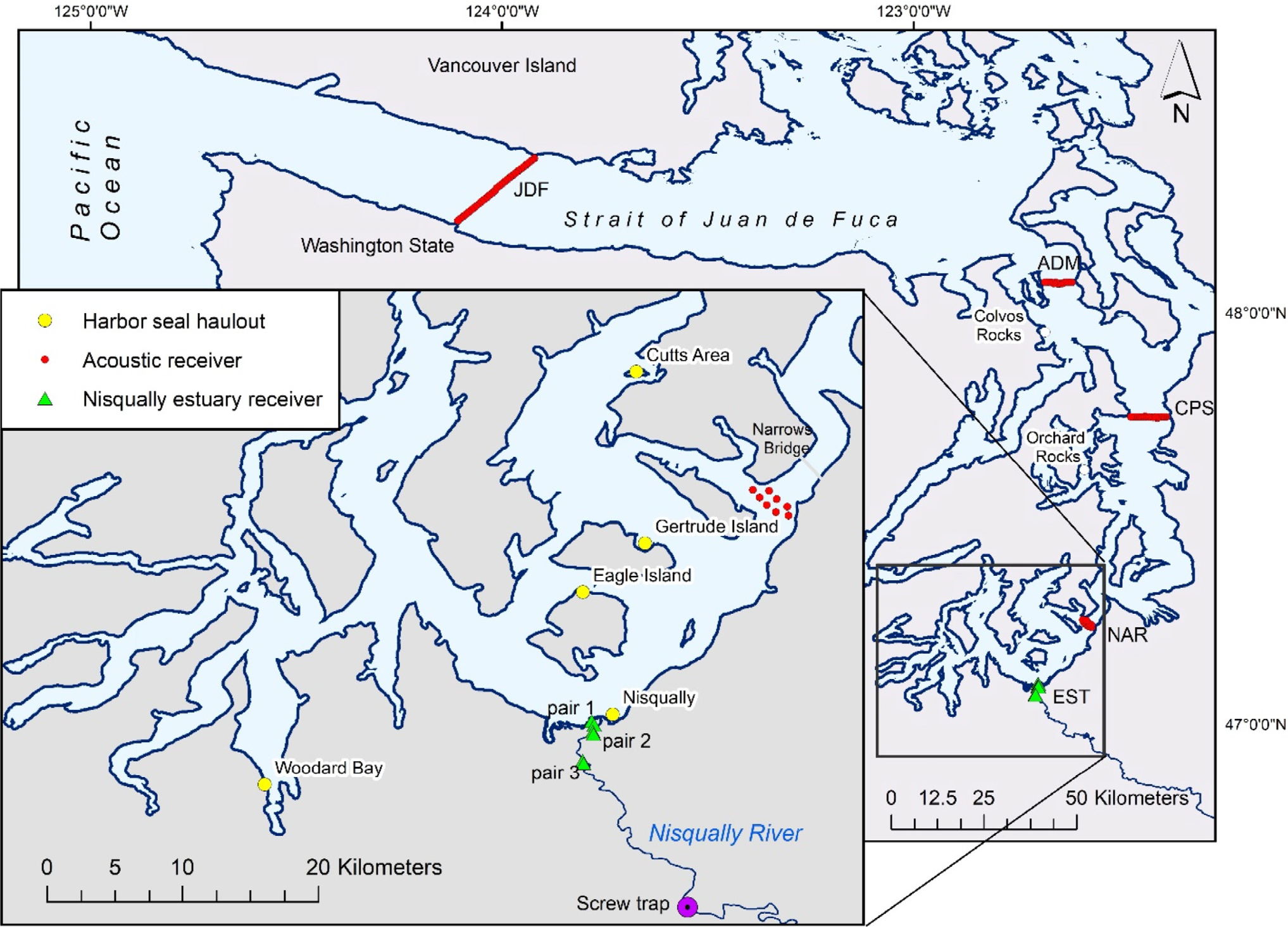
Steelhead have been the focus of many studies, primarily because the outgoing smolts are large enough to accommodate the acoustic tags. Chinook, also of major concern, have been fitted with smaller acoustic tags with mixed success, in part because of the tags’ shorter transmission range. But the technology is still advancing. Steelhead also are easier to track, because they tend to move more quickly through Puget Sound — unlike Chinook, which may linger in a river or estuary for months or even years.
Moore, who has studied seal predation in Puget Sound for 15 years, derived a method of estimating the number of steelhead eaten by seals south of the Tacoma Narrows Bridge. For that calculation, she and co-authors used tracking data along with information from other studies, including the number of seals in the area, their caloric needs, and the percentage of steelhead in the seal diet, as determined by collecting seal scat deposited on shore.
In 2016, according to those calculations, about 29 percent of the steelhead smolts died before reaching the Tacoma Narrows Bridge, with an estimated 66 percent of that mortality attributed to seal predation. In 2017, total mortality reached about 35 percent, with seals responsible for 26 percent of those deaths. And in 2018, 47 percent of the steelhead never made it to the bridge, with seal predation believed to be responsible for 70 percent of the mortality.
With a receiver array installed west of Port Angeles, researchers can estimate the number of steelhead that reach the ocean’s doorstep. An analysis reported in 2021 revealed that only 6 percent of the steelhead leaving the Nisqually River survived the trip through Puget Sound during 2014. From 2006 to 2009, survival rates ranged from 5 to 13 percent. The highest survival rates seen in the study were 38 percent in both 2016 and 2017.
Newer, unpublished survival rates for Nisqually steelhead migration to the nearocean are 21 percent in 2021 and 28 percent (preliminary results) in 2025, according to Moore.
To better understand the impact of harbor seals in the Nisqually system, Moore and associates estimated how many more adult steelhead would return if no harbor seal predation on juvenile salmon occurred south of the Tacoma Narrows Bridge. The calculation used seal-predation rate estimates for the years 2014 to 2021 and adjusted existing annual estimates of smolt-to-spawner survival rates.
Moore estimated that the number of adult spawners could increase from a low of 20 percent (2014 smolts) to a high of 50 percent (2016 smolts), assuming no seals south of the Tacoma Narrows. Those numbers from unpublished data assume that all steelhead smolts that escaped predation in South Sound would survive and return from the ocean. Uncertainty in these numbers is high, she noted, but they may help put the issue into perspective.
To rebuild a population, each generation must produce more spawners, on average, than the one before. Genetic diversity and distribution across spawning areas help populations withstand years with poor conditions. Every population is different, but where freshwater habitat can support additional fish, a depleted salmon or steelhead population is likely to benefit from greater smolt survival in Puget Sound.
Unlike salmon that die after spawning, steelhead have the potential of making multiple trips to the ocean and returning each time to spawn. In terms of population dynamics, each steelhead represents a greater production potential than a salmon, since each one can contribute offspring over multiple generations.
Adding to the debate
Seals are responsible for only a portion of the overall mortality of juvenile and adult steelhead. Other predators, environment hazards and disease each take their own toll. To understand the effects of removing seals, researchers would like to know the level of “compensatory mortality” — the proportion of fish eaten by seals that would have died anyway from another cause.
When compensatory mortality is high, removing seals could have little effect on the number of steelhead that survive to return as adults – even where seals eat large numbers of fish. That’s because the fish would die anyway, perhaps because they were weak or diseased. In a complex ecosystem like Puget Sound, compensatory mortality is extremely difficult to measure, even with the most advanced food-web models, yet it remains a key factor in the debate over human intervention.
With Nisqually steelhead facing one of the longest migration routes through Puget Sound, one might expect those out-migrants to have a higher mortality rate than young steelhead from other Puget Sound runs where conditions are similar. That concept was supported in a comparative study with wild steelhead smolts from Seattle’s Green/Duwamish River, with a migration route to the ocean about 40 miles shorter than Nisqually.
The 2017 study, by Moore and NOAA’s Barry Berejikian, found that steelhead released into the Green/Duwamish River survived at a rate nearly three times higher than those released into the Nisqually River — 17 percent compared to 6 percent. The difference appears to be the extra migration between the Tacoma Narrows and Central Puget Sound, where two thirds of the young Nisqually migrants were lost. To test whether the fish themselves made a difference, Nisqually fish were released into the Green/Duwamish, while Green/Duwamish fish were released into the Nisqually. There was no appreciable difference in the fish; the difference appears to be the release location.
An earlier study (pdf), led by Moore from 2006 to 2009, focused on survival of young steelhead smolts, specifically seven wild populations and six hatchery populations. From their river of origin to the near-ocean acoustic array west of Port Angeles, about 16 percent of the wild smolts survived while about 11 percent of the hatchery smolts survived.
Steelhead studies at the Hood Canal Bridge
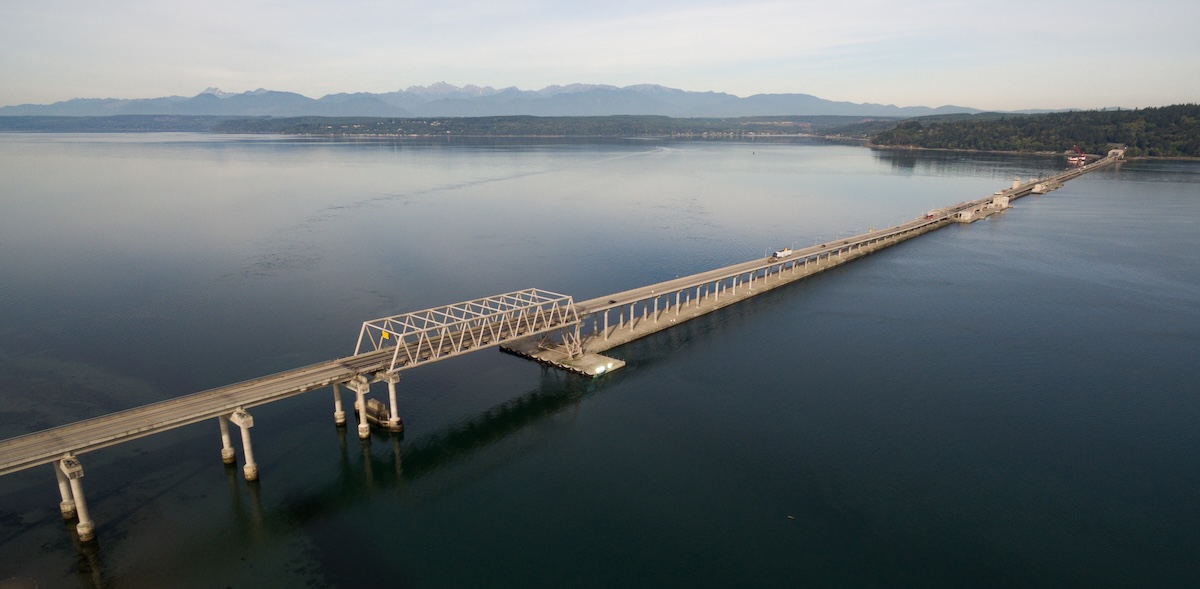
A breakthrough study in 2017 and 2018 in Hood Canal by Megan Moore and Barry Berejikian was designed to measure predation as young steelhead migrated past the Hood Canal Bridge, which has proven to be a major obstacle for steelhead. The study used acoustic tags in steelhead from the Skokomish River in South Hood Canal and Big Beef Creek in Central Hood Canal near Seabeck. Receivers were placed along the bridge and in nearby shorelines.
The study revealed that concrete pontoons, which keep the bridge afloat, disrupted the migration of steelhead, which tend to swim near the surface. The fish did not immediately dive under the pontoons, which form somewhat of a solid barrier to steelhead. Instead, many swam along the edge of the pontoons until they reached an opening for boats at each end of the bridge.
Seals seemed to target the steelhead delayed by the pontoons and those caught up in eddies created by tidal flows past the bridge. Roughly half the steelhead were lost at or near the bridge during both years of the study, and the authors were able to attribute about 79 percent of that mortality to seal predation. Read about efforts in recent years to address the problem.
Additional studies on salmonid predation are nearing completion, with results expected early next year. The multifaceted Pinniped Predation on Salmonids Project includes an effort to determine what seals are eating throughout an entire year, considering that their prey base may shift seasonally. At present, winter consumption is largely unknown. Other efforts are using DNA to identify individual seals from their scat to see if all those in an area are eating the same thing or if some seals “specialize” in particular prey species.
The extensive groundbreaking project, led by Casey Clark, the lead marine mammal researcher for the Washington Department of Fish and Wildlife, focuses on the Nisqually River system in South Puget Sound and the Duckabush and Dosewallips rivers in Hood Canal. The investigation involves all life stages of steelhead trout plus Chinook, chum, coho and pink salmon, Clark said, combining data that has never been simultaneously collected. Besides WDFW, collaborators include NOAA Fisheries, Long Live the Kings and the Nisqually and Port Gamble S’Klallam tribes, with related work by the Stillaguamish Tribe.
Washington State Academy of Sciences
In 2021, as concerns grew about predation by seals and sea lions, the Washington Legislature approved a $140,000 expenditure for the Washington State Academy of Sciences to analyze “the existing science regarding pinniped predation of salmonids, including … aspects of potential management actions.”
The final report, issued in November 2021, recommended experimenting with lethal removal of seals and sea lions to help reduce the uncertainty related to interactions among species — including the uncertainty of human intervention.
“The increase in pinniped populations in Washington state since the enactment of the MMPA has likely influenced the structure of the entire ecosystem,” the report says. “Given the large number of trophic links between pinnipeds and salmonids and the potential for direct and indirect ecological interactions, it is impossible to predict with certainty the outcomes for salmon and the rest of the food web under scenarios where the pinniped population size is changed.”
Evidence supports the idea that pinnipeds are significantly reducing the number of salmon and may be hindering salmon recovery in Washington state, according to the report. “However, this evidence does not support a definitive conclusion that pinnipeds are a primary cause of the lack of salmonid population recovery in these ecosystems.”
To understand the overall effects that eliminating some seals and sea lions could have on the ecosystem will require experiments involving lethal removal along with the flexibility to change management actions as effects are observed, according to the report. This process is known as adaptive management.
“Strategic and appropriately scaled adaptive management of pinniped populations is key to resolving these uncertainties but will require carefully constructed lethal removals and intensive monitoring of salmon,” the report concludes. “Other approaches are unlikely to lead to fundamentally new insights.”
Species interaction uncertainty
The uncertainty outlined by the Washington State Academy of Sciences report revolves around several food-web questions not easily resolved with computer modeling alone:
Compensatory mortality
Since seals and sea lions are not the only threats to salmonids, the question becomes: Would killing pinnipeds appreciably add to the salmonid populations, or are pinnipeds eating fish that would otherwise die of other causes before they return to their streams to spawn?
Alternative prey
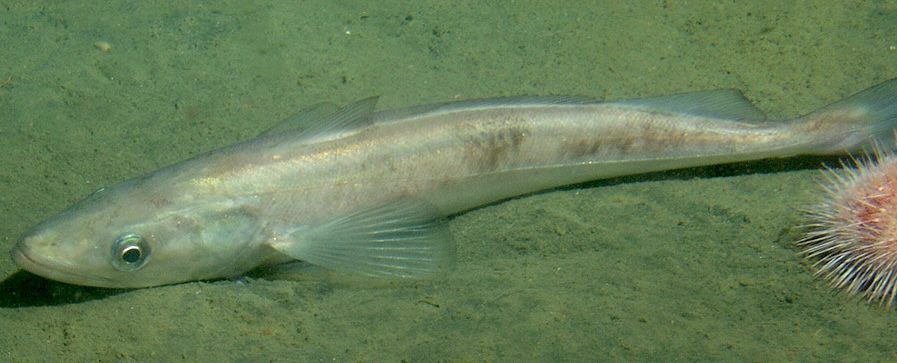
One of the most common species in the diets of Puget Sound harbor seals and sea lions is Pacific hake, a fish similar to cod with an elongated, soft body. Hake are known to prey on juvenile salmonids, so the question becomes: If seals are removed, to what extent will the hake population increase, thus leading to increased predation of salmon by hake? The same question applies to other predators of salmonids that are eaten by seals. The question is complicated by multiple factors, including the changing size and population of hake, other prey available for hake to eat, and the effects of fishing.
Prey buffering
Whether seals eat salmon, hake or other fish depends in large part on what prey are available. A common species in the diets of Puget Sound seals and sea lions is Pacific herring, considered a forage fish. Herring also are eaten by adult salmon and hake as well as larger fish and birds. Reducing the number of seals could increase the number of herring, but the final outcome is not certain. Would more herring produce an increase in predator numbers, thus creating a negative effect for salmon? Or would an increased number of herring “swamp predator demand,” fulfilling their needs and reducing predation on salmon? This latter effect is known as “prey buffering.” In 2016, an abundance of northern anchovies coming into Puget Sound may have helped to feed the seals, serving as a buffer for steelhead, which saw a significantly higher survival rate in Puget Sound that year.
Hatchery salmon
Hatcheries release large numbers of salmon into Puget Sound at particular times, which raise additional questions about predation: Do large hatchery releases attract predators, including seals, resulting in increased predation of nearby wild salmon? Or do hatchery releases “swamp predator demand” by providing alternate prey, thus saving wild salmon through a buffering effect?
Killer whales
A primary predator of seals in Puget Sound are the Bigg’s killer whales, which eat a variety of marine mammals. The presence of these killer whales in Puget Sound has increased sharply in recent years, perhaps in response to their success at hunting the large seal populations. Would a reduction in seals cause the whales to reduce their visits to Puget Sound, and how would their behavioral changes reverberate through the seal and salmonid populations?
Seal specialists
Seals and sea lions are known to eat salmonids among a variety of prey species, but individual animals are not all the same. It appears that some may choose salmon over other species, or vice versa, regardless of prey abundance. Some studies have found that most of the predation on salmon is carried out by a relatively small number of individuals. In the Strait of Georgia, one study showed that harbor seals consumed more juvenile coho, Chinook and sockeye salmon, even though pink and chum salmon were more abundant in the area. Some studies suggest that male harbor seals prefer to eat salmon, while females prefer to eat salmon predators. Key questions include: How many specialists are living in a given area? And how much are these individuals responsible for the reductions in nearby salmon and steelhead populations?
Carrying capacity
Under the best available estimates, harbor seal populations in Washington state appear to have leveled off, with the possible exception of South Puget Sound. Some areas did so earlier than others. This suggests that seal populations may be approaching — or may have already reached — carrying capacity, the maximum number of seals the existing environment can support. Food limitation, a key sign that carrying capacity has been reached, could result in increased strandings of emaciated seals and reduced pup production or mortality. So far, such evidence is inconclusive.
Given the uncertainty surrounding the effects of harbor seals, the Academy’s study committee recommends a series of experiments that would involve killing seals or sea lions and measuring the outcomes. Because populations are at an all-time high, lethal removals “would seem to pose little or no risk to the viability of pinnipeds” unless undertaken at a massive scale.
On the other hand, with salmonids listed as threatened or endangered, “the risk of not conducting experiments, whose results can inform management actions, is high, the report says. “The major risks of lethal removals appear largely social and political, rather than risks to pinniped populations as a whole.”
Nonlethal interventions to save salmonids from pinnipeds, including various deterrents with sound, have been shown to be mostly ineffective, according to the report, but new and innovative techniques should still be tried in controlled studies.
As for lethal removal, ongoing actions may be needed, especially where pinniped populations are dense, according to the report, because removed animals are easily replaced by others. Studies have shown that pinnipeds may avoid areas where lethal removal has taken place, but such behavioral changes can take time to develop. In an experimental setting, individual seals or sea lions could be tracked to answer questions about whether they tend to return or stay away from an area where others have been killed.
Early candidates for lethal removal could include Nisqually Delta, Hood Canal Bridge and the Ballard Locks, where significant impacts from seals or sea lions have been well documented, according to the report.
“Efforts to measure the impact of excluding pinniped predators should focus on known hotspots,” the report says. “Ideally, experiments should take place over several years and use appropriate control sites and salmon populations… The geographic scale of the experiment should not be limited to rivers, as marine systems are dynamic, and pinnipeds are highly mobile…
“Combining multiple studies that feed into ecosystem models would increase the pace of learning about how the entire system responds to perturbations… There are a number of ecological interactions, and there is no direct analogue in previous studies that would indicate all of the ecosystem responses. However, potential unintended effects should not be a barrier to strategic removals.”
Legalizing lethal removal in Puget Sound
Two U.S. representatives from Washington state — Republican Michael Baumgartner and Democrat Emily Randall, are co-sponsoring HR 9621, the Northwest Endangered Salmon Predation Prevention Act of 2026, which would open the door to lethal removal of seals and sea lions in Puget Sound and along the Washington Coast.
On September 15, the bill was approved by the House Natural Resources Committee on a voice vote and now awaits action by the full House.
“Tribal nations have long been leaders in habitat restoration and ecological management,” said Rep. Randall of Bremerton in a news release. “This legislation will add another tool in the toolbox for tribal and state partners to help protect endangered keystone species, including Chinook salmon and southern resident orcas.”
Based on WDFW calculations...maximum annual removals in practice would be close to 132 seals in North Puget Sound, 16 in South Puget Sound and 30 in Hood Canal.
The bill’s current language would provide significant flexibility to federal officials in issuing lethal take permits in Puget Sound under the Marine Mammal Protection Act. Specifically, the section on Puget Sound allows the Secretary of Commerce, who oversees NOAA Fisheries, to issue permits “in a manner the Secretary, in consultation with eligible entities, determines appropriate.”
The bill in Congress would require NOAA to establish application procedures, monitor effects of actions, conduct periodic reviews and address geographic, seasonal-take and species considerations. An annual report would be required with information on the population of pinnipeds and their effects on threatened or endangered fish populations.
An amendment added by the House committee would allow the agency to set up a “pinniped-fishery interaction task force,” if warranted, to make recommendations on any lethal take proposal or to suggest nonlethal alternatives. The task force also would review the effectiveness of any actions taken under the permit.
The number of pinnipeds that could be killed each year is limited to 10 percent of the “potential biological removal” (PBR) level. PBR represents the number of pinnipeds that can be removed while keeping the population within a safe range called “optimum sustainable population (OSP).” PBR is a calculation based on population, growth rate and a recovery factor related to the health of the population.
Based on WDFW calculations, the PBR for the three Puget Sound harbor seal stocks would allow a theoretical 1,323 seals to be removed in North Puget Sound, 162 in South Puget Sound and 306 in Hood Canal each year. Since the law would allow only 10 percent of PBR, maximum annual removals in practice would be close to 132 seals in North Puget Sound, 16 in South Puget Sound and 30 in Hood Canal.
An experimental approach to lethal removal, as recommended by the Washington State Academy of Sciences, is not explicitly mandated by the law, but experimental conditions could become a requirement within a lethal-take permit drafted by NOAA Fisheries.
“While we understand the critical importance of recovering endangered salmon populations, we believe this legislation departs from science-based management and is likely to result in needless harm and public outcry without contributing meaningfully to salmon recovery,” states a letter to Congress signed by 31 organizations.
Pamplin of WDFW said if the bill passes Congress, he anticipates working with Puget Sound tribes to submit a single application that identifies “predation hotspots” where removal of seals is warranted. In any seal-removal effort, experts would closely monitor the effects on seals and salmon to determine effectiveness of the program. Strategies could change in response to changing conditions, consistent with the principles of adaptive management, as envisioned by the Academy, he added.
In a letter to congressional officials (pdf), Pamplin said he does not interpret the bill as allowing “hunting” or “culling” of pinnipeds to reduce their populations.
“Those are terms and descriptions used by opponents of the legislation to invoke ugly images of a bygone era when pinnipeds were persecuted to benefit fisheries,” he said in the letter. “Rather, focused, humane removals of pinnipeds is proposed in limited areas to reduce impacts of predation to protect … ESA-listed salmon and steelhead.”
In his letter, Pamplin said his agency and the tribes would be able to implement the legislation as written, but he suggested changes to reduce ambiguities and address concerns that he and his tribal colleagues have heard. “I offer these suggestions,” he wrote, “in hopes that the bill will secure greater support and advance in the 119th Congress.”
Pamplin had suggested at least eight changes to the original bill, and some were incorporated into the bill that passed the committee. They included a requirement that permit applications spell out the rationale why lethal removal is warranted in specific locations and to describe how a monitoring program would be carried out. The bill specifies who is eligible to conduct lethal removals — namely “qualified individuals” on the staff of fish and wildlife agencies, staff of tribes, staff of tribal consortiums and those employed by the federal Wildlife Services within the USDA.
In other recommendations incorporated into the bill, Pamplin said the use of firearms should be required to follow veterinary-approved guidelines, such as those developed by the American Veterinary Medical Association (pdf).
As written, the bill would allow the removal of pinnipeds to protect salmon, steelhead and eulachon (anadromous smelt) along with any fish that are a “species of concern.” Pamplin noted that the undefined term “species of concern” has been used by different agencies in different ways, so it might be best to specify the species intended for protection.
In addition to allowing lethal removal of seals and sea lions in Puget Sound, the bill broadens the area where these animals may be killed in the Columbia River and adds the words “pinnipeds” in place of “sea lions” as targeted animals.
A hearing on HR 9621 in July before the House Subcommittee on Water, Wildlife and Fisheries included testimony on three other bills. Five experts offered oral presentations followed by written statements. In all, 17 individuals and groups, pro and con, provided written comments.
Speaking to the subcommittee, Richard Merrick, an independent marine scientist, raised numerous concerns about the bill. Merrick, a 30-year NOAA Fisheries employee, retired in 2017 as chief science advisor and director of Scientific Programs for the agency. He was part of the team that removed California sea lions from Seattle’s Ballard Locks and was involved in the lethal collection of Steller sea lions while studying their diets.
“HR 9621, while well intentioned, represents simplistic understandings of how endangered/depleted/overfished species recover, what Washington state’s pinnipeds’ diets are, and the unintended consequences that result from tampering with ecosystems,” he said in written testimony.
The benefits of seal or sea lion removal remain uncertain because of lack of data, Merrick said. He mentioned a study that found that at least 66 species prey upon young salmon smolts and other studies showing that salmon smolts make up a small fraction of a pinniped’s diet.
While targeted removal of specific seals or sea lions at high-predation locations may temporarily improve salmonid survival, others are likely to replace them without ongoing predator control, he said.
In any case, “true adaptive management is essential,” he said, to make sure that problem animals are removed and that monitoring reveals the efficacy of the program. Management changes — the essence of adaptive management — must be informed by sophisticated data collection.
Although adaptive management is mentioned in the bill and is a major element in most conservation actions, Merrick said HR 9621 fails to adequately provide for two key elements required for adaptive management: scientific considerations of the problem and monitoring the results of any actions.
Many opponents of the legislation also point out that the bill, as it stands today, includes no provisions for funding the administrative process, let alone the monitoring and studies that scientists would like to see.
Officials involved with the legislation aren’t sure when the bill might be taken up by the full House, but supporters are still pushing for passage through the House and Senate by the end of the year. Given concerns about predation of seals and sea lions, if the bill does not pass before Congress adjourns, it seems likely that the measure will be resubmitted in the next congressional session starting in January.
Maintaining treaty rights
For thousands of years, salmon and steelhead were central to the lives of Native people in the Puget Sound region. For many living today, the decline of salmon runs is a profound tragedy, yet the hope of improving salmon runs remains a guiding light.
“The explosive growth of marine mammal populations has created an imbalance in the natural world, and we need to act now to get it under control,” wrote Johnstone, chairman of the Northwest Indian Fisheries Commission in his June column, “Being Frank.”
The commission, which represents the 20 Western Washington treaty tribes, is working closely with the Washington Department of Fish and Wildlife to convince Congress that lethal removal of seals and sea lions should be allowed in Puget Sound.
Johnstone laments that seals and sea lions are swimming up into Puget Sound rivers to feed on depleted runs of salmon, while tribal fishermen sit on the banks to watch.
“This is happening against a backdrop of habitat loss that will take years to recover,” Johnstone said, referring to ongoing efforts to improve stream conditions for salmon. “While our recovery plans work to restore habitat, the most immediate thing we can do to protect salmon is reduce the impact of predation and account for the loss of the resource.”
Harbor seals, porpoises and whales were part of the natural surroundings for tribal members before the arrival of settlers in the 1800s. The natural world somehow sustained a balance that provided an abundance of salmon for the indigenous people and many other animals. Some experts believe that seal hunting, an ancient tradition, may have played a role in maintaining that balance.
“When tribes in Western Washington signed treaties with the U.S. government, we reserved the right to continue hunting and fishing as we always have,” Johnstone said. “Salmon are a treaty-protected resource, and that means we have a treaty right to manage the populations of marine mammals that threaten the health of the ecosystem.”
The Marine Mammal Protection Act was passed in 1972 to protect unique populations of seals, dolphins and whales depleted by human exploitation. The law has done its job, and no marine mammal species has gone extinct since it was passed. “But sea lions and harbor seals were never in danger of extinction,” Johnstone said, “and because of MMPA protections, they have become invasive species.”
In a landmark ruling in 1974, U.S. District Judge George H. Boldt interpreted language in the treaties as reserving the right of tribal members to continue fishing as they had been doing before they ceded lands to the U.S. government. Given changing and uncertain salmon runs, Boldt needed to address treaty language that guaranteed tribes a right to fish “in common with” other citizens. He determined that tribes should have an opportunity to take up to 50 percent of the “harvestable fish,” after protecting those needed for spawning to sustain the population.
The ruling established a framework in which state and tribal “co-managers” would establish how many salmon would be harvested and in what locations to give state and tribal fishers their allowable 50 percent. While the arrangement was highly contentious the first few years, it has developed into a workable affiliation with relatively few disputes.
In all the discussions about excess seal predation over the past 20 years, the Puget Sound tribes have not publicly asserted a right to hunt for seals, choosing instead to focus on the needs of salmon. The Makah Tribe in Northwest Washington is the only tribe whose treaty expressly secures “the right of taking fish and whaling or sealing at usual accustomed grounds and stations.” The tribe has worked with federal authorities to obtain waivers under the Marine Mammal Protection Act to hunt for gray whales.
While seals are not mentioned specifically in the treaties, two coastal tribes, the Quileute and Quinault, won a clear victory in federal court, which found that the tribes’ established right to fish included the taking of seals and whales.
“Who would imagine that more than 150 years after the Treaty of Olympia was signed between the United States and the Quileute and Quinault tribes, we would be asked to determine whether the ‘right of taking fish’ includes whales and seals?” states a Ninth Circuit Court of Appeals ruling. “Although scientists tell us sea mammals are not fish, these appeals ask us to go back to the 1855 treaty negotiation and signing and place ourselves in the shoes of two signatory tribes.”
At the time of the treaty signing, the two tribes may well have understood that the word “fish” — as used in the treaty and understood by tribal representatives — encompassed marine mammals, the court said, adding that it took into account linguistic and historical evidence, including proof that sealing and whaling were commonly practiced by tribal members. So far, the two tribes have not pursued federal authorization to hunt seals or whales under the Marine Mammal Protection Act.
Puget Sound tribes have not raised the question of a treaty right to hunt seals, probably because it would be a divisive strategy, said Cecilia Gobin, conservation policy analyst with the Northwest Indian Fisheries Commission. There is general agreement with state agencies that limited removal of seals or sea lions is warranted at specific locations.
“The treaty aspect of this is not explicitly intwined into the (HR 9621) legislation,” she said. “I don’t see a process where we would have a permit for all of Puget Sound. What we are trying to do, via the proposed legislation, is to tailor actions based on where you are. We are looking at hot spots where the (pinniped) population is having an effect on other protected resources.”
The tribes are not proposing outright culling or herd management, Gobin said. “The proposed legislation looks to shift the presumption, so if you see individual pinnipeds in certain areas (such as up a river) you can presume that they are preying on salmon and can take management actions.”
In managing seal or sea lion predation, the question about methods of killing has received some discussion. In the Columbia River, the primary effort has been to lure sea lions into large floating cages, which the animals use as haul-out platforms. They are then restrained and chemically euthanized.
That process may not translate well to Puget Sound, said Pamplin of WDFW. In Puget Sound, harbor seals are often spread out across broad tide flats, making it difficult to bring in the traps by boat and set them in place. Also, seals are more wary and less likely to enter a trap, he added.
Using firearms under strict humane and safety protocols is likely to be the preferred method for Puget Sound, Pamplin said. Engaging state or tribal staffers to shoot the animals could allow tribes to use the meat and other parts in traditional ways without contamination from euthanasia chemicals. Environmental contaminants could be a concern in some locations.
Gobin said the American Veterinary Medical Association recognizes the use of firearms as a humane way to dispatch an animal, and it is far cheaper than the trapping approach.
“We want to effectively address the predation problem, but we don’t want to see an animal go to waste,” she said. “We would like to reawaken our traditions and bring those animals back into our community for cultural uses. So much of our cultural knowledge has gone underground or dormant.”
Gobin, a member of the Tulalip Tribe, grew up on the reservation as part of a fishing family that was “steeped in our cultural way of life.”
When looking back on history and listening to traditional stories of bygone times, it is clear that some local families were recognized as seal hunters.
“While I work in natural resources and that is much about who I am, I know that my work is supporting not just my community but all communities,” she said. “We are working on communication plans to incorporate key talking points, helping folks make connections, not just to Western science but to traditional knowledge as well.”
Killer whale connections
In 2018, Washington’s governor at the time, Jay Inslee, created a task force to generate ideas to help avoid extinction for the critically endangered southern resident killer whales. About 50 representatives with wide-ranging expertise and interests worked quickly. Within nine months, they came up with an action plan (pdf) that contained 49 recommendations. One recommendation addressed concerns about predation of salmonids in Puget Sound, particularly by seals and sea lions, said to compete with the southern resident orcas for food.
Research has shown that salmon make up at least 90 percent of the southern residents’ diet, primarily Chinook salmon, a threatened species. A lack of Chinook has been recognized as a primary threat to the long-term survival of the whales. The task force wanted to know if seals and sea lions were eating enough juvenile and adult salmon to ultimately deprive the orcas of a needed food supply.
Acting on a task force recommendation, the Legislature enlisted the Washington State Academy of Sciences to try to untangle the complex food web in Puget Sound and come to a better understanding of who eats whom and perhaps where, when and how. Solid answers proved to be elusive, as the academy reported, but riding atop the food web is a countervailing force that must be considered.
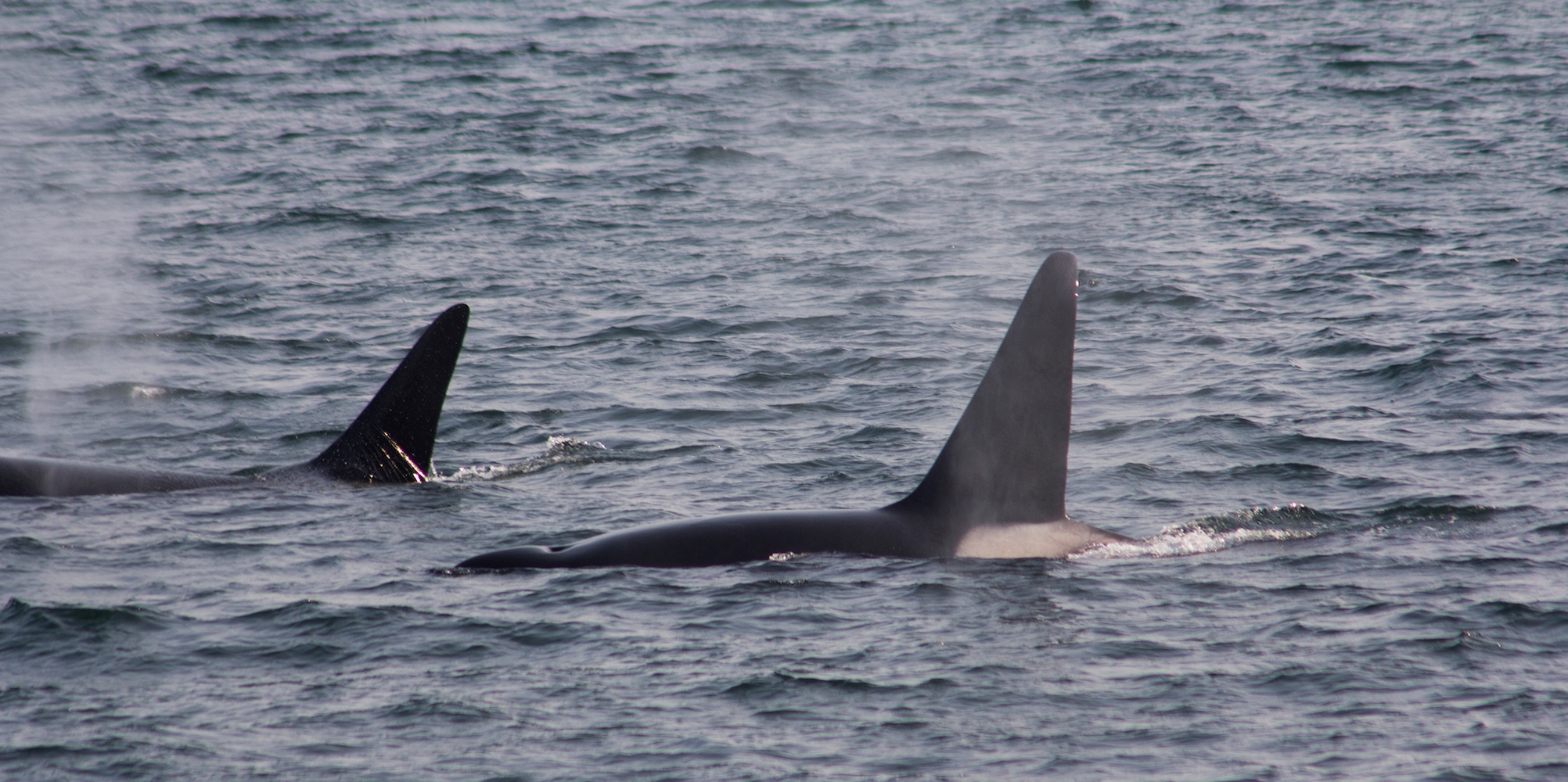
While southern resident killer whales eat mainly salmon, another subspecies of orcas, the Bigg’s killer whales, readily go after harbor seals for their meals. Seals are believed to be their primary prey in the Salish Sea, which makes the growing number of Bigg’s — previously known as transients — incidental allies to the southern residents.
A 2018 study by Monika Wieland Shields, director of Orca Behavior Institute, documented a dramatically increasing presence of Bigg’s killer whales in Puget Sound over the past 30 years, with the number of visits more than doubling during the years 2011 to 2017 compared to 2004 to 2010. Based on estimated harbor seal consumption, it is likely that the Bigg’s have eaten at least 1,000 seals each year in the Salish Sea — a very conservative estimate, Shields said.
The presence of the Bigg’s orcas continues to increase at a rapid pace, according to Shields, who documented 1,860 unique daily sightings in 2025, compared to 634 in 2017, when her previous estimates were made. She has not yet updated her estimated seal consumption rate by these marine-mammal-eating whales.
“I was thinking in 2017 that the number of sightings couldn’t go much higher, but it did,” Shields said. “I think it is inevitable that this predator will start controlling the prey. The fact that we haven’t seen it yet speaks to possible errors and uncertainty in how we are estimating harbor seal numbers.”
The availability of large numbers of seals keeps the whales coming back, Shields said, offering three possible reasons why their overall presence continues to increase at a high rate. First, their population continues to grow, she said. The West Coast Bigg’s population grew 2.9 percent from 1994 to 2024, slowing to 1.9 percent from 2019 to 2024, according to a recent report from Jared Towers for the Canadian Department of Fisheries and Oceans.
The second reason for the increased presence of Bigg’s is the number of orca families never observed before in Puget Sound but now making themselves at home, Shields said. Many of these new whales were previously seen in more northerly waters, such as Southeast Alaska. Some of the newcomers might be more accustomed to preying upon other marine mammals, such as harbor porpoises, which also are increasing in Puget Sound, Shields said, but all the Bigg’s whales eat a variety of marine mammals.
Another reason for the increasing presence of Bigg’s may be the decreasing presence of southern residents, which may be staying away because of declining salmon runs. While Bigg’s and southern residents don’t compete for the same food, observers have long recognized that the two “ecotypes” tend to avoid each other — with Bigg’s often moving away when southern residents arrive. Reasons for this behavior remain unknown, Shields said, but the Bigg’s may be taking advantage of the absence of southern residents.
The increasing presence of Bigg’s killer whales — and their increasing predation on harbor seals — is likely to lead to population-level effects on the seals, Shields said, arguing against population-reduction measures such as widespread culling of harbor seals. It is easy to conceive of connections between increasing numbers of seals and declining numbers of Chinook salmon, but evidence is lacking, she said.
“Predator-prey dynamics are complex,” states her 2018 paper, “particularly in cases like these where harbor seals are generalist predators and Chinook salmon are prey to a wide variety of species.”
Groups mobilize in opposition
More than 30 environmental, animal-welfare, scientific and legal organizations have joined forces to oppose HR 9621, the Northwest Endangered Salmon Predation Prevention Act of 2026.
“While we understand the critical importance of recovering endangered salmon populations, we believe this legislation departs from science-based management and is likely to result in needless harm and public outcry without contributing meaningfully to salmon recovery,” states a letter to Congress signed by 31 organizations.
The letter objects to “what amounts to an indiscriminate statewide cull,” which could be allowed under the legislation as written, but only if approved by the federal agency in charge of permits.
“We are concerned that provisions in this section, as written, are highly vulnerable to administrative abuse,” the letter says. “These measures are inimical to the focused, science-based approach to pinniped predation that the Washington Academy of Sciences, among others, has recommended…
“The bill, while adverting to ‘adaptive management,’ sets no requirements for determining the effectiveness of lethal removal or ascertaining the potential consequences for other important state wildlife,” the letter continues. “Indeed, the bill’s broad scale and allowances would make controlled, science-based management impossible.”
State Fish and Wildlife officials say they are open to certain changes in the bill and would not seek a permit for widespread hunting or culling.
A letter sent to Congress from about 60 doctors of veterinary medicine from across the country objected to the use of firearms against unrestrained animals, adding “shooting an animal in the water should be unequivocally prohibited.”
“If a seal or sea lion is shot in the water, it is almost certain to be lost, so whether the animal is killed instantly or merely injured would be unknown and unknowable,” the letter says. If shot and injured, the animals would probably enter the water and be lost, whether dying a prolonged death or coming ashore alive.
Guidelines (pdf) from the American Veterinary Medical Association call for caution in using of firearms for marine mammals.
Casey McLean, executive director of SR3 — SeaLife Response, Rehabilitation and Research — is alarmed by the increasing number of seals being shot illegally in Puget Sound, and she is concerned that the legislation will increase the numbers.
“We have already had gunshot animals coming into our hospital,” said McLean, a veterinary nurse at the SR3’s wildlife rehabilitation center. “In the past, we’ve found seals washed up dead and discovered later than they’d been shot. In the past few years, we’re seeing wounded animals showing up alive with gunshots.”
The use of firearms, even if conducted by wildlife officers, would lead to more wounded animals and more animals washing up dead, because not every animal can be recovered, she said.
“To me, this is not about the poor seals,” she said. “You are going to do something that will not work. The population will stay at a healthy range, and other seals will move into the area. You would have to kill the seals year after year after year, and you won’t solve the problem.”
Experts and advocates may disagree over the severity of the seal-predation problem, but most everyone agrees that salmon restoration involves a multiplicity of thorny issues that won’t be solved by killing seals. Other issues include salmon habitat, from streams to ocean; human obstructions, such as dams and bridges; water quality, including pollution, temperature and oxygen; fishing pressures, ocean and inland; and climate change with effects on temperature, streamflow and the entire food web.