

Gray whales of the Salish Sea
Overview
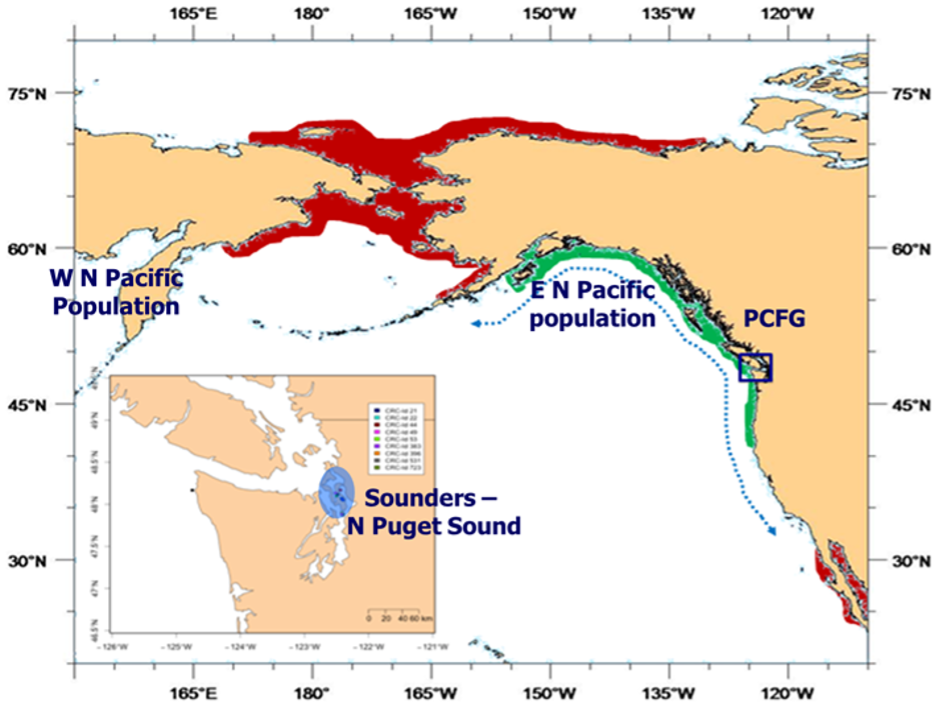
Gray whales are among the more commonly sighted large whale species in the Salish Sea and along the coast of the Pacific Northwest, but a clearer understanding of the multiple ways they use our waters has only come into focus in recent years. Gray whales were historically mostly known for their annual migrations past the Washington Coast including the entrance to the Salish Sea: southbound in December on route to their wintering grounds in Baja California, Mexico and northbound in March to May returning to their primary feeding grounds in Arctic waters (Figure 1).
In general, gray whale use of the Salish Sea and coastal waters falls into several broad groups or categories that are discussed in more detail in later sections but can be summarized as follows:
- Overall Eastern North Pacific migrating group. This is the major portion of the gray whale population that migrates past the Pacific Northwest.
- Migration stragglers. In spring and sometimes in December particularly in years with high mortality, gray whales wander into the Salish Sea. These whales are often in poor nutritional condition and may already be in a debilitated state and end up in unusual areas.
- Sounders gray whales. This is a small group of annually-returning gray whales that break off from the migration and feed in spring in northern Puget Sound documented starting in 1990.
- Pacific Coast Feeding Group. These approximately 250 gray whales appear to be a distinct unit that largely do not appear to migrate further north and feed in the Pacific Northwest from spring to fall.
- Western gray whales. While most of the whales migrating past the Pacific Northwest are part of the eastern North Pacific population, many gray whales from the small endangered western population that feed in waters off Russia also appear to migrate past our coast.
Natural History
Overall Eastern North Pacific migrating group
The overall Eastern North Pacific gray whale population has seen a remarkable long-term recovery from commercial whaling but has seen some major fluctuations in more recent decades. Gray whales have undergone two declared Unusual Mortality Events (UMEs), one in 1999-2000 (Moore et al., 2001, Gulland et al., 2005) and one in 2019-2023 (Raverty et al., 2024) during which thousands of gray whales apparently died (Stewart et al., 2023).
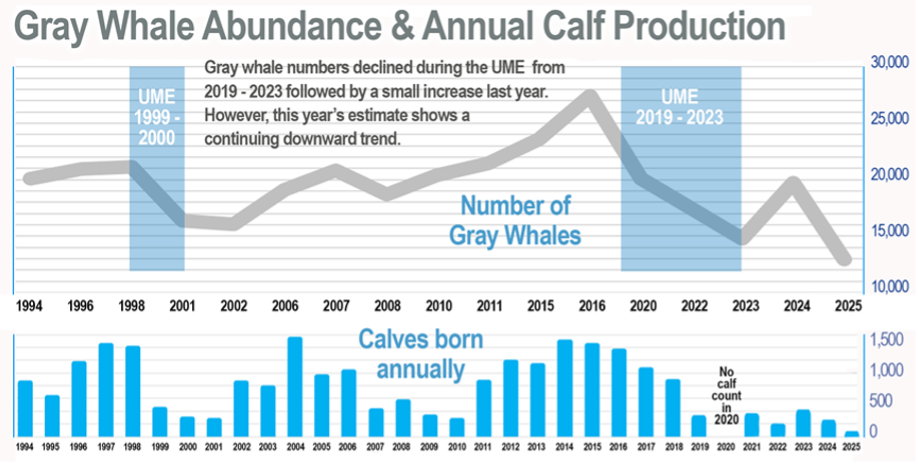
This popuation is censused annually by NOAA based on counts made from the shore of California during the whales’ southbound migration. Their most recent abundance was estimated as 12,950 (with a 5% margin for error) for 2024-25 which was one of the lowest estimates in over 50 years and down from the previous year’s estimate of 19,730 (Eguchi et al., 2024, 2025). These recent estimates represent a very concerning decline overall and break the pattern seen after past UMEs and other declines (Figure 2). Past declines and mortality events occurred after the whale populations reached peak numbers; 28,790 in 2014-15 and 26,960 in 2015-16. However, unlike past events, this time the decline has continued with no sign of a rebound, suggesting a more serious and long-term crisis for gray whale feeding in the Arctic. Along with high mortality and declining abundance estimates, calf production for this population dropped from highs of just over 1,600 prior to the 2019-2023 UME to just a few hundred in 2019 and the following year, finally dropping to just 85 calves in 2025 (Lang et al., 2024, 2025). A recent publication (Stewart et al., 2023) summarized the “boom-bust” cycles and developed a model examining how these interrelate with a variety of factors including changing conditions in the Arctic.
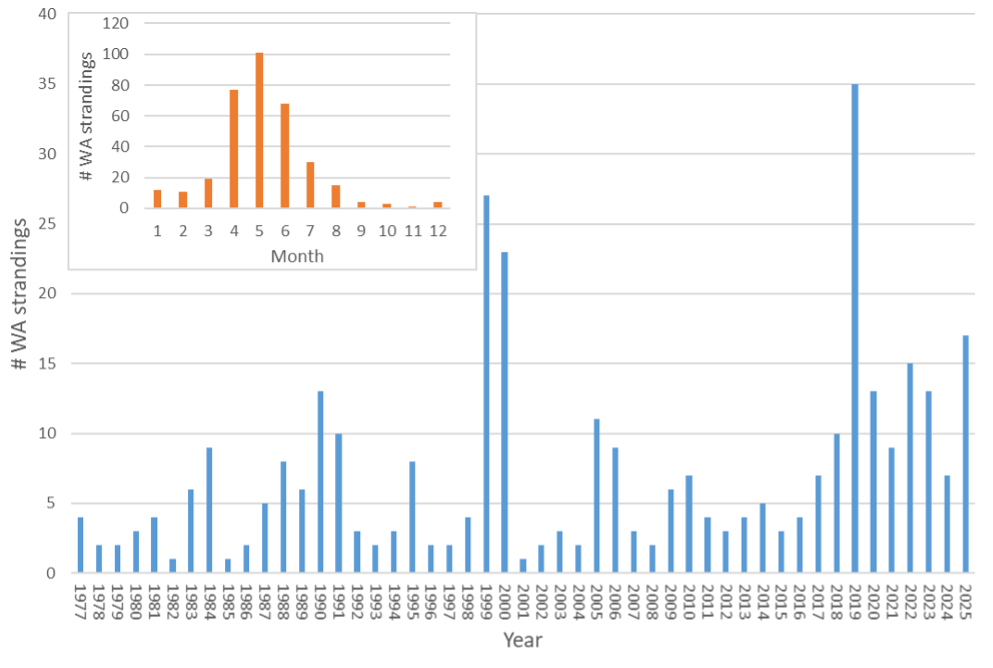
The gray whale stranding record for Washington provides one of the longest stranding time series with consistent effort along the entire migration route for the E North Pacific population (Figure 3). The 345 strandings in Washington clearly shows the two declared unusual mortality events as well as a third period (1990-91) which was not widely recognized as a mortality event but closely matches a third period during which the gray whale population declined dramatically (Stewart et al., 2023). The 2025 Washington strandings (17) is the fourth highest number of strandings in a year in the time series even though the UME was officially closed in 2023 and the gray whale population is half what it was just 10 years ago.
Migration stragglers
In spring and sometimes in December, particularly in years with high mortality, gray whales wander into the Salish Sea and show up in unusual areas not known as productive gray whale feeding areas. In 1984, an elevated number of gray whales came into Puget Sound where many died and created a concern about toxic exposure from feeding on contaminated sediments in Puget Sound that was sensationalized by the media (Calambokidis 1992). Most of these animals were in poor nutritional condition and many appeared in a debilitated state prior to dying. In one case, an adult swam directly into the side of a stationary Coast Guard vessel, apparently oblivious to its surroundings.
The spring timing of most of these incidents suggests these whales are breaking off from the migration of the overall E North Pacific population. During spring these whales would be near the end of their seasonal fast. Those that had not built up adequate fat reserves to make it through the winter fasting would be in a precarious nutritional state and in a desperate search for areas to feed. Often, these whales can be seen going through the motions of feeding in areas where feeding is not productive. We have documented many of these whales ending up dead, some with unusual debris in their stomachs including wood chips, rocks, and sometimes, human garbage. One whale that tried to feed off West Seattle and later died had plastic bags, juice containers, sweatpants, and a golf ball, among other items in its stomach (Cascadia Research, Unpublished data).
Sounders gray whales
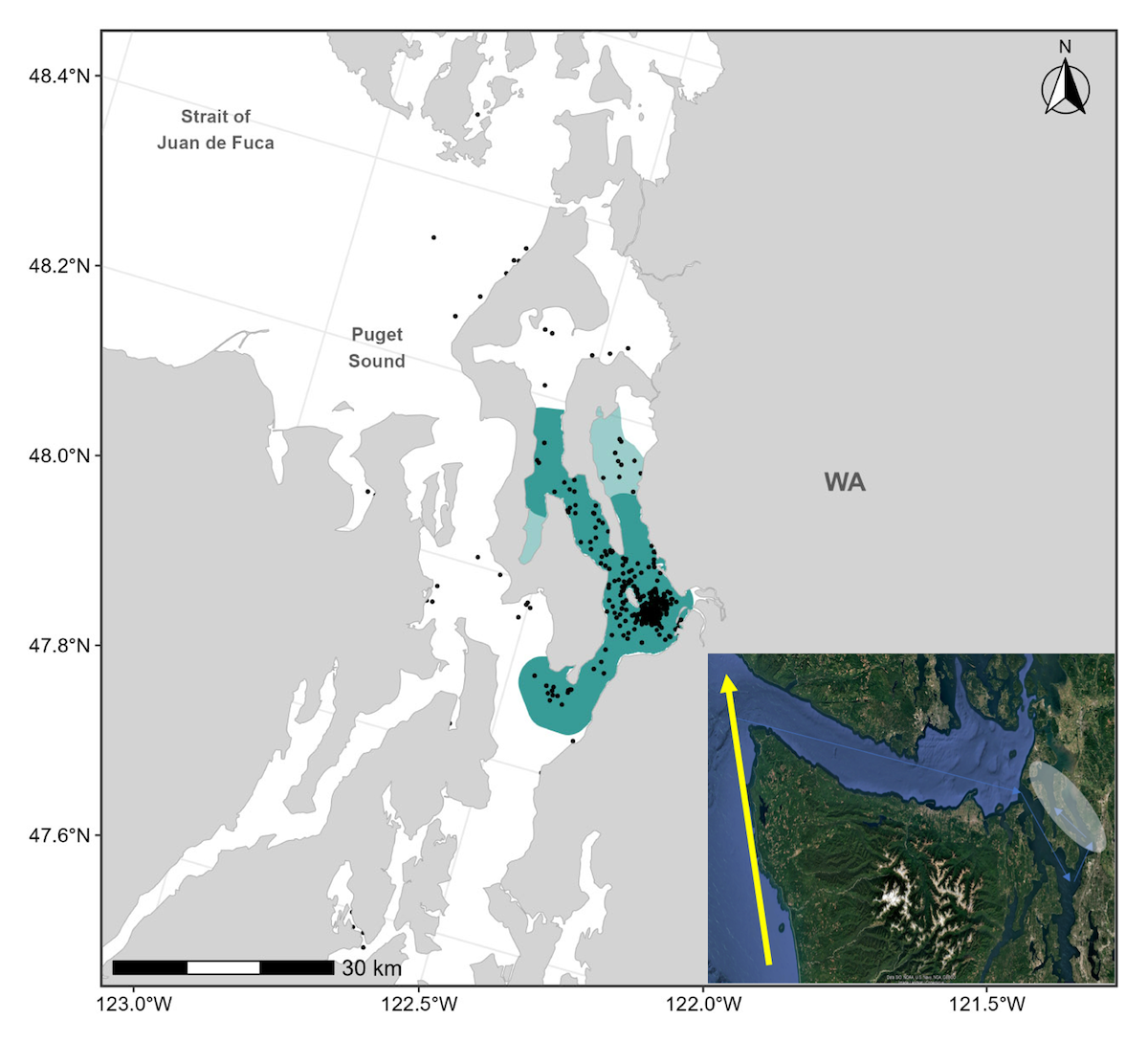
Annually, a small group of gray whales breaks off from its northern migration and feeds in northern Puget Sound. While gray whales are known to feed on herring spawn or other prey found along their migration route, the Sounders detour of over 150 km from their usual migratory path to feed (Figure 4). The loyalty and regular return of these animals to the small yet dependable areas around Whidbey and Camano Islands over more than 35 years has been remarkable. The six individuals that were first documented in 1990 and 1991 have continued to return annually, and new whales have joined the Sounders, mostly during waves between the years of 1999-2000 and 2019-2023 (Figure 5) (Calambokidis et al., 1992). Using a very high-risk feeding strategy, these whales have learned to use incoming and high tides to access highly nutritious ghost shrimp in the intertidal zone.
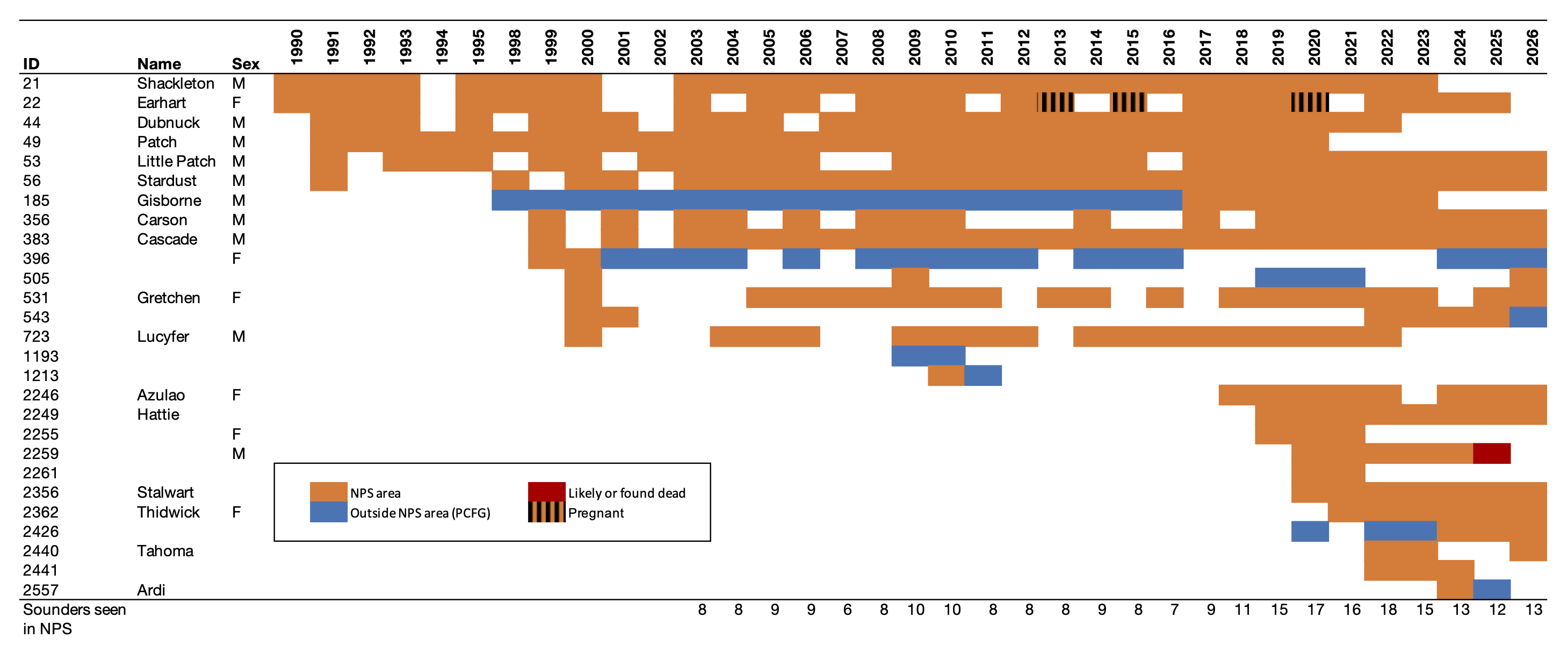
Each period where new whales have joined other Sounders has coincided with periods of elevated gray whale deaths, suggesting these whales may have been looking for other areas to feed in years of nutritional stress. This is similar to the migration stragglers described earlier but represent whales that were successful in finding a productive area to feed. One Sounder (CRC-44, Dubnuk) demonstrated this. He was first identified 8 times on 7 different days from 6 March to 16 April 1991 in southern Puget Sound seemingly searching for areas to feed. After joining other Sounders later that season in northern Puget Sound, he was seen hundreds of times over the next 32 years before he was suspected to have died in 2020.
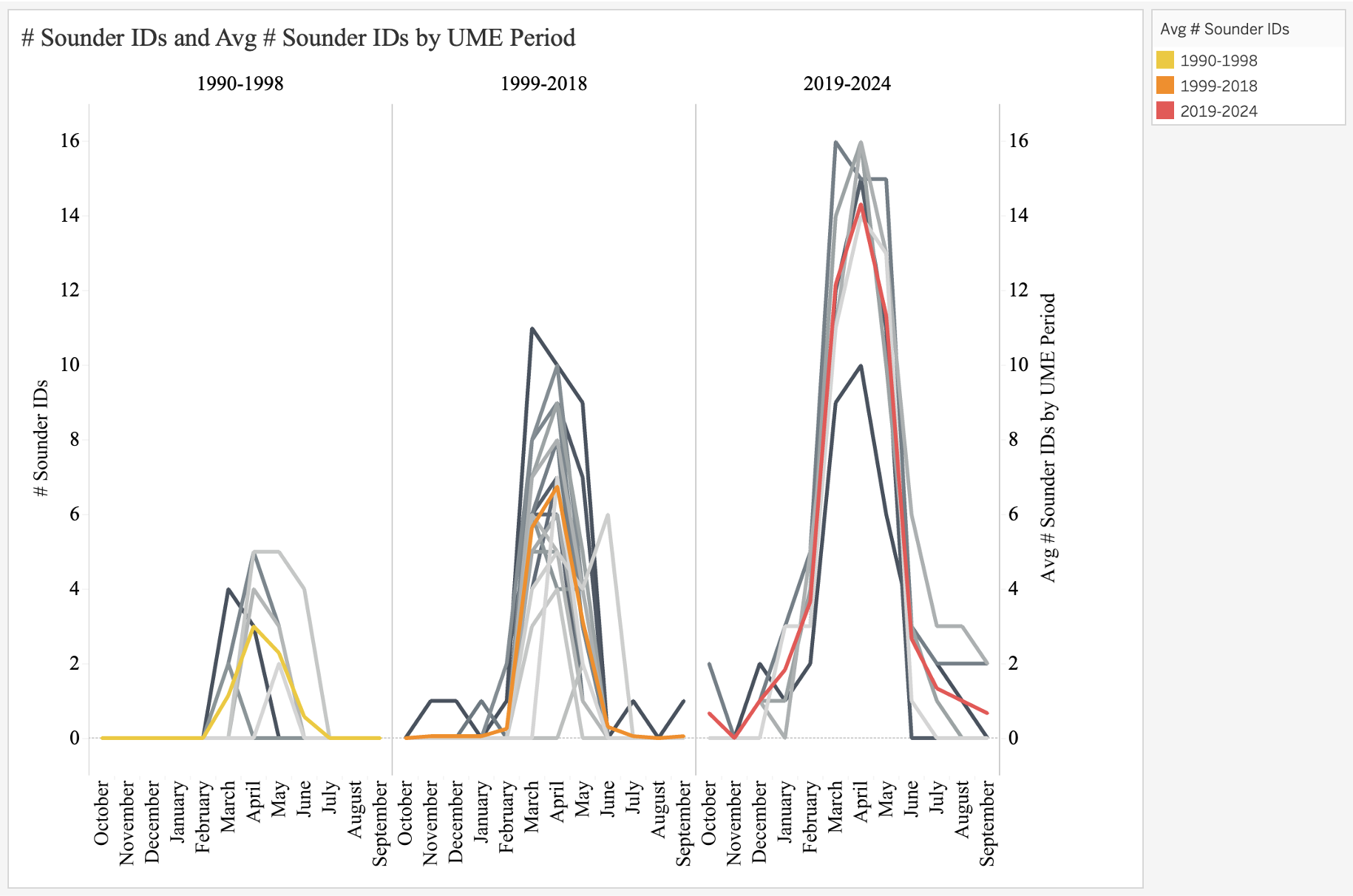
As the number of Sounder whales has increased over the years, so has the duration they have stayed (Figure 6). While Sounder gray whales are primarily present from March to May, in recent years and since the start of the most recent UME, they have increasingly extended their stays in Puget Sound. In all these cases, the whales stayed through the spring, apparently foregoing migration to Mexico. These early and extended stays have included:
- Early arrival first seen starting in 2020 when CRC 53, nicknamed “Little Patch” showed up in December 2020 almost three months earlier than normal for Sounders.
- Starting in Winter 2021-22 and extending at last through the Winter of 2025-26, three to five long term Sounders have arrived early (Dec or Jan).
- In the most recent season, five whales showed up in late December 2025 and early January 2026 including three of the long term Sounders (CRC 22, 53, and 531) and two newer (CRC 2246 and 2362), four of these five are known females.
- One whale (CRC 2440) stayed in North Puget Sound almost continuously from January 2022 to May 2023 before leaving the area for several years and returning in December 2025.
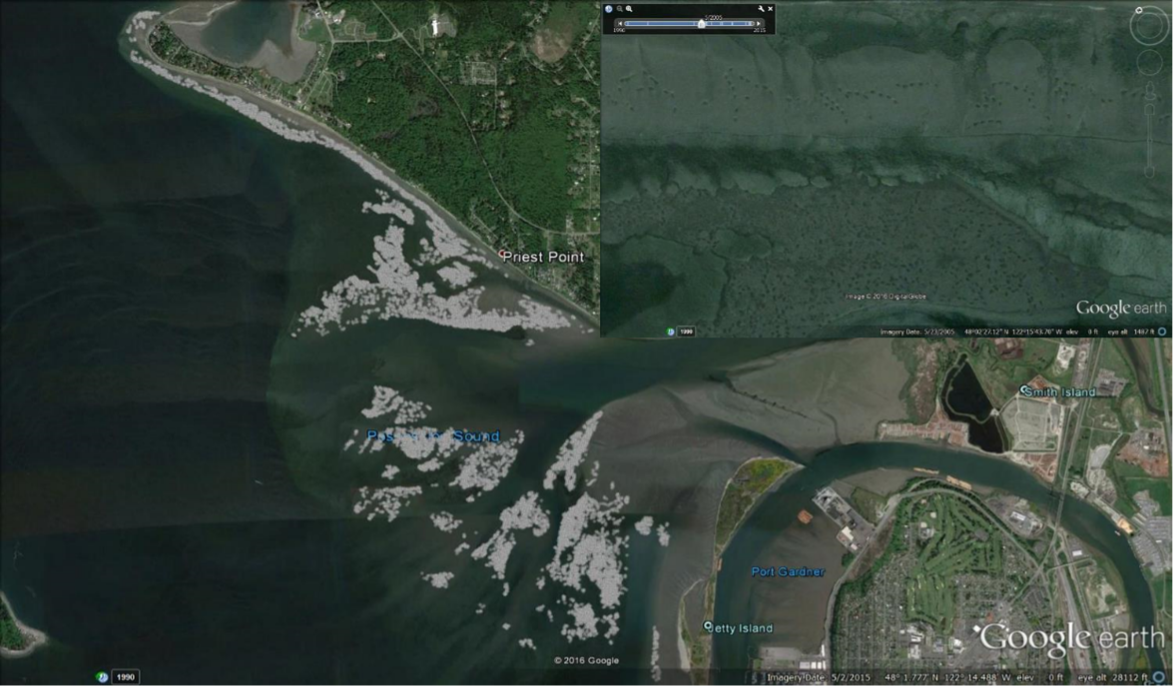
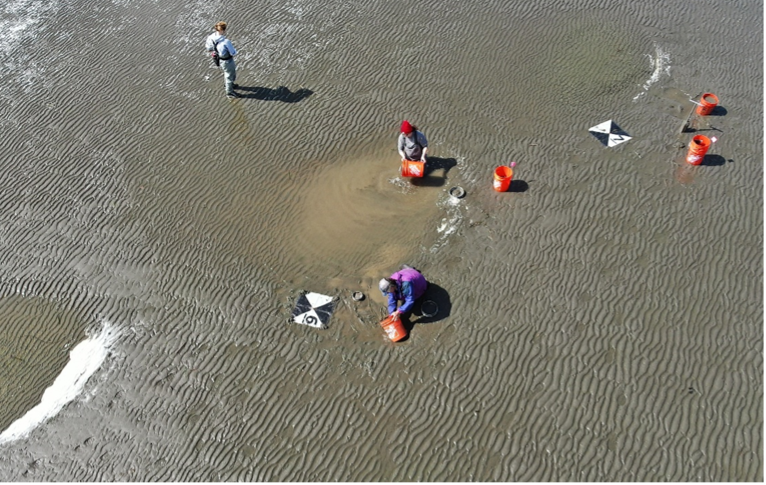
A characteristic behavior of the Sounder gray whales is their extensive feeding at higher tidal levels on dense beds of ghost shrimp in the shallow intertidal. While gray whales are surprisingly versatile and adaptive feeders, they are best known for their ability to suction feed on dense aggregations of small crustacean invertebrates called amphipods that live on the seafloor on the continental shelves of Arctic seas. Exclusive to the Sounders, this involves feeding in extremely shallow intertidal waters at high tide (mean depth of 2.5m; Clayton et al. In Prep) and which are completely exposed at lower tides (Figure 7). This puts them at high risk of stranding and requires navigating out before the tide drops because some key foraging areas are located up to 3 km from safe deep waters. While foraging, these individuals leave impressions of their bodies in the fine sediment (“pits”), that are then exposed during low enough tides. These pits were first described in the early 1990s using aerial imagery by Laurie Weitkamp, a master’s student at the University of Washington who was studying ghost shrimp in northern Puget Sound (Weitkamp et al., 1992). More recently, Stanford PhD student Hannah Clayton has been using drones and cutting-edge photogrammetric processes to remotely study the size, shape, and occurrence of these feeding pits (Figure 8). Tens of thousands of these pits are visible in Google Earth satellite images taken at low tide (Harrison et al., In Prep). These low tide ghost shrimp feeding areas have been remarkably consistent over the more than 35 years that the Sounders have been using this area (Rueda et al., In Prep).
Concern about potential competition for shrimp between gray whales and the small commercial fishery that exists in northern Puget Sound resulted in assessment of ghost shrimp abundance by the Department of Natural Resources and the Washington Department of Fish and Wildlife, who manage the fishery, in 2015 and 2016. Results suggested that the standing stock of ghost shrimp was considerably higher than either the harvest or the take by gray whales. Since these assessments, the number of Sounder gray whales and the duration they spend feeding here, have both increased. Hannah Clayton’s PhD dissertation aims to better understand the impact increased gray whale foraging has on local shrimp populations, the energetic value of these shrimp to these whales, and how these interfacing dynamics relate to changing climates and their resilience as a species. Since 2023, ongoing field efforts aimed at estimating shrimp abundance and the amount of prey consumed by these whales has occurred (Figure 8) with the support of numerous volunteers, students, and organizations such as CRC and the Tulalip Tribe. Preliminary results seem to indicate that ghost shrimp numbers in the northern Puget Sound are remarkably similar to those calculated nearly 10 years ago despite increased foraging. They also indicate that the shrimp themselves are comparable in nutritional value to other species gray whales forage on elsewhere in their range (Clayton et al., In Prep; Green et al., In Prep).
Photographs taken by Unmanned Aircraft Systems (UAS) show that Sounder gray whales dramatically improve in body condition while feeding in northern Puget Sound (Durban & Fearnbach et al., In Prep). The reliability of the prey resource and the nutritional value of this feeding area are likely why the Sounder gray whales have shown remarkable survival over the 35 years they have been studied, despite the high mortality experienced by East North Pacific (ENP) gray whales overall during several recent periods.
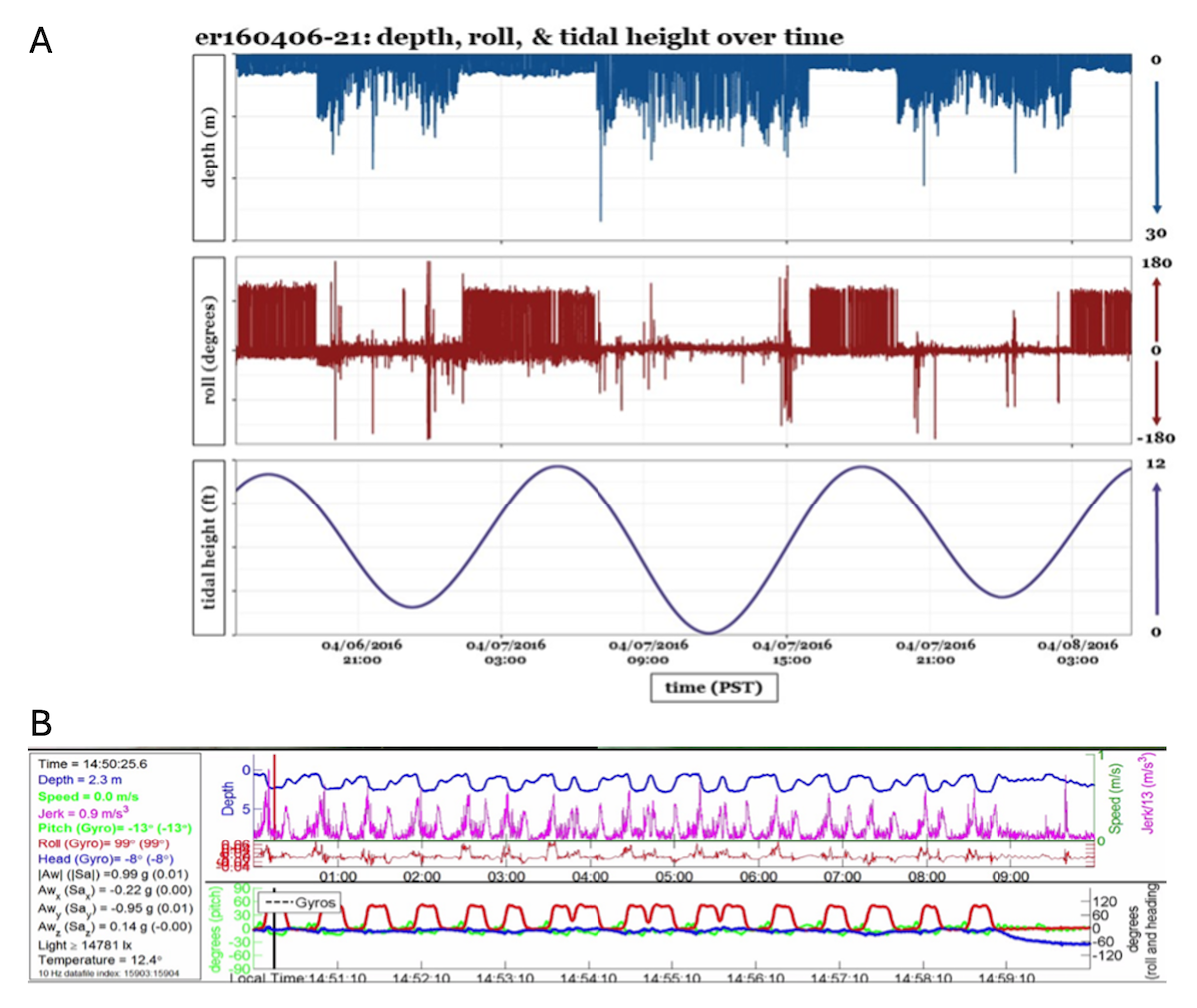
Over 40 suction-cup-attached tags were deployed on Sounder gray whales from 2016 to 2024, revealing that these whales almost exclusively feed at high tide periods in extremely shallow waters (2-3 m; Figure 9). Suction cup videos showed little evidence of feeding in deeper water. Even where whales were spending extensive time “milling” in other areas, which we thought could have been areas they were feeding, the tags revealed they were mostly interacting with each other or lying on the bottom and not feeding. Preliminary results from tag data analyses demonstrate that these whales feed mostly during tidal levels over 4.5 ft and in shallow waters (mean 2.5m), with a large portion of feeding occurring on the Snohomish Delta (Clayton et al., In Prep).
Pacific Coast Feeding Group
One of the better-studied subpopulations of gray whales feeds from spring through fall in the Pacific Northwest extending into the Salish Sea. These whales that travel in winter to breed in Mexico with other ENP gray whales, are considered by some to be a distinct population but this has been debated. It has become more controversial associated with the proposed resumption of historical whaling by the Makah Tribe. Their uncertain status has led to some controversy even around what to call this group though many have settled on the neutral Pacific Coast Feeding Group or PCFG, which we will use here. While the occurrence of out of season or summer gray whales in the Pacific Northwest have been reported in early literature, it was not until the studies of Jim Darling off the west coast of Vancouver Island in the 1970s that it became clear this was a stable group of animals that apparently did not make the migration to more northern feeding areas (Darling 1984).
Starting in 1986, Cascadia began a catalog of PCFG whales seen off the northern Washington Coast and in the Salish Sea. In the late 1990s this was expanded to become a large collaborative effort supported by NOAA. One of the key contributors to this larger collaboration on PCFG gray whales was Brian Gisborne who in 1998 started photographing and documenting PCFG gray whales along the West Coast Trail off SW Vancouver Island, an area of high whale density. Taking photos on almost a daily basis as he ferried hikers and others along this stretch of coast, Brian became the leading contributor to the collaborative database. In 2020 the PCFG Consortium was formed to advance research and collaboration among researchers.
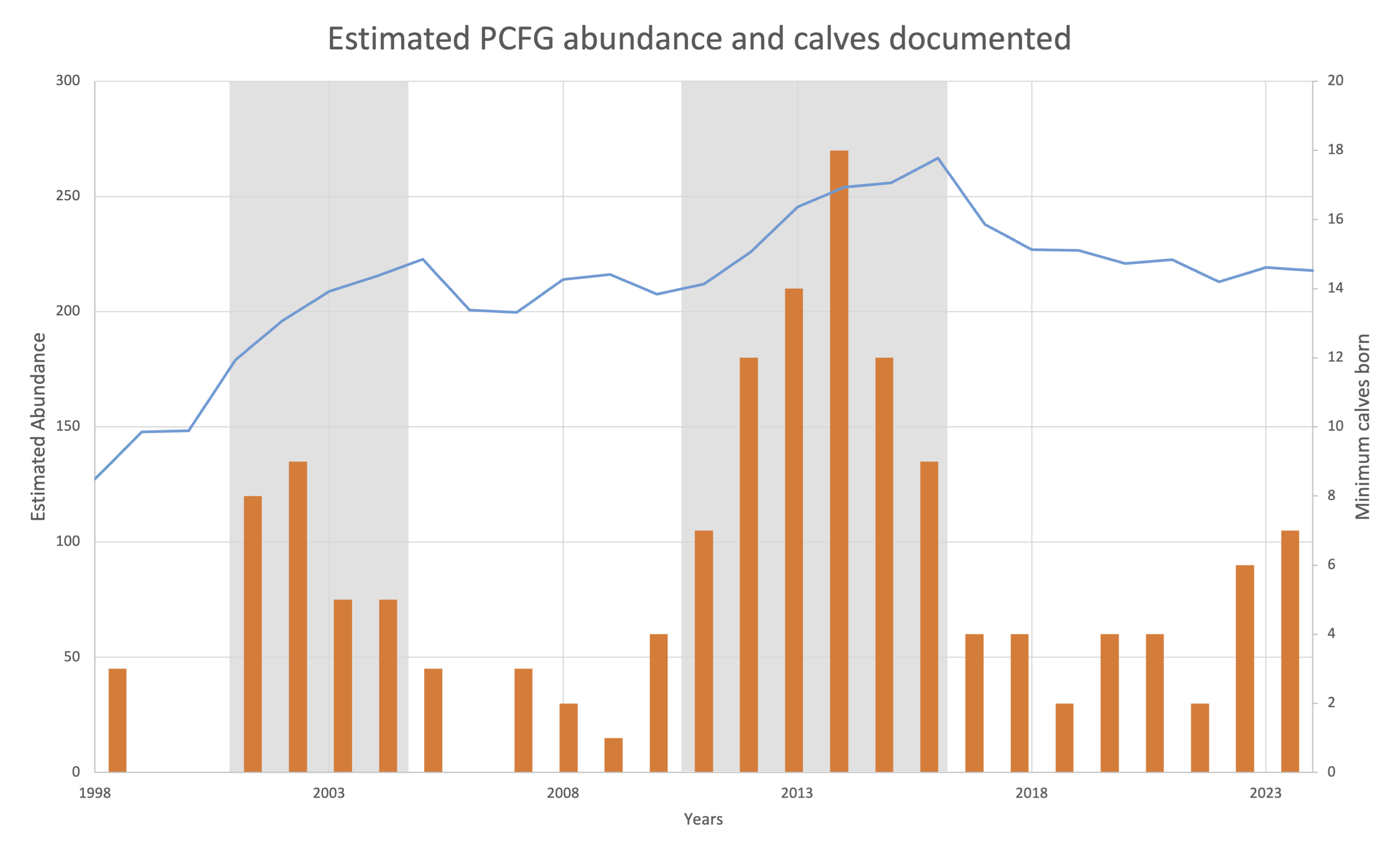
Estimates of the PCFG have been consistent over the last 20 years and generally have stayed between 200 and 250 whales (Figure 10). Increasing evidence has supported treating PCFG whales as a distinct unit including: 1) the consistent return of individuals based on photo-ID, 2) differences in mitochondrial DNA between PCFG whales and other gray whales (Frasier et al., 2011, Lang et al., 2014), 3) evidence of internal recruitment to this group with calves of PCFG mothers becoming PCFG whales (Calambokidis and Perez 2017a), and 4) size differences between PCFG whales and other gray whales (Bierlich et al., 2023). So far, both the IWC and Canada have treated PCFG whales as a distinct unit, but in the US, NOAA has not (Weller et al., 2013).
Western gray whales
While most of the whales migrating past the Pacific Northwest, including the Salish Sea, are part of the eastern North Pacific population, many gray whales from the small endangered western population that feed in waters off Russia also migrate past the Washington coast. This was a big surprise first dramatically documented after some Western gray whales were satellite tagged in the hope of identifying the areas they used for breeding. Instead of heading to waters off China as hypothesized, they were found to migrate from Russia to the Mexico wintering grounds used by ENP gray whales (Mate et al., 2015). The Western gray whale population is considered Endangered under the US ESA since it was once far more numerous and is currently limited to a few hundred individuals documented feeding off Russia, mostly near Sakhalin Island. Additionally, genetic studies of these whales showed they appear to be distinct from those feeding in the eastern North Pacific (LeDuc et al., 2002, Lang et al., 2014).
After the surprising finding with an initial satellite tagged whale, an increasing number of individual photo-IDs matches of these “Western” gray whales were also found to those documented off the coast of Washington and southern British Columbia (Weller et al., 2012, Cascadia unpublished data). While some of these whales appeared to linger for periods of days on migration, they do not appear to spend extended periods in the Pacific Northwest and are not known to enter the Salish Sea.
Threats
Gray whales face risks from entanglements, ship strikes, resumption of whaling, underwater noise, increasing predation from killer whales, and changing climatic conditions that may be affecting their prey in the Arctic.
The most dramatic factors threatening the overall eastern North Pacific population have been prey-related, causing high mortality, declining population, and low calf production. While the exact factors behind this are not well understood, this has gone from an issue that impacted the population for short periods and from which it bounced back repeatedly (Stewart et al., 2023), to one that has now continued and extended past these short-term events. It has left the population at the lowest level in more than 50 years, and calf production at the lowest level since monitoring began. These mortalities primarily reflect animals dying from starvation and poor nutritional condition, something seen in both the strandings in Washington and elsewhere in their range. While it is tempting to attribute this simplistically to the dramatic decrease in ice cover in the Arctic, the interplay of factors is more complicated because previous research had also identified how gray whales also benefited in the short term from decreased ice cover.
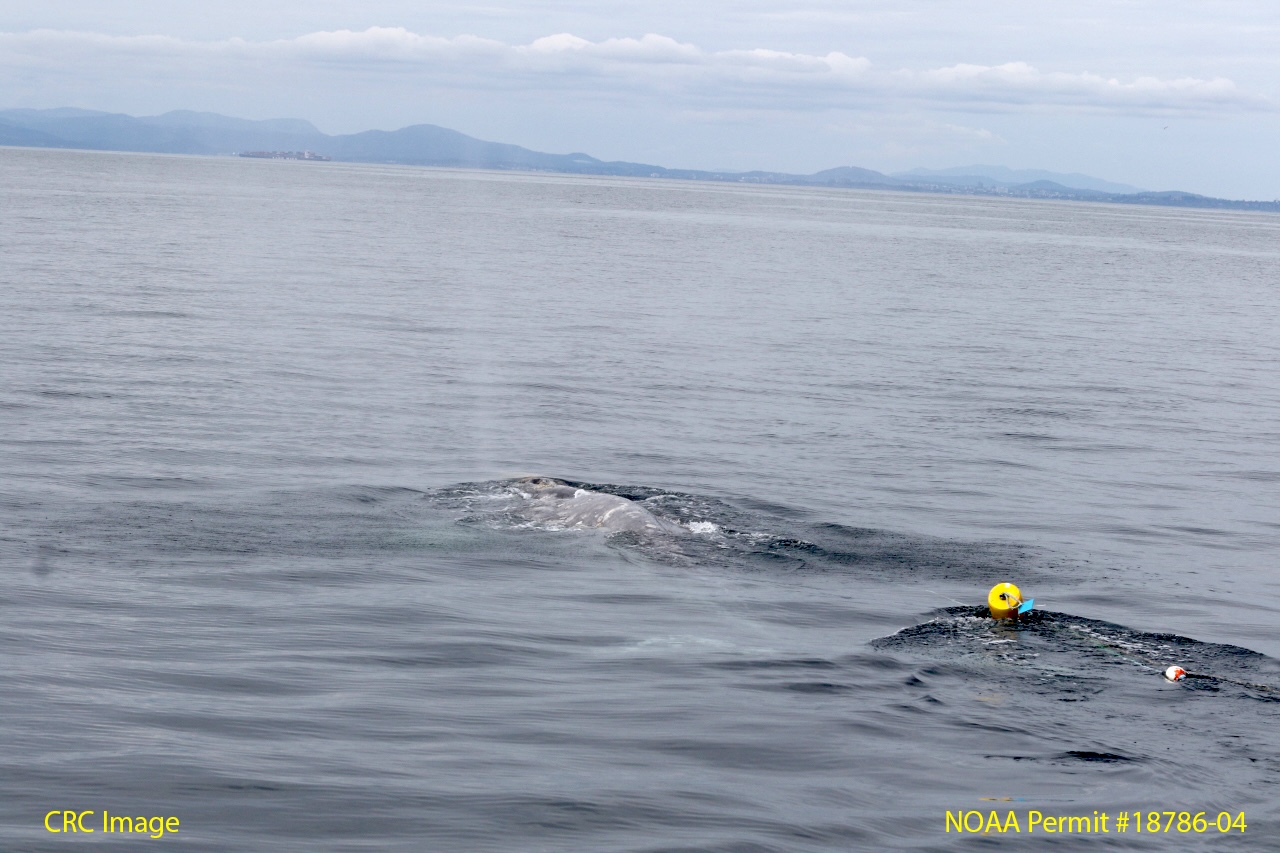
Entanglements in fishing gear represent a source of mortality for gray whales along with other large whale species. These entanglements can occur all along the range of the gray whale including Puget Sound and the Salish Sea (Figure 11). When the overall ENP gray whale population is facing major nutritional challenges and elevated mortality, it sometimes results in more gray whales spending time and coming into Puget Sound and increasing their risk of entanglement.
Examination of dead gray whales has revealed some animals killed by blunt force trauma consistent with vessel strikes. There have been observed collisions between high-speed recreational boats and some of the Sounders whales that use high traffic areas of Puget Sound. This may be less of an issue for gray whales than for some other large whale species such humpback, blue, and fin whales that may be more susceptible to vessel strikes.
Gray whales appear to be impacted by vessel approaches. Lemos et al., (2022) reported elevated levels of stress hormones in PCFG gray whales off Oregon related to higher levels of vessel traffic. Pavlinovic and Calambokidis (2023) reported elevated metrics of speed, course deviations, and breath rates when vessels were present.
The Makah Tribe has proposed a resumption of its historical hunt of gray whales in the late 1990s after gray whales were delisted under the ESA. One gray whale was killed in a Makah hunt in 1999 and another in an unsanctioned hunt several years later. After NOAA’s permission to allow the hunt was challenged in court, there has been a long process including under NEPA and the MMPA to provide authorization for this hunt to resume. The current management plans calls for small numbers of either migrating whales from the large population or a PCFG whale to be taken in alternating years.
Gray whales experience predation from killer whales primarily targeting younger calves. Forty-two percent of gray whales sampled had rake mark scars indicating they had survived an attack by killer whales (Corsi et al., 2022). While most documented attacks have been on gray whale calves, in recent years several stranded non-calf gray whales in Washington State showed signs of having been recently attacked by killer whales.
References cited
Bierlich, K. C., Kane, A., Hildebrand, L., Bird, C. N., Fernandez Ajo, A., Stewart, J. D., Hewitt, J., Hildebrand, I., Sumich, J., & Torres, L. G. (2023). Downsized: Gray whales using an alternative foraging ground have smaller morphology. Biology Letters, 19(8), Article 20230043.
Calambokidis, J. (1992). Gray whale deaths in Puget Sound: A perspective. Puget Sound Notes, 28, 5–7.
Calambokidis, J., Darling, J. D., Deecke, V., Gearin, P., Gosho, M., Megill, W., Tombach, C. M., Goley, D., Toropova, C., & Gisborne, B. (2002). Abundance, range and movements of a feeding aggregation of gray whales (Eschrichtius robustus) from California to southeastern Alaska in 1998. Journal of Cetacean Research and Management, 4(3), 267–276.
Calambokidis, J., Evenson, J. R., Chandler, T. E., & Steiger, G. H. (1992). Individual identification of gray whales in Puget Sound in 1991. Puget Sound Notes, 28, 1–4.
Calambokidis, J., Kratofil, M. A., Palacios, D. M., Lagerquist, B. A., Schorr, G. S., Hanson, M. B., Baird, R. W., Forney, K. A., Becker, E. A., Rockwood, R. C., & Hazen, E. L. (2024). Biologically important areas II for cetaceans within U.S. and adjacent waters – West Coast region. Frontiers in Marine Science, 11, Article 1283231. https://doi.org/10.3389/fmars.2024.1283231
Calambokidis, J., Laake, J., & Perez, A. (2017). Updated analysis of abundance and population structure of seasonal gray whales in the Pacific Northwest, 1996–2015 (IWC Report SC/A17/GW/05). International Whaling Commission.
Calambokidis, J., & Perez, A. (2017a). Sightings and follow up of mothers and calves in the PCFG and implications for internal recruitment (IWC Report SC/A17/GW/04). International Whaling Commission.
Calambokidis, J., & Perez, A. (2017b). Association of PCFG gray whales on migration (IWC Report SC/A17/GW/02). International Whaling Commission.
Calambokidis, J., Steiger, G. H., Curtice, C., Harrison, J., Ferguson, M. C., Becker, E., DeAngelis, M., & Van Parijs, S. M. (2015). Biologically important areas for selected cetaceans within U.S. waters – West Coast region. Aquatic Mammals, 41(1), 39–53. https://doi.org/10.1578/AM.41.1.2015.39
Clayton, H., Cade, D. E., Burnham, R., Calambokidis, J., & Goldbogen, J. (2023). Acoustic behavior of gray whales tagged with biologging devices on foraging grounds. Frontiers in Marine Science, 10, Article 1111666. https://doi.org/10.3389/fmars.2023.1111666
Colson, K. M., Pirotta, E., New, L., Cade, D. E., Calambokidis, J., Bierlich, K. C., Bird, C. N., Fernandez Ajó, A., Hildebrand, L., Trites, A. W., & Torres, L. G. (2024). Using accelerometry tags to quantify gray whale foraging behavior. Marine Mammal Science, Article e13210. https://doi.org/10.1111/mms.13210
Corsi, E., Calambokidis, J., Flynn, K. R., & Steiger, G. H. (2022). Killer whale predatory scarring on mysticetes: A comparison of rake marks among blue, humpback, and gray whales in the eastern North Pacific. Marine Mammal Science, 38(1), 223–234. https://doi.org/10.1111/mms.12863
Eguchi, T., Lang, A., & Weller, D. (2024). Abundance of eastern North Pacific gray whales 2023/2024 (NOAA Technical Memorandum NMFS-SWFSC-695). U.S. Department of Commerce. https://doi.org/10.25923/n5qa-0y54
Eguchi, T., Lang, A., & Weller, D. (2025). Abundance of eastern North Pacific gray whales 2024/2025 (NOAA Technical Memorandum NMFS-SWFSC-724). U.S. Department of Commerce. https://doi.org/10.25923/jqea-s505
Frasier, T. R., Koroscil, S. M., White, B. N., & Darling, J. D. (2011). Assessment of population substructure in relation to summer feeding ground use in the eastern North Pacific gray whale. Endangered Species Research, 14(1), 39–48.
Krahn, M. M., Ylitalo, G. M., Burrows, D. G., Calambokidis, J., Moore, S. E., Gosho, M., Gearin, P., Plesha, P. D., Brownell, R. L., Jr., Blokhin, S. A., Tilbury, K. L., Rowles, T., & Stein, J. E. (2001). Organochlorine contaminant concentrations and lipid profiles in eastern North Pacific gray whales (Eschrichtius robustus). Journal of Cetacean Research and Management, 3(1), 19–29.
Lang, A., Calambokidis, J., Scordino, J., Pease, V. L., Klimek, A., Burkanov, V. N., Gearin, P., Litovka, D. I., Robertson, K. M., Mate, B. R., Jacobsen, J. K., & Taylor, B. L. (2014). Assessment of genetic structure among eastern North Pacific gray whales on their feeding grounds. Marine Mammal Science. https://doi.org/10.1111/mms.12129
Lang, A., Eguchi, T., & Weller, D. (2024). Eastern North Pacific gray whale calf production 1994–2024 (NOAA Technical Memorandum NMFS-SWFSC-707). U.S. Department of Commerce. https://doi.org/10.25923/j01w-ja77
Lang, A., Eguchi, T., & Weller, D. (2025). Eastern North Pacific gray whale calf production 1994–2025 (NOAA Technical Memorandum NMFS-SWFSC-725). U.S. Department of Commerce. https://doi.org/10.25923/83br-pk61
LeDuc, R. G., Weller, D. W., Hyde, J., Burdin, A. M., Rosel, P. E., Brownell, R. L., Jr., Wursig, B., & Dizon, A. E. (2002). Genetic differences between western and eastern gray whales (Eschrichtius robustus). Journal of Cetacean Research and Management, 4, 1–5.
Lemos, L. S., Haxel, J. H., Olsen, A., Burnett, J. D., Smith, A., Chandler, T. E., Nieukirk, S. L., Larson, S. E., Hunt, K. E., & Torres, L. G. (2022). Effects of vessel traffic and ocean noise on gray whale stress hormones. Scientific Reports, 12(1), Article 18580. https://doi.org/10.1038/s41598-022-14510-5
Mate, B. R., Ilyashenko, V. Y., Bradford, A. L., Vertyankin, V. V., Tsidulko, G. A., Rozhnov, V. V., & Irvine, L. M. (2015). Critically endangered western gray whales migrate to the eastern North Pacific. Biology Letters, 11(4), Article 20150071.
Melica, V., Atkinson, S., Calambokidis, J., Gendron, D., Lang, A., & Scordino, J. (2022). Naturally stressed? Glucocorticoid profiles in blubber of blue and gray whales in response to life history parameters. Marine Mammal Science, 38, 1524–1548. https://doi.org/10.1111/mms.12954
Melica, V., Atkinson, S., Calambokidis, J., Lang, A., Scordino, J., & Mueter, F. (2021). Application of endocrine biomarkers to update information on reproductive physiology in gray whale (Eschrichtius robustus). PLOS ONE, 16(8), Article e0255368. https://doi.org/10.1371/journal.pone.0255368
Norman, S. A., Bowlby, C. E., Brancato, M. S., Calambokidis, J., Duffield, D., Gearin, P. J., Gornall, T. A., Gosho, M. E., Hanson, B., Hodder, J., Jeffries, S. J., Lagerquist, B., Lambourn, D. M., Mate, B., Norberg, B., Osborne, R. W., Rash, J. A., Riemer, S., & Scordino, J. (2004). Cetacean strandings in Oregon and Washington between 1930 and 2002. Journal of Cetacean Research and Management, 6(1), 87–99.
Osborne, R., Calambokidis, J., & Dorsey, E. M. (1988). A guide to marine mammals of Greater Puget Sound. Island Publishers.
Pavlinovic, A., & Calambokidis, J. (2023). Observations of gray whales and other cetaceans in the vicinity of Naval Station Everett in North Puget Sound and gray whale's responses to vessel's presence (Report prepared for Contract N4425522P0002). U.S. Navy.
Pirotta, E., Bierlich, K. C., New, L., Hildebrand, L., Bird, C. N., Fernandez Ajó, A., & Torres, L. G. (2024). Modeling individual growth reveals decreasing gray whale body length and correlations with ocean climate indices at multiple scales. Global Change Biology, 30(6), Article e17366. https://doi.org/10.1111/gcb.17366
Pirotta, E., Fernandez Ajó, A., Bierlich, K. C., Bird, C. N., Buck, C. L., Haver, S. M., Haxel, J. H., Hildebrand, L., Hunt, K. E., Lemos, L. S., New, L., & Torres, L. G. (2023). Assessing variation in faecal glucocorticoid concentrations in gray whales exposed to anthropogenic stressors. Conservation Physiology, 11(1). https://doi.org/10.1093/conphys/coad082
Raverty, S., Duignan, P., Greig, D., Huggins, J. L., Huntington, K. B., Garner, M., Calambokidis, J., Cottrell, P., Danil, K., D'Alessandro, D., Duffield, D., Flannery, M., Gulland, F. M. D., Halaska, B., Lambourn, D. M., Lehnhart, T., Urbán Ramirez, J., Rowles, T., Rice, J., … Fauquier, D. (2024). Gray whale (Eschrichtius robustus) post-mortem findings from December 2018 through 2021 during the unusual mortality event in the eastern North Pacific. PLOS ONE, 19(3), Article e0295861. https://doi.org/10.1371/journal.pone.0295861
Stewart, J. D., Joyce, T. W., Durban, J. W., Calambokidis, J., Fauquier, D., Fearnbach, H., Grebmeier, J. M., Lynn, M., Manizza, M., Perryman, W. L., Tinker, M. T., & Weller, D. W. (2023). Boom-bust cycles in gray whales associated with dynamic and changing Arctic conditions. Science, 382(6667), 207–211. https://doi.org/10.1126/science.adi1847
Warlick, A. J., Huggins, J. L., Lambourn, D. M., Duffield, D. A., D'Alessandro, D. N., Rice, J. M., Calambokidis, J., Hanson, M. B., Gaydos, J. K., Jeffries, S. J., Olson, J. L., Scordino, J. J., Akmajian, A. M., Klope, M., Berta, S., Dubpernell, S., Carlson, B., Riemer, S., Hodder, J., … Norman, S. A. (2022). Cetacean strandings in the U.S. Pacific Northwest 2000–2019 reveal potential linkages to oceanographic variability. Frontiers in Marine Science, 9, Article 758812. https://doi.org/10.3389/fmars.2022.758812
Weller, D. W., Bettridge, S. O. M., Brownell, R. L., Laake, J. L., Moore, J. E., Rosel, P. E., Taylor, B. L., & Wade, P. R. (2013). Report of the National Marine Fisheries Service gray whale stock identification workshop (NOAA Technical Memorandum NOAA-TM-NMFS-SWFSC-507). National Oceanic and Atmospheric Administration.
Weller, D. W., Klimek, A., Bradford, A. L., Calambokidis, J., Lang, A. R., Gisborne, B., Burdin, A. M., Szaniszlo, W., Urbán, J., Gomez-Gallardo Unzueta, A., Swartz, S., & Brownell, R. L., Jr. (2012). Movements of gray whales between the western and eastern North Pacific. Endangered Species Research, 18, 193–199.
Acknowledgements
This species profile was produced by the Cascadia Research Collective with partial funding by the Encyclopedia of Puget Sound and the University of Washington Puget Sound Institute through a grant from the National Estuary Program at the Environmental Protection Agency. In-kind support and guidance were provided by the Puget Sound Ecosystem Monitoring Program.