

Untangling chemical names and looking back over 200 years of 6PPD history
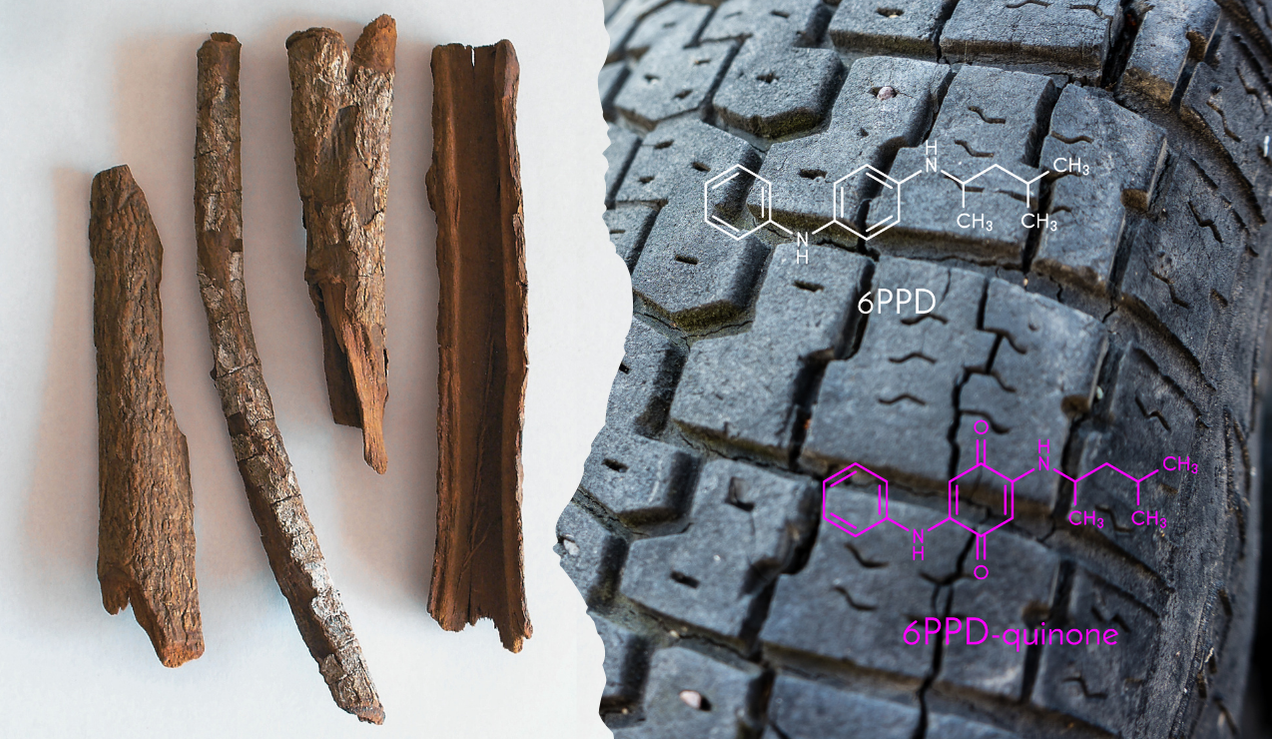
Five and a half years ago, the world was suddenly confronted with the chemical names 6PPD and 6PPD-quinone — a pair of related chemicals that quickly became notorious for their deadly effects on coho and other salmonid species.
Since then, hundreds of scientific papers have evoked these names, as researchers worldwide struggle to determine why 6PPD-quinone (often shortened to 6PPD-Q) can be extremely harmful to some fish while nearly harmless to others.
The history of 6PPD — which logically begins in the early days of the automobile — involves decades of searching for chemicals that would allow car owners to get more mileage out of their tires. Chemicals with “PPD” in their names became central in the effort to protect tires from ozone, a ubiquitous compound that destroys rubber. Now, with the understanding that ozone converts 6PPD to the highly toxic 6PPD-quinone, the search has resumed for a less-poisonous compound that can, hopefully, protect tires as well as 6PPD has done.
As the research advances, the names 6PPD and 6PPD-quinone are becoming familiar to toxicologists and practically anyone concerned about salmon and the environment. What is rarely discussed, however, is what the letters “PPD” stand for, the meaning of the number “6” or how the word “quinone” relates to “quinine,” a traditional medicine used to treat malaria.
The following descriptions examine the history of the chemical, from the origin of its structure to its eventual use as a tire preservative.
The foundation of 6PPD in organic chemistry
The untold story of quinone
It is no accident that quinone, a class of familiar compounds, is just one letter away from quinine, the first effective treatment for malaria and considered by some to be the all-time greatest discovery in herbal medicine. The indigenous people of the Andes of South America used the bark of the cinchona tree for centuries to treat fevers and disease.
By the early 1600s, the medicinal bark was introduced to Europe after doctors found that it could treat malaria. While the bark was certainly an effective treatment, it was caught up in a controversy for a time, according to an article published by the National Institutes of Health. Uncertainty about the treatment may have been caused by impurities in the ground-up bark given to patients.
In 1820, French scientists Pierre-Joseph Pelletier and Joseph-Bienaimé Caventou isolated the active compound found in the cinchona bark. They named it “quinine” from “quina-quina” (meaning bark of barks), the Inca name for the sacred bark of the cinchona tree.
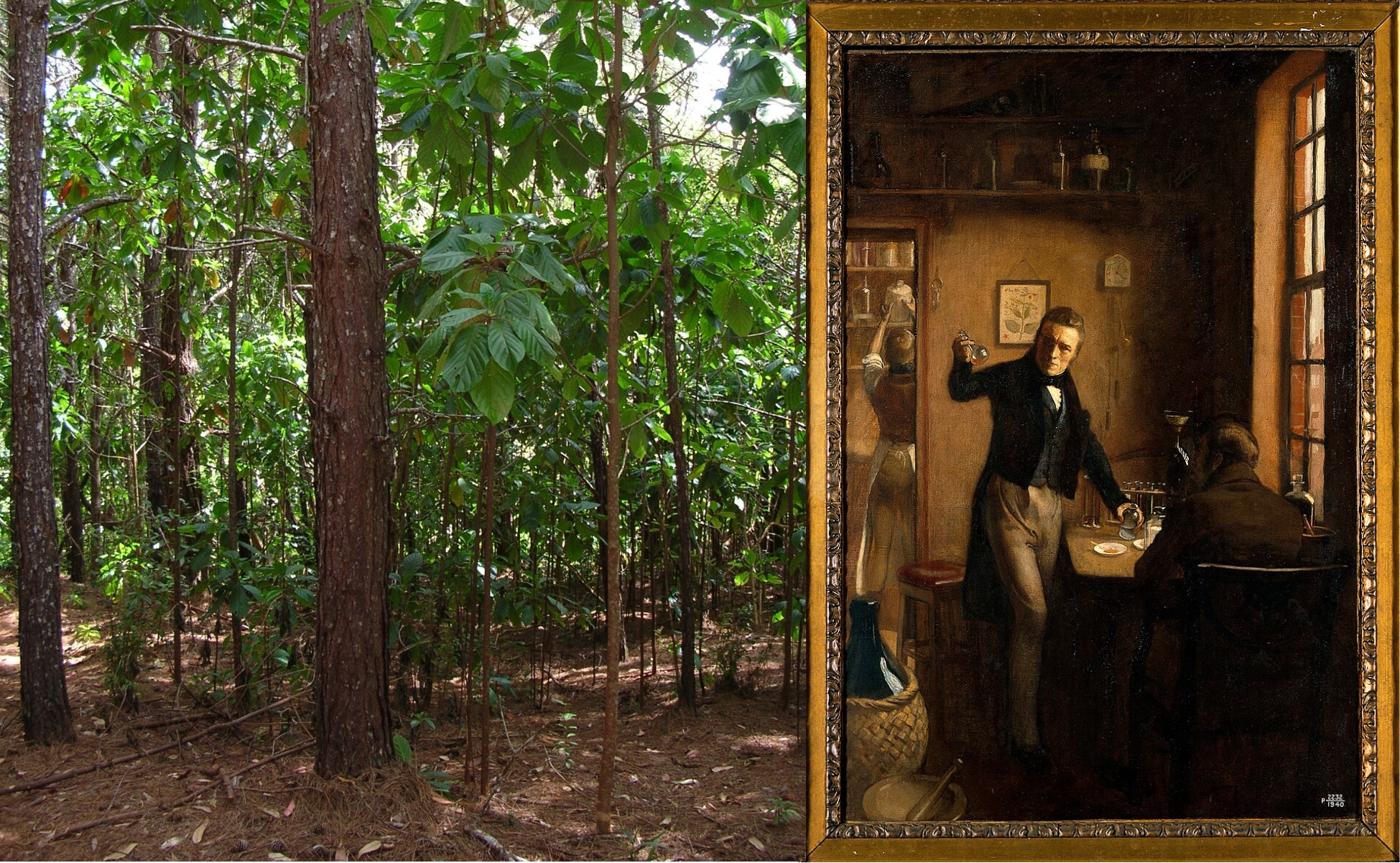
Because the bark was in high demand, chemists raced to synthesize quinine without relying on trees. It was a challenging endeavor, and the quest played an important role in the development of modern organic chemistry, according to a 2005 historical report by two Argentine authors.
Although the word “quinone” is just one letter away from “quinine,” the chemical relationship is more complicated. “Quinone” is wrapped up in the chemistry of the medicinal bark and predates the name “quinine,” according to scientific literature of the early 1800s.
In 1806, 14 years before the French scientists isolated quinine, Louis Nicolas Vauquelin, another French scientist, identified a natural acid in the quinquina bark, using a slight variation of the Inca name.
“Let us give it the name ‘acide kinique’ from the word ‘quinquina,’ until — when it is better known in its nature and its combinations — a better name may be given to it,” Vauquelin said in the original peer-reviewed manuscript. In English, “acide kinique” became “quinic acid.”
Vauquelin became famous for his work on quinic acid and many other discoveries. He did not know, at the time, that a German pharmacist, Friedrich Christian Hofmann, had isolated the same acid from cinchona bark in 1790 and named it “Chinasäure” (“china acid” — no connection to the country). In German, “China” remains the word for cinchona even today.
About 1838, Russian chemist Alexander Voskresensky oxidized quinic acid and obtained a yellow substance. He named it “Chinoyl,” using the ending “yl” on “Chin” to designate an organic “radical.” According to one theory at the time, a radical was considered a chemical building block that would remain stable through chemical changes.
A few years later, by 1844, German chemist Friedrich Wöhler concluded that the yellow substance was instead a complete, neutral molecule. Consequently, he renamed it “Chinon,” the German word corresponding to the English “quinone.”
Wöhler wrote: “The name ‘Chinoyl’ proposed … for this substance cannot be retained, because the ending “yl” is customarily used to designate an organic radical, which Chinon is not. I therefore give preference to the latter name, ‘Chinon.’”
For at least a few years, quinone retained its identity as an individual compound with its pair of double-bonded oxygens attached to a single ring of benzene. But by the 1860s, as chemists expanded their research into larger-ring structures, chemical dictionaries began to consider the quinones as a “class of compounds” with a specific structural pattern.
Thus, what was formerly “quinone” became “benzoquinone,” because it involved a single ring of benzene. There is also “naphthoquinone” involving the double-ringed naphthalene, “anthraquinone” involving the triple-ringed anthrylene, and so on for other ring configurations.
The list of quinones in everyday products today is quite long. While this class of chemicals tends to raise concerns because of their reactive nature, toxicity is a function of their chemical environment. Many are safely used, and some are even essential components of normal biological function.
For example, Coenzyme Q10, known as CoQ10, is a natural antioxidant found in every cell. It fuels cellular energy and protects cells from oxidative damage. Levels naturally decline in older people, especially those taking statin medications. Studies have shown that CoQ10 supplements can help certain people with specific medical conditions.
Phylloquinone (Vitamin K1), which is found in leafy green vegetables, plays a role in blood clotting. Plastoquinone, found in all green plants, is a key component in photosynthesis.
All sorts of dyes also are built from quinones, especially naphthoquinones and anthraquinones. The natural dye Henna, which provides a distinctive red-orange stain, is a naphthoquinone. Brilliant synthetic dyes Alizarin (vibrant red), Disperse Blue 3 and Solvent Orange 57 are all anthraquinones.
Natural herbal laxatives rely on anthraquinone glycosides. Widely used cancer drugs — also anthraquinone derivates — work by disrupting the DNA of cancer cells. Modern treatments for malaria are less often quinine – which is not a quinone at all — and more often drugs like Atovaquone, a highly modified variation of naphthoquinone.
Quinones are NOT found in pure hydrogen peroxide — a familiar chemical used for first-aid, cleaning with oxygen bleaches, teeth whitening and many other functions. But virtually all manufacturing of hydrogen peroxide involves the use of anthraquinones.
The history of 6PPD as a rubber preservative
The evolution of tire chemicals
Even before the invention of the automobile, a self-made chemist, Charles Goodyear, revolutionized the use of rubber and paved the way to modern tires by using chemical additives. The highly successful antiozonant 6PPD came into prominence in the 1960s — about midway through the history of tire chemistry. Many other additives with names like DPPD, IPPD and CPPD have been tried with varying success.
If told completely, the ongoing story of tire chemistry must begin with the earliest use of rubber at least 3,600 years ago. Ancient civilizations in Central America played games with rubber balls on ballcourts of various sizes, according to archeologists who have unearthed ballgame structures and equipment. The Olmec people of Southern Mexico, who predated the Mayans and Aztecs, harvested rubber from the Panama rubber tree (Castilla elastica) and used it to fashion footwear, craft tools and make rubber bands as well as rubber balls.
Europeans were fascinated with the bouncy rubber balls brought back by explorers and scientists in the early 1500s. But rubber became more of a household name after 1770, when British chemist Joseph Priestley recognized that the dried sap from these special trees could “rub out” graphite pencil marks. He named his invention “rubber,” which caught on and became the name for the material itself.
The use of natural rubber was limited by a critical property related to temperature: It becomes soft and sticky in the heat of summer, yet stiff and brittle in the cold of winter. In 1839, Charles Goodyear, living in Wolburn, Mass., made a breakthrough that would alter the course of industry when he accidentally spilled a mixture of raw rubber and sulfur onto a hot stove. The heating created crosslinks to maintain the strength of rubber at all temperatures, a process that became known as vulcanization.
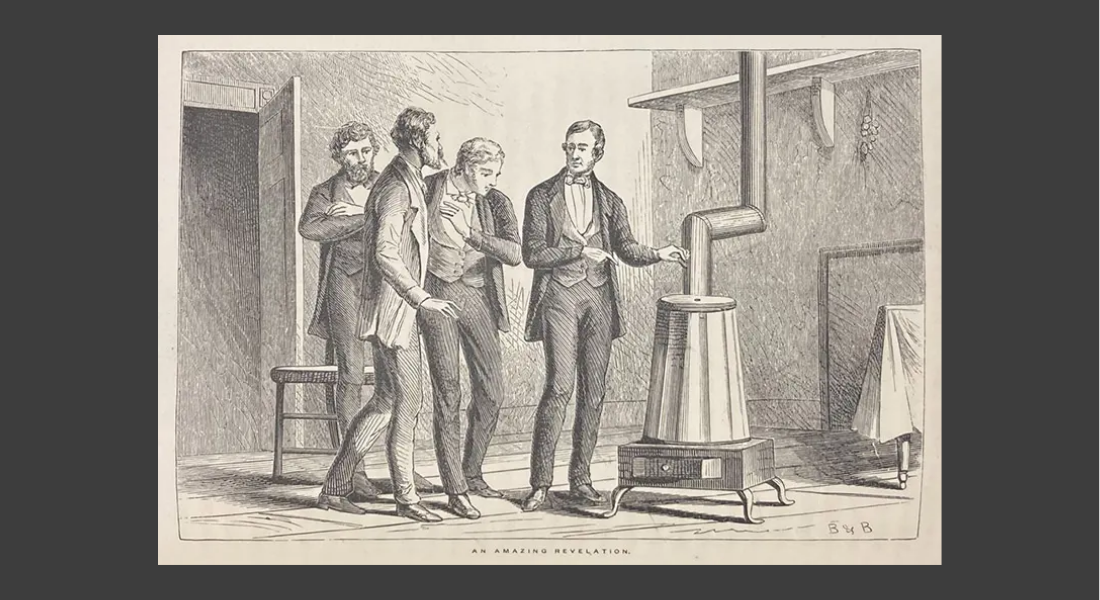
Goodyear’s discovery launched a vast array of products, from waterproof raincoats to life jackets, along with industrial gaskets, hoses, conveyor belts and cylinder linings for steam engines.
When the first modern car — the 1886 Benz Motorwagen — came on the market, it rolled on solid rubber tires made of vulcanized rubber. The ride was slow and rough. In 1895, the Michelin brothers, André and Édouard, produced the first removable pneumatic tire, transforming automobiles from slow-moving motorized carriages to fast, long-distance vehicles.
In the early 1900s, tire chemists began blending carbon black, a fine soot, into tires to strengthen their resistance to road wear and degradation from ultraviolet light. Tires went from a light grey — the natural color of rubber — to jet black.
In 1906, chemist George Oenslager, based in Akron, Ohio, found he could speed up the slow vulcanization process with the use of “accelerators,” which are catalysts that lower the energy needed for sulfur to break its own bonds and become linked to rubber molecules. Curing time went from hours to minutes.
During the 1920s, chemists began experimenting with complex organic molecules, including chemicals in the family of phenylene diamines (PPDs). These additives helped to capture free radicals and atmospheric ozone that can break the polymer chains.
“The effect of ozone on the degradation of tire-rubber compounds was not fully understood until the 1930s,” according to a report (PDF) by the Interstate Technology and Regulatory Council. “At that time, a typical tire lasted only 10,000 miles or roughly two years.”
During World War II, supplies of natural rubber from Asia became limited, so chemical engineers in the U.S. and Russia invented synthetic rubber produced from crude oil. Their products fulfilled wartime needs for rubber until rubber-tree supplies resumed after the war. During the 1950s, chemists improved the formulas for synthetic rubber, and by the mid-1960s synthetic materials outpaced natural rubber in tires.
After World War II, the U.S. Army maintained an extensive inventory of vehicles, whose tires were experiencing cracking and deterioration. Government chemists conducted a search for compounds to better preserve the rubber. They were aware of earlier antiozone compounds, such as DPPD (diphenyl-PPD, and IPPD (isopropyl-PPD).
While DPPD and IPPD both helped, DPPD reacted too slowly with ozone to fully solve the problem, and IPPD reacted so quickly that it was prematurely used up, according to the ITRC report. The “Goldilocks” chemical, with the right reactivity and ability to migrate to the rubber’s surface layer, turned out to be 6PPD, the “6” standing for a six-carbon unit as part of the PPD structure.
In 1965, the Monsanto Company obtained patent rights to the antiozonant 6PPD, which the company marketed under the trade name Santoflex 13, just one product in a line of Santoflex antioxidants. After the patents expired in the 1980s, other companies began producing and selling 6PPD, sometimes mixed with other compounds. Today, 6PPD is found in nearly every tire on the road. For other PPD derivatives, check out the table in the technical document by California’s Department of Substances Control.
Now that 6PPD has become associated with environmental problems, some of these other PPD compounds have been considered as a replacement. One candidate is CCPD, a compound that has been known to chemists for years and appears to be much less toxic to coho than 6PPD.
While 6PPD is highly effective at blocking the damaging effects of ozone on tires, the chemical reaction with ozone leads to 6PPD-quinone, one of the most toxic chemicals ever produced.
Ground-level ozone is a highly reactive compound produced under energetic conditions, such as when sunlight strikes pollutants in automobile exhaust. Ground-level ozone should not be confused with the atmospheric “ozone layer,” an essential feature of our planet that helps to block damaging ultraviolet rays. On the road, ozone is known to break the chemical bonds of rubber in tires, leading to degradation and shortening a tire’s life. The value of 6PPD is that this chemical is able to capture the ozone before it can attack the rubber. In the process, we get the formation of 6PPD-quinone.
Chemical structure
The structure and meaning of 6PPD
N-(1,3-dimethylbutyl)-N′-phenyl-p-phenylenediamine
That is the long and cumbersome name for an amazing, yet dangerous chemical used in tires, abbreviated as 6PPD. It is a complex, multi-functional compound with a complex name to match. It’s no wonder that this formal name is rarely used except at the beginning of scientific articles.
While this complex name may seem intimidating, untangling the nomenclature is not so difficult if you understand that organic chemistry is something like Tinker Toys, Legos or a map of highways connecting cities together. Atoms link to each other according to basic rules of nature — such as carbon atoms each providing four links of attachment to other atoms. The nomenclature thus follows the structure.
Ignoring the energy consumed or delivered in chemical reactions, we can build 6PPD and other closely related chemicals from a structural point of view, starting with benzene, one of the basic compounds in organic chemistry, and then adding onto it. In common terms, C stands for carbon, H for hydrogen, N for nitrogen and O for oxygen.
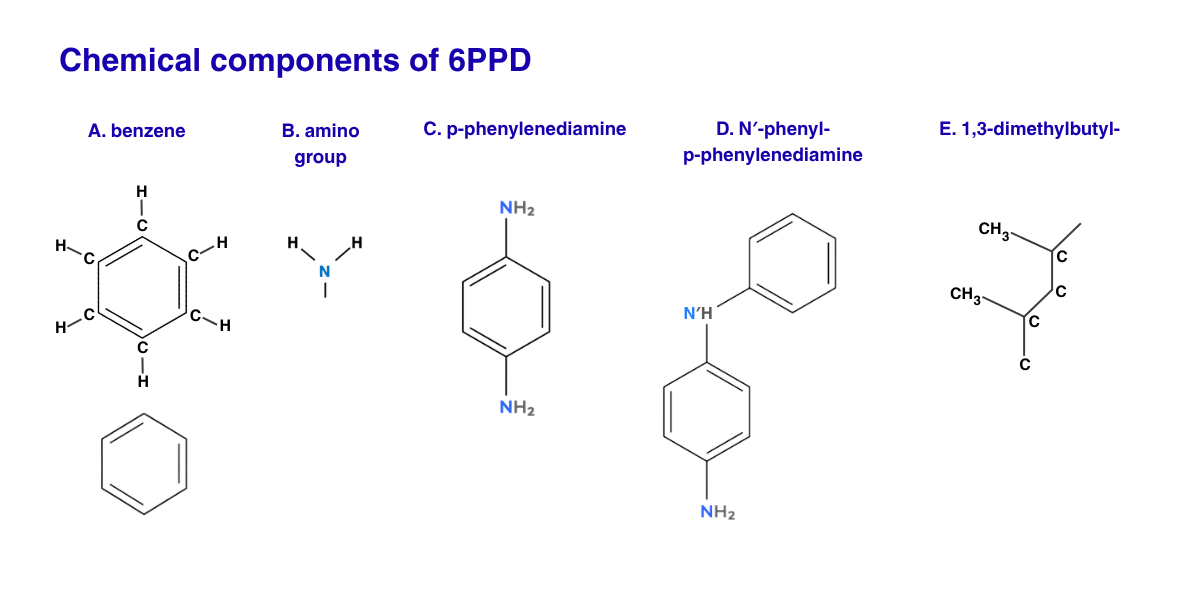
Figure 1A shows the location of carbon and hydrogen atoms of benzene and below that a simplified version, in which carbons are assumed to occupy the corners and hydrogen atoms go where needed to complete the picture. Note the four connections for each carbon atom, with double bonds counting as two.
To the benzene ring (drawn as a hexagon for convenience), we need to add two amino groups (—NH2) (FIgure 1B) on opposite sides (Figure 1C). Amines are interesting, because they are found in many biologic systems. Adding a hydrogen to an amino group gives us ammonia (NH3). Adding a carbolic acid group (—COOH) and a side chain can lead to one of many amino acids — the building blocks of protein and other biological compounds.
According to chemical nomenclature, if we attach one chemical group to a benzine ring, the basic ring is known as “phenyl.” If we add two groups, the ring becomes “phenylene.” So if we add two amino groups to our benzene ring, it becomes phenylene diamine, “di” meaning two (Figure 1C).
The location of the amino groups also comes into play. When they are opposite each other on the ring, as in 6PPD, they are called “para,” and may be designated with the letter “p.” Now we have the last half of our complex name for 6PPD: “p-phenylenediamine,” or “PPD” This is a recurring structure in the most basic search for alternatives to 6PPD.
Now we will build onto our growing structure, starting with an add-on to one amino group on p-phenylenediamine. This is done by replacing a hydrogen on the amino group with a phenyl group (another benzene ring). The accent mark (“prime”) on the “N” is used simply to tell one nitrogen atom from another. We now have N′-phenyl-p-phenylenediamine (Figure 1D).
Let’s now construct the last piece to be added, the 1,3-dimethylbutyl group (Figure 1E). It starts with a butyl group, which has four carbons, and then adds two methyl groups, each with a single carbon. The methyl groups are added to the first and third carbon atoms in the butyl group, thus giving us 1,3-dimethylbutyl (Figure 1E).
Next, we attach the 1,3-dimethylbutyl group to the nitrogen on the available amino group that is part of N′-phenyl-p-phenylenediamine, completing the 6PPD structure: N-(1,3-dimethylbutyl)-N′-phenyl-p-phenylenediamine (Figure 2).
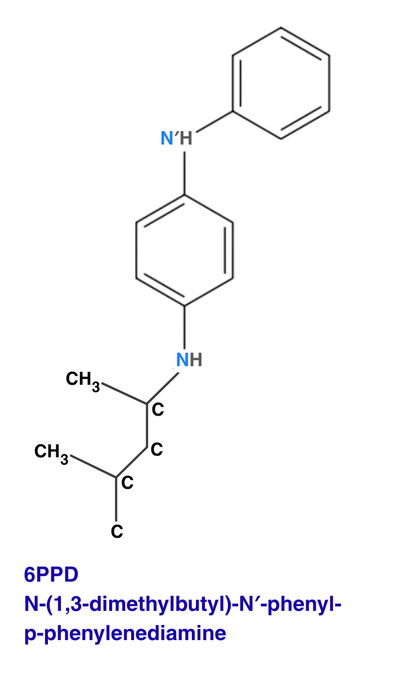
Where does the name “6PPD” come from? The PPD part is the p-phenylenediamine that we constructed in this exercise. The number 6 comes from a shorthand used years ago by chemists in the rubber industry and eventually adopted as official nomenclature by the International Organization for Standardization. The “6” itself comes from the six carbon atoms that are found in the attached dimethylbutyl group.
Other compounds using numbers for naming include 7PPD and 8PPD, specific compounds that contain seven- and eight-carbon chains, respectively, attached to one of the two amino groups on PPD. Others are 77PD, which have identical 7-carbon chains, one attached to each of the amino groups. Likewise, for 88PD.
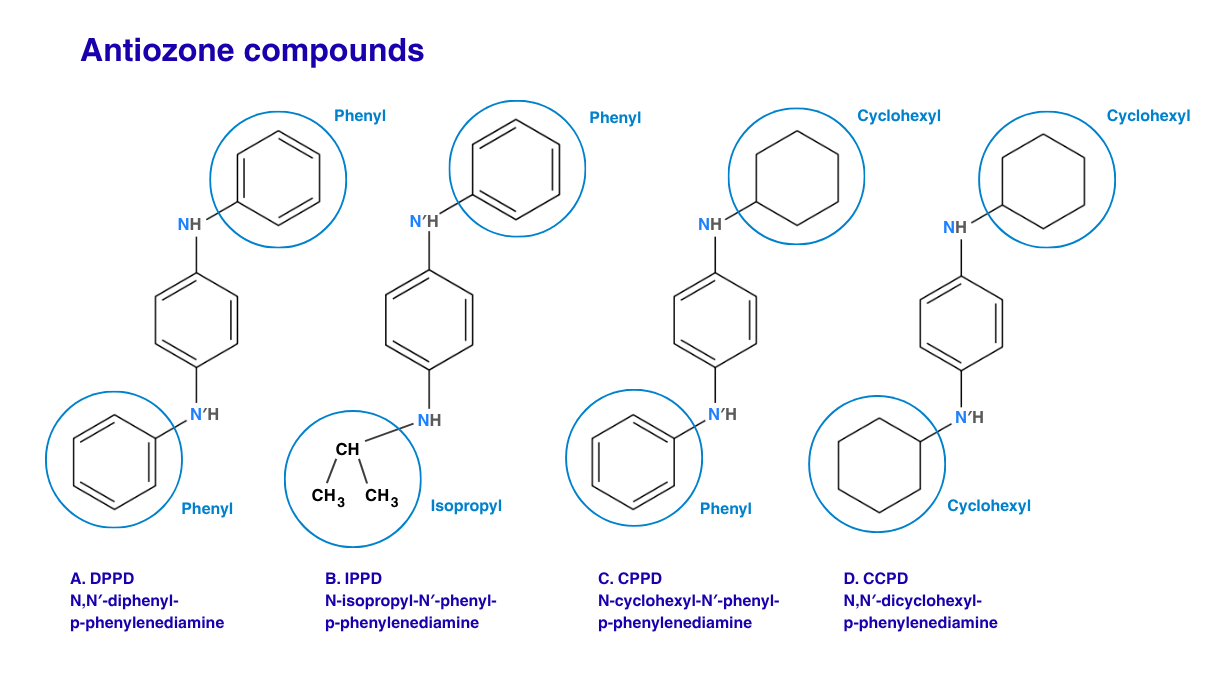
Among the earliest antiozone compounds were DPPD, or diphenyl-PPD, and later IPPD, or isopropyl-PPD (Figures 3A and B). “Diphenyl” indicates two phenyl groups, one on each of the amines of PPD. “Isopropyl” indicates a three-carbon propyl group (as in propane) with the attachment point on the middle carbon.
Since 6PPD has come under fire for its environmental problems, other PPD compounds are being considered as a replacement, including CCPD (Figure 3D). Like 77PD and 88PD, the double letters “CC” represent twin groups on opposite ends of our PPD structure. Specifically, CCPD has two cyclohexyl groups, while CPPD (Figure 3C) has one cyclohexyl group and one phenyl group. “Cyclo” means “circle,” so cycohexyl (and cyclohexane) is a six-carbon benzene ring with hydrogen atoms in place of double bonds between the carbons.
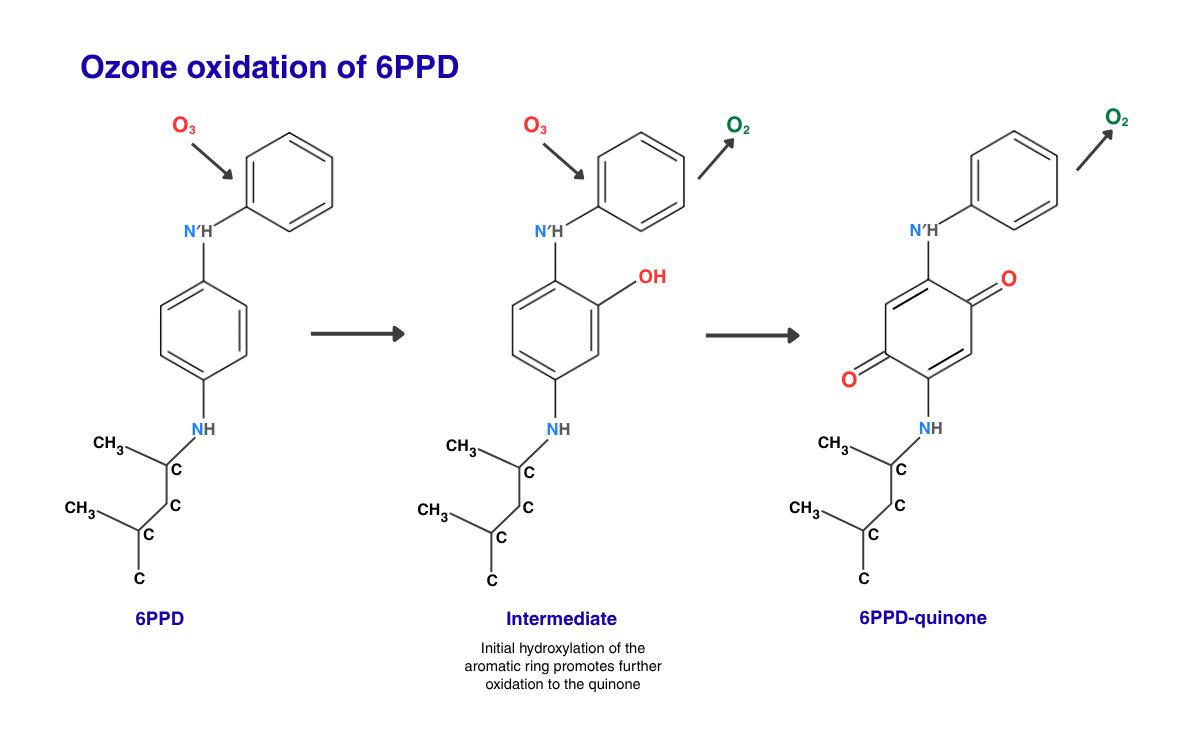
What scientists didn’t know until December 2020 was that many of the PPD compounds — most significantly 6PPD — produce a quinone structure while reacting with ozone. The chemical name for 6PPD-quinone is:
2-anilino-5-[(4-methylpentan-2-yl)amino]cyclohexa-2,5-diene-1,4-dione.
You don’t see that name often; most chemists just go with the abbreviation 6PPD-quinone or 6PPD-Q.
To understand the transformation, let’s start with simple benzene and bring in ozone (O3). The result is benzoquinone, as shown in Figure 4:
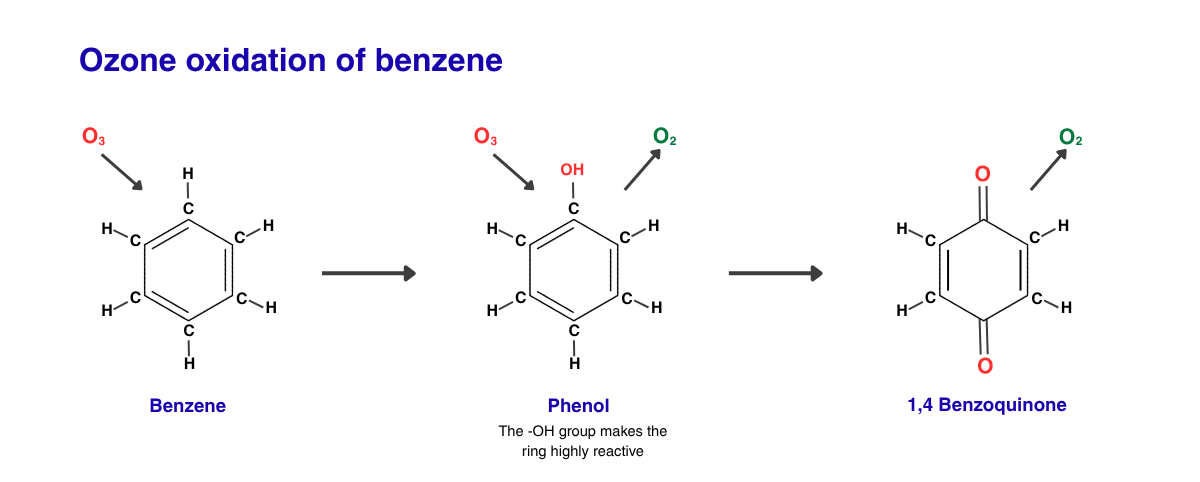
Notice the two double-bonded oxygens tied to carbons on the benzene ring. From benzene, we can advance to ozone oxidation — or ozonation — of 6PPD (Figure 5):
As we have seen, the nature of this chemical class called quinones can be both toxic and beneficial, going well beyond the positive effects of 6PPD and the dangerous effects of 6PPD-Q. The questions now become: Can one or more safer replacements for 6PPD be found? Will chosen chemicals avoid the formation of quinone, or will they be designed with quinones that do not disrupt biological functions?
Read more about 6PPD in our series "Toxic tires: Seeking alternatives to 6PPD".