

How salmon shape regional identity and conservation in Puget Sound
Pacific salmon in Puget Sound have declined dramatically due to habitat loss, climate change, and other human pressures. While billions have been spent on recovery, little research has examined how residents connect with salmon and how these fish influence people's relationship with the region. Understanding these connections could help conservation efforts engage communities more effectively. A study published early in 2026 in the journal Environmental Management by social scientist David J. Trimbach and GIS analyst Rebecca Niggemann of the Washington Department of Fish and Wildlife addresses this knowledge gap. The research was supported in part by the Puget Sound Institute [the Puget Sound Institute is the publisher of the Encyclopedia of Puget Sound].
The researchers surveyed 407 residents across Puget Sound's 12 counties to explore whether salmon contribute to people's "sense of place" (their connections and identity associated with the region) and "placemaking" (how the presence of salmon influences the ways people modify and experience the landscape). The researchers also mapped salmon's physical and cultural presence across the region. Visualizing ecological and social data together represents a novel approach that provides conservation managers with concrete tools for targeting outreach and identifying communities already deeply connected to salmon.
Results showed strong salmon-related connections. Large majorities agreed that salmon contribute to their attachment to Puget Sound (79%), sense of belonging (69%), regional identity (65%), and pride (72%). When asked to name wild animals that define the region's character, 87% mentioned salmon—far more than any other species including orcas. Nearly 90% view salmon as symbols of Puget Sound, Washington State, and the Pacific Northwest.
Frequent visitors to Puget Sound, shoreline property owners, and self-identified anglers (people who fish) showed particularly strong salmon-related sense of place. Notably, county of residence didn't matter— the importance of salmon resonated across all 12 counties.
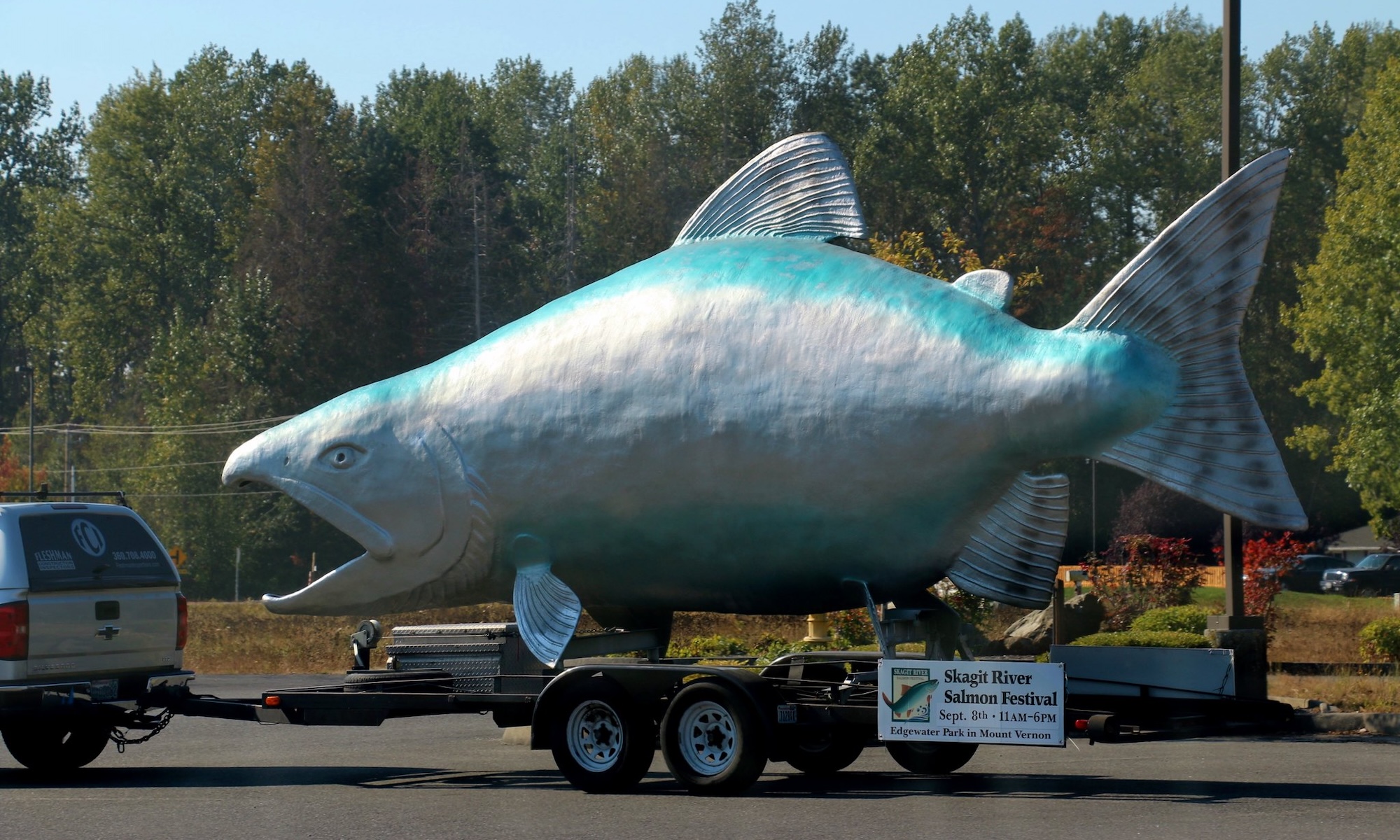
Mapping revealed salmon's extensive regional footprint: 19,366 linear miles of salmon-bearing streams, 2,877 habitat restoration projects, 267 salmon-named businesses, 63 roads, 39 place names, and 19 public artworks. This demonstrates how salmon "make" the region through both ecological presence and the human activities they inspire.
The research was done in collaboration with Washington Department of Fish and Wildlife to provide locally relevant outcomes that are tailored to community perspectives and priorities. Building on this applied focus, the researchers outline several recommendations that could be used by those involved in salmon management and conservation. They include facilitating direct salmon experiences, expanding place-based education, targeting shoreline owners and people who fish for restoration work, using salmon's mapped presence in communications, and meaningfully involving residents in recovery planning.
The research confirms Puget Sound as a true "place of salmon"—these fish don't just inhabit the region; they help define it. By understanding and nurturing human-salmon-place connections, conservation can tap into residents' existing attachments to create more effective, community-supported recovery efforts.
Citation
Trimbach, D.J. and Niggemann, R. 2026. Place of Salmon?: Examining Salmon, Sense of Place, and Placemaking in Puget Sound. Environmental Management, 76, 85. Place of Salmon?