

Report evaluates pathways to reduce nutrient pollution in Puget Sound
The Marine Water Quality State of Knowledge report provides technical background to support informed decision-making and recovery planning focused on the Marine Water Quality Vital Sign for Puget Sound. Among its key findings is an evaluation of three primary nutrient reduction strategies proposed in the Marine Water Quality Implementation Strategy: upgrading wastewater treatment plants, managing agricultural and stormwater runoff, and restoring natural processes that remove or transform nutrients before they reach marine waters. Computer modeling and case study analysis reveal that while all three strategies would measurably improve dissolved oxygen levels, none—even if fully implemented—would completely eliminate anthropogenic impacts on water quality.
Upgrading wastewater treatment
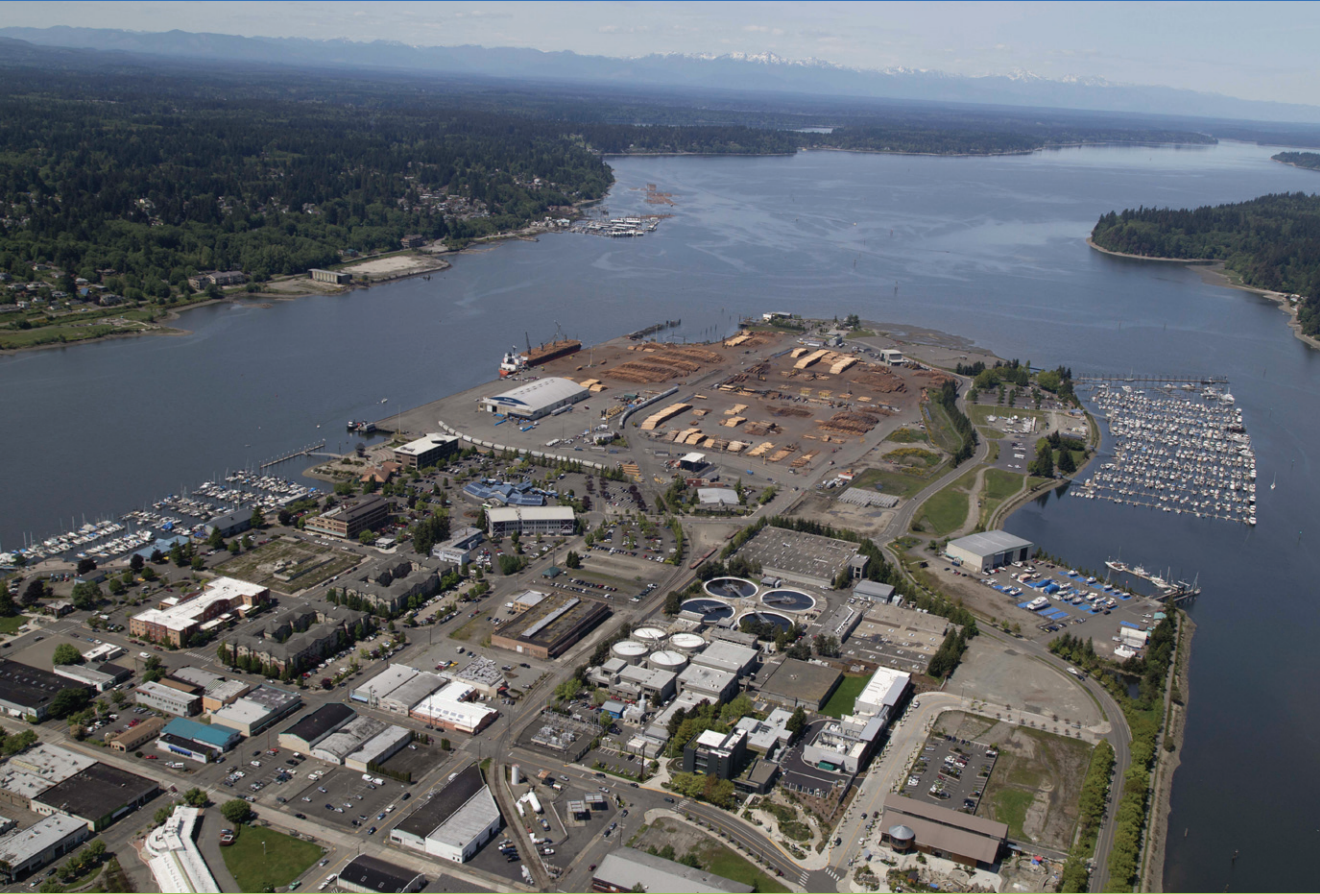
Wastewater treatment plants contribute approximately 50-60% of all human-caused nutrient pollution entering Puget Sound through more than 100 discharge facilities. In fact, most existing plants were not designed to remove nitrogen from wastewater—conventional facilities remove only 10-30% of incoming nitrogen, releasing effluent with median concentrations around 24 mg/L of dissolved inorganic nitrogen. Two treatment approaches could substantially reduce these loads: Biological Nutrient Removal, which achieves effluent concentrations of 8-10 mg/L, and Enhanced Nutrient Removal, which uses more sophisticated processes to reach 2-3 mg/L. Currently, Budd Inlet has the only the facility that uses the latter.
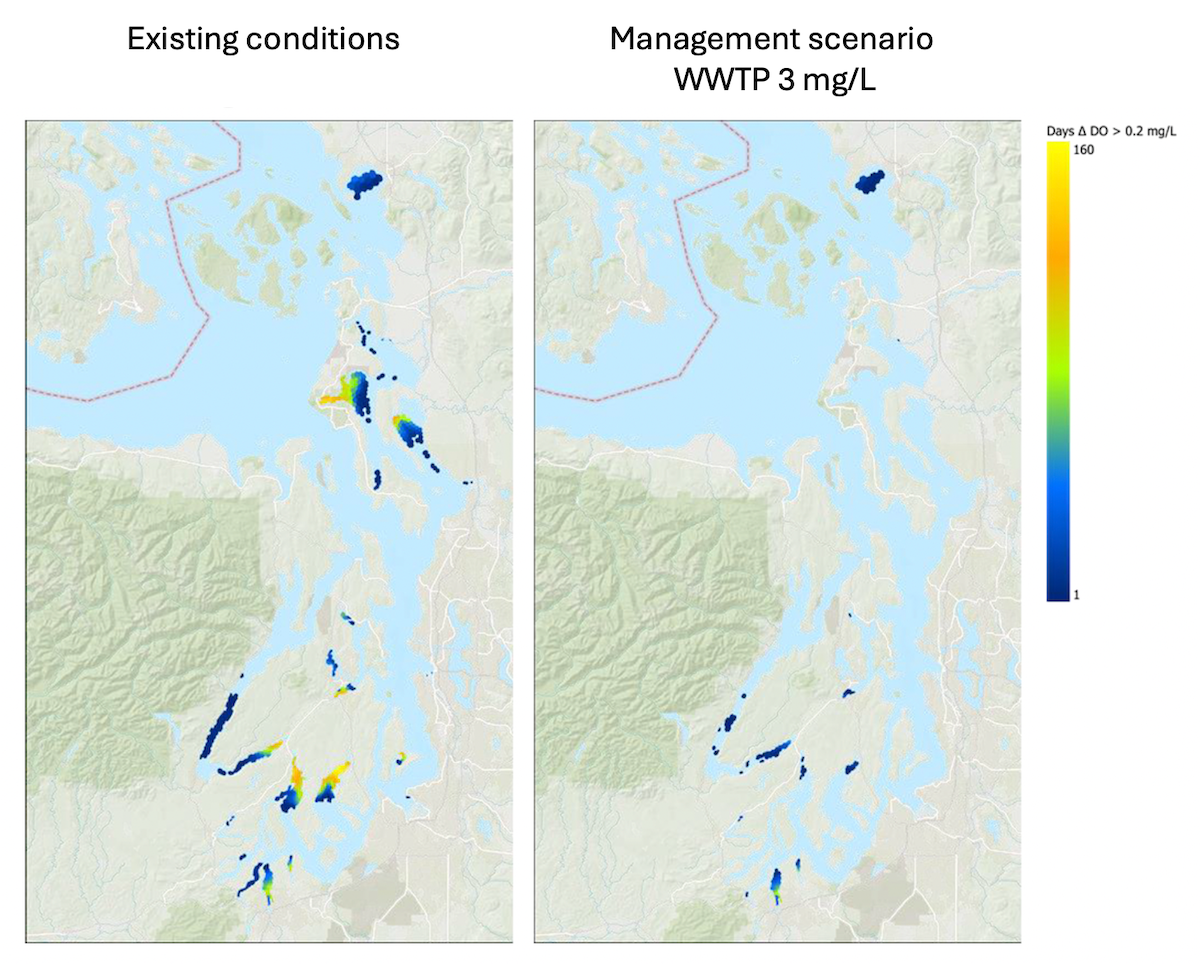
Using the Salish Sea Model, researchers evaluated a scenario where all treatment plants achieved 3 mg/L discharge levels—the lowest achievable with current proven technologies—representing maximum technically feasible nitrogen reduction. Results showed significant improvements in dissolved oxygen levels throughout Puget Sound, with substantial reductions in the spatial extent of areas experiencing oxygen depletion. However, even with treatment maximized to this level at all facilities, some areas in every sub-basin would still show dissolved oxygen changes greater than 0.2 mg/L compared to what conditions would be without human influence—the threshold for meeting the Marine Water Quality target. For comparison, the researchers also modeled potential impacts of population growth without any corresponding treatment improvements. That outcome showed nitrogen loading increasing proportionally with population and substantially expanding problem areas, particularly in Whidbey Basin and South Sound. These two scenarios show that wastewater upgrades are essential but not sufficient for achieving water quality targets.
Beyond their effectiveness in removing nitrogen, wastewater treatment upgrades present significant implementation considerations. Since only a few regional facilities currently treat for nitrogen, achieving these treatment levels would require major reconstructions or complete rebuilding, though the extent of upgrades needed varies by plant. Advanced treatment systems demand substantially more energy, chemicals, and operational resources than conventional treatment, raising questions about the full environmental footprint of these upgrades. The report recommends life cycle assessments to evaluate whether the environmental benefits of reduced nitrogen discharge outweigh the environmental costs of increased energy consumption and potential greenhouse gas emissions from both energy use and the denitrification process itself, which can produce nitrous oxide. Additionally, changes in treatment processes may affect the removal of other contaminants of concern, including contaminants of emerging concern and compounds like PCBs—considerations important for regions addressing both nutrient pollution and toxic contaminants under separate implementation strategies.
Managing agricultural and stormwater runoff
The next largest source, contributing roughly 20% of total anthropogenic nitrogen loading to Puget Sound, comes from agricultural and urban runoff. This diffuse pollution enters marine waters through multiple pathways: fertilizer runoff from farms and residential areas, livestock waste, and stormwater from impervious surfaces. Controlling these dispersed sources is a challenge the report authors identify as a 'wicked' problem that persists despite decades of research and technology improvements.
To understand what successful watershed management might achieve, researchers used the Salish Sea Model to evaluate a scenario where all watershed nitrogen concentrations were reduced to halfway between current conditions and pre-development levels. This scenario showed general improvements in dissolved oxygen throughout Puget Sound and reduced spatial extent of problem areas. However, similar to the wastewater treatment scenario, some areas in every sub-basin would still experience dissolved oxygen changes exceeding 0.2 mg/L compared to reference conditions.
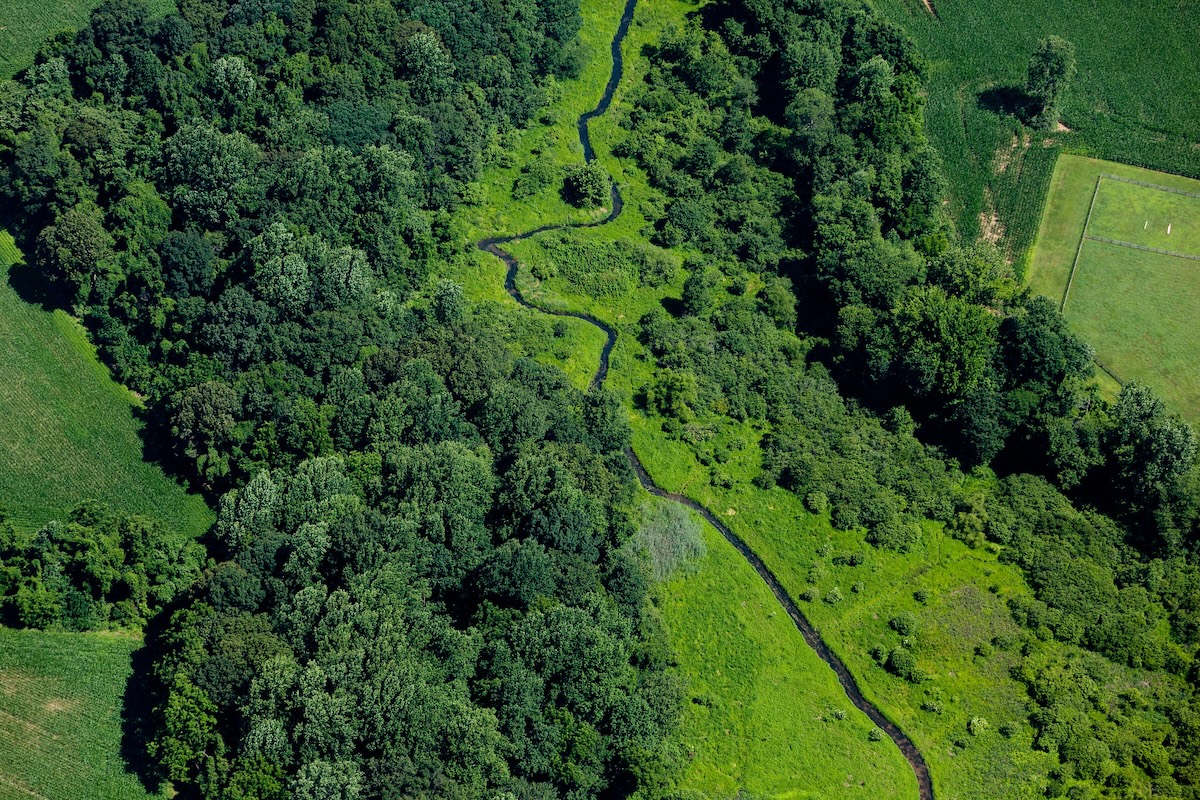
The gap between this modeled scenario and real-world implementation is substantial. Agricultural best management practices show highly variable performance. Field studies indicate that practices like cover crops, livestock exclusion from streams, and riparian buffers can reduce nitrogen by 3–65%. Effectiveness varies widely depending on site-specific factors including soils, vegetation, placement, and maintenance. Moreover, only about one-third of field studies demonstrated actual water quality improvements—far fewer than modeling studies predicted would succeed. Where improvements have occurred, they required sustained effort over 10-20 years using multiple practices rather than single solutions. Even then, success is not guaranteed: parts of the Chesapeake Bay watershed showed improvement after decades of effort, while the Choptank estuary within that same watershed and the Mississippi River watershed saw limited or no reductions despite BMP implementation. Several factors explain the less successful results: lack of farmer incentives to adopt BMPs, insufficient numbers or poor placement of practices, legacy nutrients stored in soils that provide long-term sources, and time lags between implementation and observable downstream improvements.
Urban stormwater nitrogen management faces distinct technical challenges. Performance varies widely across stormwater management approaches, from net nitrogen export to complete removal. Bioretention systems show the most consistent results, removing approximately 57% of total nitrogen on average. But the complexity of the nitrogen cycle creates trade-offs: retention ponds may reduce nitrate but release organic nitrogen, while biofilters capture particles but don't support denitrification. Even where effective technologies exist, regulatory frameworks lag behind: no nitrogen reduction technologies have received approval through the Washington State Technology Assessment Protocol – Ecology (TAPE) program, limiting options for requiring nitrogen management under stormwater permits.
Effective watershed nutrient management requires strategic targeting of practices in nutrient hotspots, combinations of multiple approaches, realistic decades-long time horizons, and acceptance that even aggressive implementation will not fully restore pre-development conditions.
Restoring natural processes
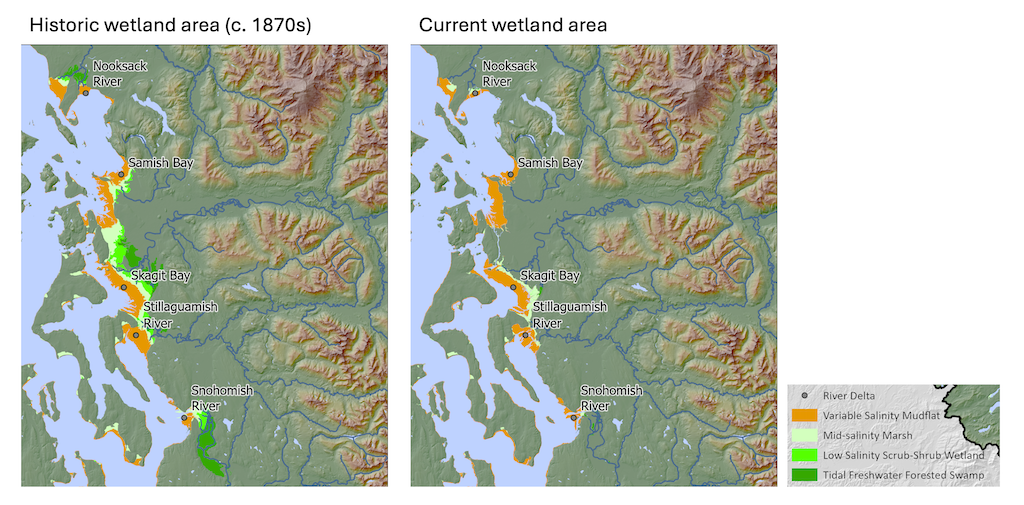
Modeling shows that both wastewater treatment upgrades and improved watershed management would reduce nutrient inputs to Puget Sound, yet neither achieves water quality targets. A third strategy focuses on restoring what development has eliminated: the natural processes that historically removed nutrients from water before it reached marine environments. Puget Sound has lost 20-40% of its wetlands over the past two centuries—70-100% in some urbanized areas—eliminating much of this natural filtering capacity. Wetlands, riparian areas, and complex stream channels once filtered substantial nitrogen through plant uptake, microbial transformation, and denitrification.
Research on individual restoration elements demonstrates measurable nitrogen removal capacity. Natural and constructed wetlands remove approximately 50% of total nitrogen on average, regardless of size, while riparian buffers show approximately 67% average removal, with groundwater nitrogen reduction reaching 70%. Channel complexity improvements increase denitrification by providing contact between water and streambed sediments where nitrogen-processing bacteria thrive. These systems offer substantial co-benefits beyond nutrient removal, including improved salmon habitat, reduced stream temperatures, increased biodiversity, and climate resilience.
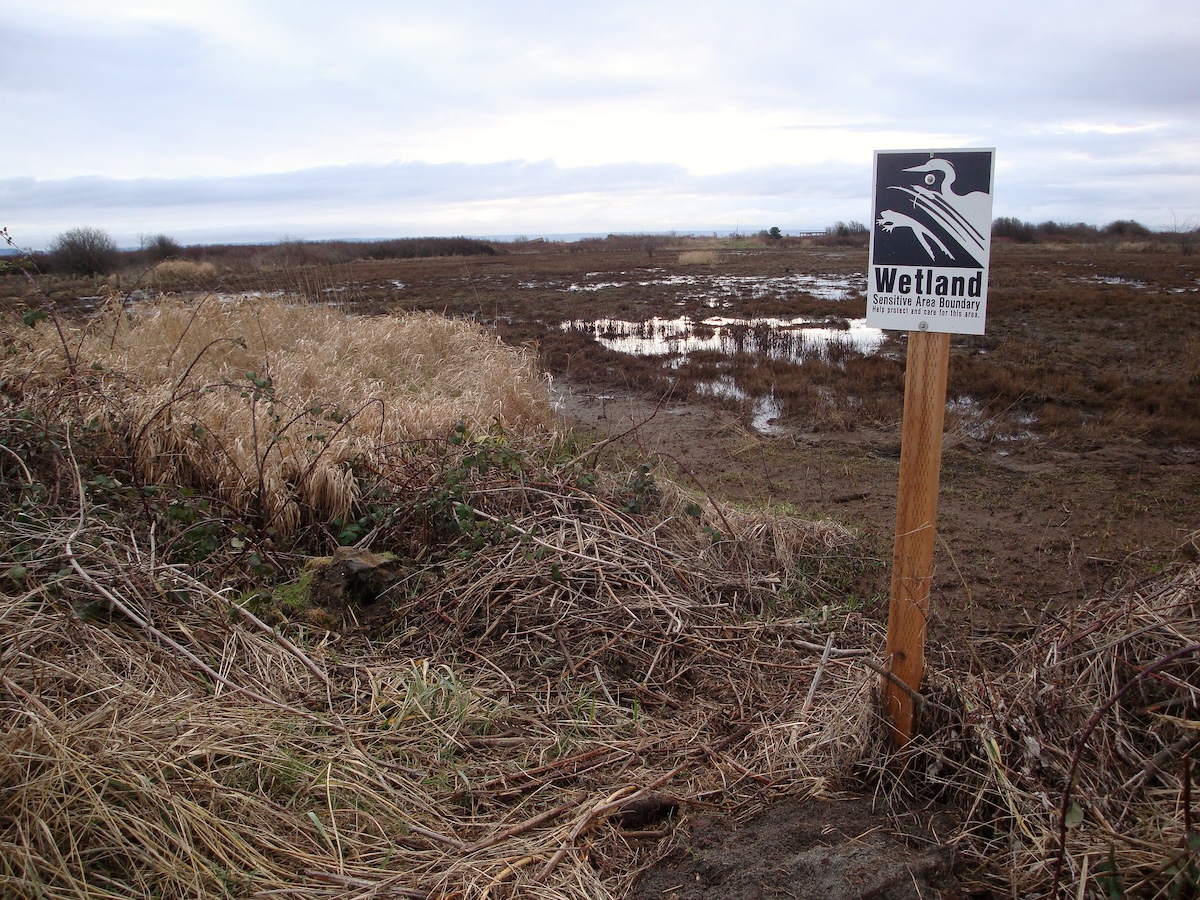
However, restoration effectiveness varies dramatically depending on design and placement. Wetland nitrogen removal efficiency ranges from net nitrogen export to complete removal, influenced by factors including temperature, hydraulic residence time, vegetation type, and loading rates. Strategic placement matters more than simply maximizing restored area: targeted wetland restoration near nutrient hotspots achieves about four times greater nitrogen removal than random placement, with small wetlands playing a disproportionately large role despite their size.
Despite promising results from individual projects, no comprehensive watershed-scale implementation has demonstrated this strategy's effectiveness throughout an entire system. The report identifies this as a critical knowledge gap. Questions also remain about optimal timing of floodwater inputs, methods for water retention, fate of nitrogen in restored systems, and how temperature, soils, and microbial communities affect performance under different conditions. Effective natural process restoration would require moving beyond opportunistic project-by-project approaches toward strategic, landscape-scale planning that recreates not just wetland area but historic size distributions and spatial arrangements. The wide variability in performance means effectiveness cannot simply be assumed—monitoring is essential to verify that restored systems actually remove nutrients as intended.
An integrated approach
No single strategy can restore Puget Sound's marine water quality to pre-development conditions, even with maximum implementation. Yet modeling also demonstrates that doing nothing would lead to significantly worsening conditions as the region's population grows. Each strategy offers measurable benefits—wastewater treatment upgrades would substantially reduce the largest pollution source, watershed management would address diffuse inputs, and restoring natural processes could intercept nutrients before reaching marine waters.
Improving water quality will require integration across all three strategies, with realistic expectations about timeframes and outcomes. Decades-long commitments are necessary, particularly for watershed management where improvements may take 10–20 years to materialize. Strategic targeting proves more effective than maximum effort: placing restoration projects near nutrient hotspots, prioritizing treatment plant upgrades where they'll have greatest impact, and focusing agricultural practices in high-loading areas all multiply returns on investment.
The report acknowledges that uncertainty remains around optimal implementation approaches, particularly for wetland and riparian restoration where watershed-scale demonstrations are lacking. Adaptive management with robust monitoring will be essential to verify that investments achieve intended outcomes and to adjust strategies as understanding improves.