Species and food webs

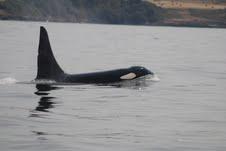
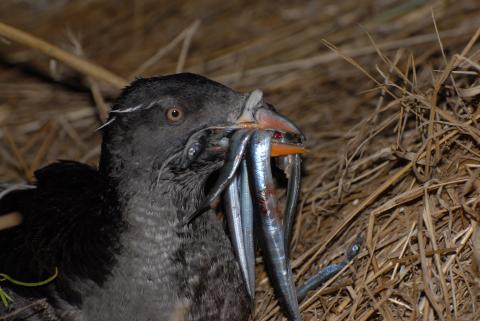
Puget Sound hosts more than 100 species of seabirds, 200 species of fish, 15 marine mammal species, hundreds of plant species, and thousands of invertebrate species (Armstrong et al. 1976; Thom et al. 1976; Canning and Shipman 1995). Visit our species page for a full list. The array of species found in Puget Sound reflects its high productivity, the wide diversity of habitats present, and its unique geographic location at the interface of “northern” and “southern” ranges for many species. These species do not exist in isolation, but rather interact with each other in a variety of ways: they eat and are eaten by each other; they serve as vectors of disease or toxins; they are parasitic; and they compete with each other for food, habitat, and other resources.

There is no single food web in the Puget Sound ecosystem. Instead there are many marine food webs that reside in the soft-bottomed nearshore, in rocky-bottomed areas, in habitats dominated by eelgrass or kelp, and in pelagic areas as well. Similarly, there are terrestrial and freshwater aquatic food webs that occur in alpine habitats, mid-elevation and lowland forests, and rivers, lakes, and streams. The food webs in each of these areas are not discrete and independent, but rather are highly interconnected by organic matter sources, physical proximity, exchange of water, and organisms that change habitats during the course of their life cycles.

Food webs also change both in time and space due to variation in stratification, prey availability, organic-matter source availability and quality, and other local and regional conditions. In addition, some species occupy multiple places or play multiple roles in the food web depending on their life stage, size, habitats they occupy, and time of year.

Sources:

Sound Science: Synthesizing ecological and socioeconomic information about the Puget Sound ecosystem. Published 2007. Used by permission.

Overview

The health of an ecosystem is tied closely to the health of its food webs. This article provides an overview of the concept, origin, and characteristics of a food web and how predator and prey relationships are shaped in the Salish Sea.  

Bear eats salmon. Photo: Robert Voors (CC BY-NC-ND 2.0) https://www.flickr.com/photos/robert_voors/1303192433

Related Articles

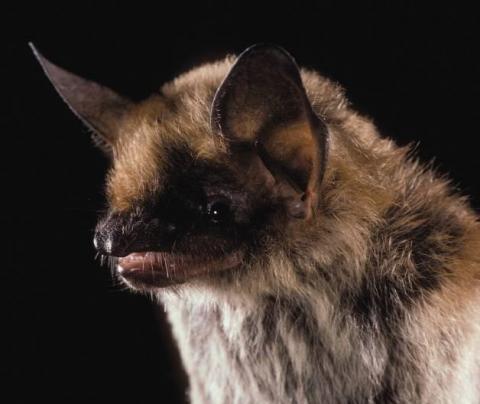
The Washington Department of Fish and Wildlife recently released a Bat Conservation Plan for the 15 species of bats found in Washington State. All but four of these species occur within the greater Puget Sound watershed1, including:

Big Brown Bat (Eptesicus fuscus), California Myotis (Myotis californicus), Fringed Myotis (Myotis thysanodes), Hoary Bat (Lasiurus cinereus), Keen’s Myotis (Myotis keenii), Little Brown Myotis (Myotis lucifugus), Long-legged Myotis (Myotis volans), Silver-haired Bat (Lasionycteris noctivagans), Townsend’s Big-eared Bat (Corynorhinus townsendii), Western Long-eared Myotis (

Browse a collection of shellfish photos provided by the Swinomish Tribe.

With funding from the EPA (EPA Interagency Agreement DW-13-923276-01), scientists at the Northwest Fisheries Science Center and the University of Washington used a field and quantitative modeling ‘source-transport-fate’ assessment approach to classify the vulnerability of shellfish growing areas to closures caused by watershed and marine-derived pathogens. Based on the historical prevalence of nutrient pollution, shellfish closures, and phytoplankton blooms in commercial and recreational shellfish growing area, the project focused on three nearshore sites--the Hamma Hamma (WRIA 16), Dosewallips (WRIA 16) and Samish (WRIA 3).

A new Chinook monitoring framework is designed to build cooperation among managers and policymakers working across the Puget Sound watershed. The report, prepared by an independent team of scientists and released by NOAA, includes a regionally specific, common classification system for Chinook habitats and key ecological attributes. 

The Puget Sound Recovery Implementation Technical Team has released a draft of a NOAA technical memorandum describing frameworks for adaptive management and monitoring of Chinook salmon in Puget Sound. Download the report.

Eelgrass (Zostera marina L.) is an aquatic flowering plant common in tidelands and shallow waters along much of Puget Sound’s shoreline. It is widely recognized for its important ecological functions, and provides habitat for many Puget Sound species such as herring, crab, shrimp, shellfish, waterfowl, and salmonids.