History

Find articles pertaining to human history in the Puget Sound and Salish Sea regions from the perspective of the social and economic sciences. Subtopics may include history of science and policy regarding Puget Sound protection and restoration, as well as related cultural history.

Additional resources:

Overview

The Puget Sound region has a long history that has shaped the culture and environment we experience today. View a timeline describing key events in the Puget Sound region dating from Washington statehood to the present.

Chief Sealth, known to settlers as Chief Seattle. Photo: E.M. Sammis/MOHAI.

Related Articles

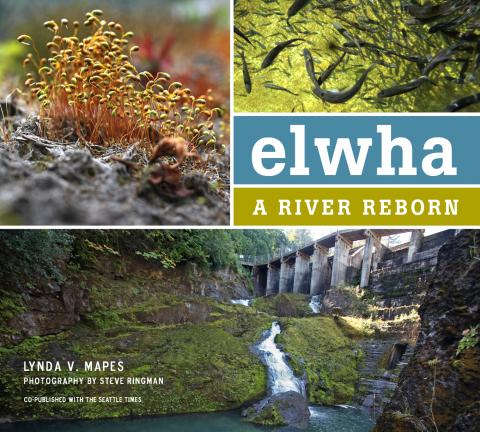
The Encyclopedia of Puget Sound spoke with Seattle Times reporter Lynda Mapes about the exhibit Elwha: A River Reborn, which opened at the University of Washington Burke Museum on November 23rd. The exhibit is based on the book of the same title by Mapes and photographer Steve Ringman, and tells the story of the largest dam removal in U.S. history.  

The audio files below are excerpts from a May 2013 interview with Donald Malins, former Director of the Environmental Conservation Division of NOAA Fisheries. Research by Malins and his colleagues in the 1970s and mid-1980s revealed high levels of industrial toxics in sediment-dwelling fish in Puget Sound, leading to the creation of Superfund sites in the Duwamish Estuary and Commencement Bay. Read a full profile of Donald Malins. The interview was conducted by Richard Strickland and Randy Shuman in cooperation with the Encyclopedia of Puget Sound as part of the Puget Sound Voices series. Additional assistance was provided by Jake Strickland. 

In the 1970s and 1980s, research from a division of NOAA's Montlake Lab suddenly changed the way scientists and the public viewed the health of Puget Sound. Their discovery of industrial toxics in the region's sediment-dwelling fish led to the creation of two Superfund sites, and new approaches to ecosystem management across the Sound. The man at the forefront of this research was Dr. Donald Malins, featured here as part of the Puget Sound Voices series.

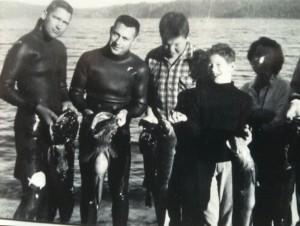
Vern Morgus remembers the early days of scuba diving in Puget Sound.

The Salish Sea extends across the U.S.-Canada border, and includes the combined waters of the Strait of Georgia, the Strait of Juan de Fuca, Puget Sound Basin and the San Juan Islands (see map).

The name Salish Sea was proposed by Bert Webber in 1989 to reflect the entire cross-border ecosystem. Both Washington State and British Columbia voted to officially recognize the name in late 2009. The name honors the Coast Salish people, who were the first to live in the region.

More information on the ecology and naming of the Salish Sea is available from the SeaDoc Society and Western

The Puget Sound region has a long history that has shaped the culture and environment we experience today. View a timeline describing key events in the Puget Sound region dating from Washington statehood to the present.