Sound is the most efficient means of communicating underwater. Unlike light, which is filtered from the water column within tens of meters, sound has the ability to travel around the world. Marine mammals and other aquatic animals have evolved over millions of years to use underwater sound as a primary means of communicating and assessing their environment. Sound plays an essential role in various critical activities like breeding, foraging, maintaining social structure, and avoiding predators.
The efficiency with which sound travels underwater has also led to increasing concern over the potential impacts of man-made sound introduced into the oceans. Since the beginning of the industrial age, man has introduced increasing amounts of sound into the world's oceans from wide ranging activities (e.g. noise from global shipping, oil and gas exploration, construction activity, naval exercises). Potential effects of these sounds may range over wide spatial [areas], from the immediate vicinity of the activity to across ocean basins, and temporal scales, with both chronic effects, where background sound levels are increased over long periods of time, and acute impacts, where shorter duration, intense sounds may alter the behavior and/or health of individuals in the short term.
Overview
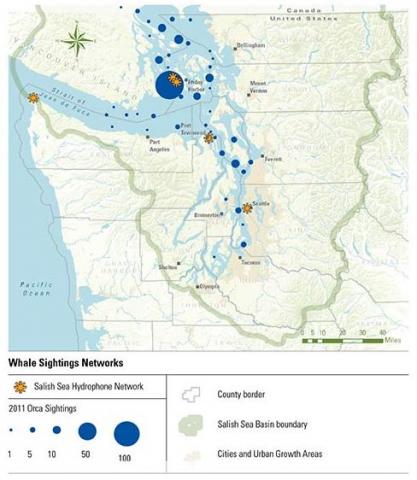
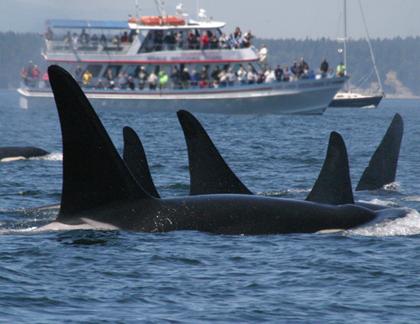
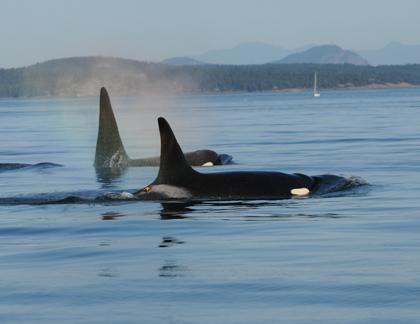
Research on the sounds and feeding behavior of Puget Sound's southern resident orcas is providing new insight into how the whales respond to underwater noise. A recent online conference brought together some of these findings along with discussions on how to reduce the impacts of noise from vessel traffic.