Persistent contaminants

Persistent contaminants, also known as persistent organic pollutants (POPs), are toxic chemicals that adversely affect human health and the environment around the world. They persist for long periods of time in the environment and can accumulate and pass from one species to the next through the food chain. 

Source: Environmental Protection Agency

Overview

The Lower Duwamish Waterway in Puget Sound was designated a Superfund cleanup site in 2001. Its legacy of contamination predates World War II and the waterway continues to pollute Puget Sound through stormwater runoff.

Lower Duwamish Waterway dredging on Superfund site. Photo: Gary Dean Austin (CC BY-SA 2.0) https://www.flickr.com/photos/49648789@N08/17069420399/

Related Articles

Efforts to reduce fire hazards over a half century ago have left an unintended trail of persistent environmental contaminants from flame retardant chemicals known as PBDEs. Bans and substitutes are still evolving.

New federal legislation, approved overwhelmingly by the U.S. Congress in December 2015 and signed into law by President Obama in June 2016, is designed to make sure that people and the environment are not harmed by new and old chemicals on the market.

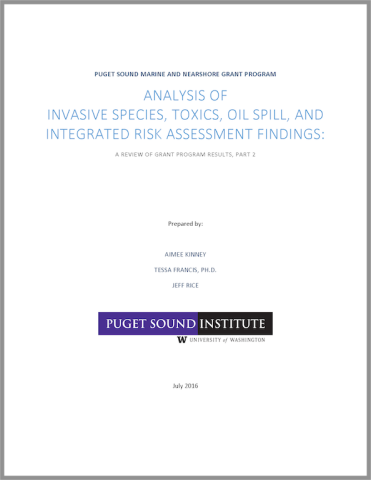
A July 2016 report from the University of Washington Puget Sound Institute summarizes and reviews 10 EPA-funded projects focusing on Puget Sound's marine and nearshore environments. The projects were conducted between 2011-2015 with support from the EPA's National Estuary Program.  The report is an analysis of findings on invasive species, toxics, oil spill, and integrated risk assessment.

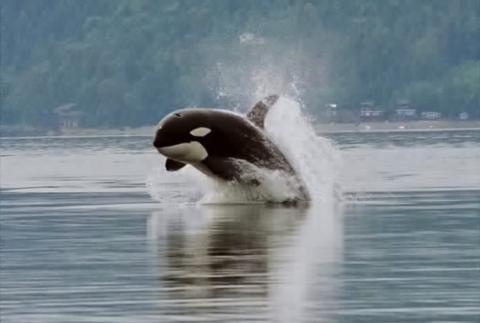
Researchers are proposing a shift in thinking about how some of the region’s most damaging pollutants enter Puget Sound species like herring, salmon and orcas.

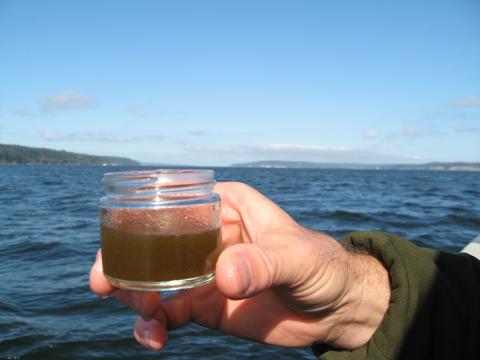
Researchers are studying how persistent pollutants such as PCBs avoid settling to the bottom of Puget Sound. This article continues our coverage of new theories on the spread of toxic chemicals in the food web. 

The Lower Duwamish Waterway in Puget Sound was designated a Superfund cleanup site in 2001. Its legacy of contamination predates World War II and the waterway continues to pollute Puget Sound through stormwater runoff.