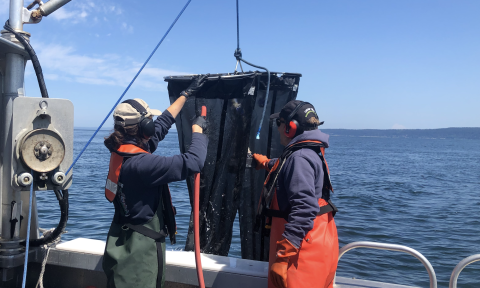
Zooplankton, tiny marine crustaceans, are a critical link between primary producers, or plants and algae that trap energy from the sun, and larger species like fish, mammals and birds. Many of the most important species in Puget Sound rely upon zooplankton, including salmon, forage fish like herring, surf perch, and sand lance, hake, Pollock, and shrimp. Yet, no comprehensive zooplankton monitoring program exists in Puget Sound. Each Puget Sound basin has its own unique zooplankton and bacteria community. Copepods are typically the most dominant zooplankton type in Puget Sound.
Overview
Zooplankton are critical to the marine food web, but until recently there have been few surveys of the zooplankton community in Puget Sound. Ongoing monitoring is now revealing a system full of complexity and surprises. The following article was commissioned by the Habitat Strategic Initiative Lead (HSIL), a cross-agency team co-led by the Washington Departments of Fish and Wildlife and Natural Resources.