

All Articles

The voice of eelgrass
Wade out into the shallows of Puget Sound on a warm, sunny day and put your ear close to the water. You might catch the faint, champagne-like bubbling of eelgrass.
Rare tidal marshes set the table for salmon recovery
Tidal wetlands are crucial to Chinook salmon recovery but are among the most threatened habitats in Puget Sound. In 2012, The Nature Conservancy began restoring a 150-acre section of tidal marsh on Port Susan Bay at the mouth of the Stillaguamish River. That project is entering a new phase and may soon connect with other adjacent restoration efforts put forth by the Stillaguamish Tribe.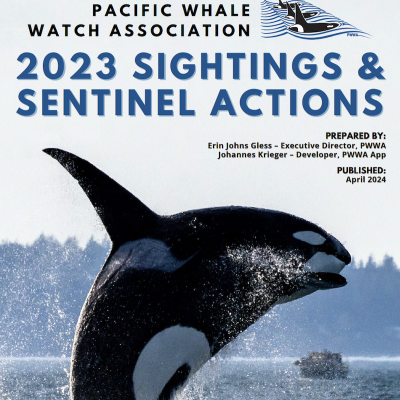
Pacific Whale Watch Association 2023 Sightings and Sentinel Actions
The Pacific Whale Watch Association (PWWA) is a community of ecotourism professionals with a shared commitment to education, conservation, and responsible wildlife viewing in Washington state and British Columbia. The 2023 PWWA annual report summarizes wildlife sightings and sentinel actions logged by members throughout the year. Sentinel actions are protective measures taken by professional whale
Hood Canal summer chum could be first-ever salmon removed from Endangered Species List
Summer chum salmon in Hood Canal are making a remarkable comeback. Could it be enough to support their removal from the Endangered Species List?
Will these gentle giants return to the Salish Sea?
A shark species the length of a bus was once common in the Salish Sea. Then it was labeled a "destructive pest" and nearly wiped out. Can the gentle and often misunderstood basking shark make a comeback?
The decline of Dall’s porpoise in the Salish Sea
Dall’s porpoises have declined in the Salish Sea since the early 1990s for reasons that are unknown. However, the species, which remains abundant in inshore waters of Alaska and in open coastal and offshore waters of the North Pacific Ocean, is not considered threatened or endangered. Major threats to Dall’s porpoise populations include direct hunting, by-catch in fisheries, and the impacts of
Under a new proposal, our local orcas — resident and Bigg’s killer whales — would each become a new species
A scientific paper, published on March 27th, spells out the unique physical and genetic characteristics that should make each group a separate species, with the proposed scientific names Orcinus ater for residents and Orcinus rectipinnus for Bigg’s.
Habitat protection and restoration in Puget Sound: An overview of Strategic Initiative Lead investments 2016-2023
Between 2016 and 2021, $21 million provided by the Environmental Protection Agency (EPA) funded 100 different projects to protect, restore, and study critical habitats in Puget Sound. This publication presents an overview of many of the key accomplishments and lessons learned from these efforts. It is a catalog of some of the ‘big ideas’ presented by the scientists and conservationists involved
The words ‘in common with’ were pivotal to Judge Boldt’s ruling on Native American fishing rights
Three common words and their legal interpretation a half-century ago helped set the stage for a cultural revival among Native Americans while propelling an environmental movement that still resonates today. Environmental reporter Christopher Dunagan revisits the legal reasoning behind the famous Boldt decision that upheld tribal fishing rights in the state of Washington.