River deltas

Puget Sound serves as the ultimate drainage destination for many rivers that carry fresh water from the Olympic and Cascade mountain ranges to the ocean. When this freshwater mixes with the ocean’s saltwater it creates biologically rich environments known as estuaries. These estuaries provide critical habitat for young salmon, migratory birds, and many other species including forage fish and marine mammals. These estuaries are found in16 major deltas in six of the seven Puget Sound sub-basins. 

--Source: Encyclopedia of Puget Sound

Overview

Puget Sound serves as the ultimate drainage destination for many rivers that carry fresh water from the Olympic and Cascade mountain ranges to the ocean. When this freshwater mixes with the ocean’s saltwater it creates biologically rich environments known as estuaries. These estuaries provide critical habitat for young salmon, migratory birds, and many other species including forage fish and marine mammals.
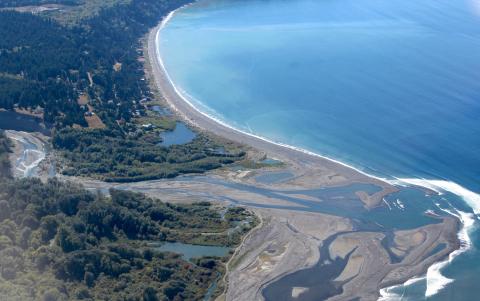
Aerial view of curved coastline showing forested hills, winding river delta with mudflats, and long sandy beach meeting bright blue ocean waters.

Related Articles

Puget Sound serves as the ultimate drainage destination for many rivers that carry fresh water from the Olympic and Cascade mountain ranges to the ocean. When this freshwater mixes with the ocean’s saltwater it creates biologically rich environments known as estuaries. These estuaries provide critical habitat for young salmon, migratory birds, and many other species including forage fish and marine mammals.

The rivers flowing into Puget Sound pass through 16 major deltas in six of the seven Puget Sound sub-basins (listed below). Scientists estimate that 70–80% of Puget Sound’s historical delta habitats have been lost to human development since

The diversity and complexity of estuarine ecosystems is vital to the overall health of Puget Sound. This summary fact sheet focuses on the current state of these ecosystems in Puget Sound—large river deltas, embayments, their interconnecting beaches, and rocky coasts—and the historical changes that have occurred since the development of the Puget Sound coastline. Additional emphasis is placed on the historical losses of tidal wetlands within these estuaries.