Sharks

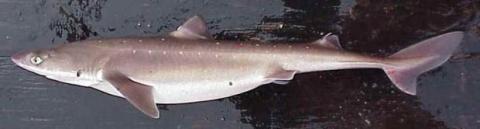
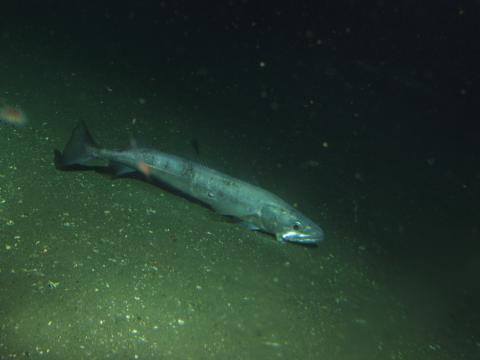
At least nine species of sharks have been documented in Puget Sound. One species — the Pacific spiny dogfish shark — is quite common, while several species are seen only rarely. Scientists aren’t sure if these “rare species” have somehow eluded human contact or if these sharks simply don’t come around very often. Reported encounters — which often involve catching sharks with sport or commercial fishing gear — are more frequent along the Washington Coast and down into California.

Shark species known to exist in Puget Sound

Basking shark (Cetorhinus maximus)*
Bluntnose sixgill shark (Hexanchus griseus)
Broadnose sevengill shark (Notorynchus cepedianus)*
Brown cat shark (Apristurus brunneus)
Common thresher (Alopias vulpinus)*
Leopard shark (Triakis semifasciata)*
Pacific spiny dogfish (Squalus suckleyi)
Salmon shark (Lamna ditropis)*
Soupfin shark (Galeorhinus galeus)*

*Species considered rare in Puget Sound at this time

--Source: Encyclopedia of Puget Sound

Overview

Recent discoveries of two new shark species in Puget Sound have sparked public interest and may encourage greater conservation efforts. In this seven-part series, Christopher Dunagan provides an overview of sharks in Puget Sound and some of the recent work among scientists to protect these often misunderstood creatures.
Close-up of a shark partially submerged in water, showcasing its dorsal fin and textured, spotted skin.

Related Articles

A shark species the length of a bus was once common in the Salish Sea. Then it was labeled a "destructive pest" and nearly wiped out. Can the gentle and often misunderstood basking shark make a comeback?

Over the past year, the Washington Department of Fish and Wildlife has reported an unusually high number of sixgill sharks found washed up along Puget Sound's shoreline. Four dead sharks in all were spotted, alarming scientists who believe that the large predators use Puget Sound as a pupping ground. Sixgills are rarely seen in Puget Sound but are one of its largest fishes, reaching lengths of up to 16 feet. Some speculate that warmer-than-usual waters could be a factor in the deaths, but the cause remains a mystery. We spoke with Fish and Wildlife biologist Lisa Hillier.

The first comprehensive guide to the fishes of the Salish Sea is the culmination of more than 40 years of research by University of Washington authors Ted Pietsch and Jay Orr. The new three-volume set includes descriptions and illustrations for every fish species known to have been documented here, all gathered from an exhaustive search of libraries, aquariums, fish collections and even one restaurant.

The marine habitat of Puget Sound can be divided up into nearshore, benthic (associated with the sea floor), and pelagic (open water) habitats. This article focuses on the pelagic habitat within the Puget Sound. This article was prepared as part of the 2015 Puget Sound Fact Book produced by the University of Washington Puget Sound Institute. 

Bentho-pelagic fish utilize both bottom habitats and shallower portions of the water column, often feeding in shallow water at night and moving to deeper water to form schools during the day.