Water quality

Puget Sound is unique in the lower 48 Unites States because of its fjord-like physiography, inland extent, wide range of depths, and urbanized watersheds and shorelines. Limited exchange of seawater between sub-basins within Puget Sound can result in long residence times, potentially increasing the susceptibility of biota to contamination introduced through human activities. The varied habitats within Puget Sound support multiple life history stages of many species, potentially exposing sensitive life stages to contamination. There are multiple water quality concerns in Puget Sound:

  • Levels of toxic contaminants in biota that live or feed in Puget Sound.
  • The eutrophication of marine waters, producing hypoxic and anoxic regions.
  • Wastewater contamination, principally from combined sewer overflows or septic systems
  • Harmful algal blooms, which introduce toxins that enter the food web
  • Acidification of marine waters, and the adverse ecological effects that result.

Degradation of water quality in Puget Sound occurs through three primary mechanisms. The first is through the introduction of toxic contaminants, primarily comprising manufactured synthetic chemicals, but also including compounds that occur naturally that are concentrated in the local environment to toxic levels via human activities. The second is through human-caused changes in naturally occurring chemicals, compounds, or physical parameters (e.g., temperature, turbidity, nutrients, pH). The third is through introduction of new diseases or pathogens, or through other activities that cause an unnatural increase in disease organisms.

Sources:

Puget Sound Science Review


Overview

A 2023 report from the Puget Sound Ecosystem Monitoring Program presents an overview of selected recent monitoring and research activities focused on toxic contaminants in the Salish Sea. 

Cover of 2022 Salish Sea toxics monitoring synthesis: A selection of research

Related Articles

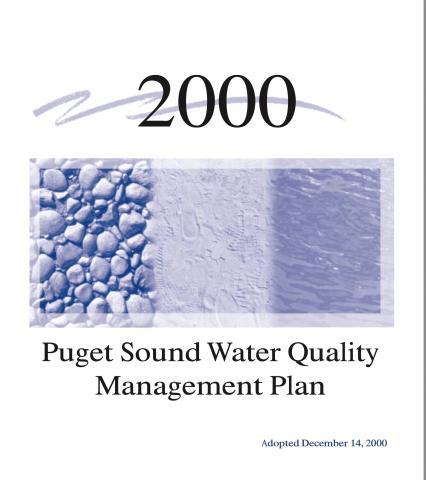
The Puget Sound Water Quality Management Plan was Washington State’s long-term strategy for protecting and restoring Puget Sound. This report was released in 2000 and also served as the federally approved Comprehensive Conservation and Management Plan for Puget Sound under Section 320 of the federal Clean Water Act.

The year 2025 has been fairly mystifying to experts who make their living studying natural systems in the Puget Sound region.

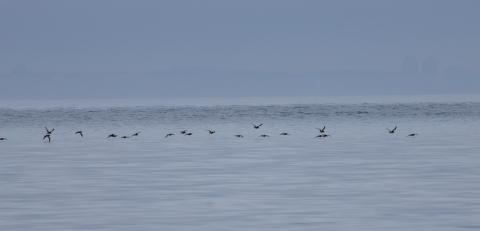
Unusual observations this year include record-low dissolved oxygen levels, unexpected gray whale visitations, and the sudden arrival of an astounding number of short-tailed shearwaters — a seabird almost never seen in Puget Sound.

Cold waters rising from the deep along the West Coast helped to rescue Puget Sound from an oceanic heat wave bringing warm-water troubles to other parts of the Pacific Ocean. But our inland waterway has had its own problems, and the reasons have been a challenge

The third State of the Sound Report summarizes what is known about Puget Sound, its resources, and trends that threaten it.
Summary proceedings of a conference on improving on-site sewage systems in Puget Sound, November 14-15, 1994, Bothell, Washington, sponsored by Puget Sound Water Quality Authority.
The 1999-2001 Puget Sound Water Quality Work Plan prepared by the Puget Sound Water Quality Action Team coordinates state, federal, tribal and local actions to restore and protect the Sound's resources and water quality.
1997–1999 Puget Sound Water Quality Work Plan. Legislation passed in 1996 changed the way the management plan is carried out. The Puget Sound Water Quality Protection Act (Chapter 90.71 RCW) established the Puget Sound Water Quality Action Team and directed it to prepare a biennial work plan and budget (in this case, covering the period from July 1, 1997, through June 30, 1999).