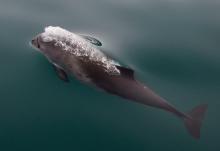
A 2015 paper in the journal Diseases of Aquatic Organisms examines potential causes of increased harbor porpoise strandings in Washington and Oregon.
By Jessica L. Huggins, Stephen A. Raverty, Stephanie A. Norman, John Calambokidis, Joseph K. Gaydos, Deborah A. Duffield, Dyanna M. Lambourn, James M. Rice, Brad Hanson, Kristin Wilkinson, Steven J. Jeffries, Brent Norberg, Lynne Barre
This report presents the findings and recommendations of the Committee. The recommendations will be presented for comment and discussion by participants at the First Annual Meeting on Puget Sound Research, which will be convened in Seattle on March 18 and 19, 1988.
Toxicant pretreatment planning study technical report C1: Presence, distribution and fate of toxicants in Puget Sound and Lake Washington was published in October 1984.
By E. A. Crecelius, J. T. Gunn, P. Hamilton, W. Hom, R. D. Muench, S. P. Pavlou, G. P. Romberg, R. F. Shokes, J. Vinelli
This 1954 report accumulates all available wind report summaries have been in the form of monthly wind roses for each reporting station and makes a determination of the frequency and maximum duration of surface winds of above average velocity at selected stations over a three year period.
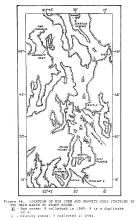
This 1954 report present the results of a geochemical investigation, based on existing data, of the waters of Puget Sound. Rivers draining into the Puget Sound and upwelled water moving in at depth from Juan de Fuca Strait are the chief sources of the chemical constituents in Puget Sound.
This study compared recent and historical data to determine the presence of any significant changes in nutrient and oxygen concentrations subsequent to METRO discharge, examined seasonal cycles in water properties, and examined the flux of nutrients within the study area.
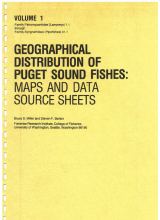
Volume 1: Family Petromyzontidae (lampreys) through family Syngnathidae (pipefishes). Volume 2: Family Percichthyidae (temperate basses) through family Hexagrammidae (greenlings). Volume 3: Family Cottidae (sculpins) through family Molidae (molas).