A biennial report produced by the Governor's Salmon Recovery Office provides stories and data about salmon, habitat, and salmon recovery in Washington, including Puget Sound.
By Washington State Recreation and Conservation Office; Governor's Salmon Recovery Office
In recent decades, hundreds of millions of dollars have been spent to restore habitat for Puget Sound salmon. In this article, we look at how scientists are gauging their progress. Are environmental conditions improving or getting worse? The answer may depend on where you look and who you ask.
The 2016 Salish Sea Ecosystem Conference took place April 13-15 at the Westin Bayshore in Vancouver BC. Over 1100 scientists and policy experts attended.
Formaldehyde is often used to control parasites on hatchery salmon and trout. The U.S. Environmental Protection Agency and the Washington State Department of Ecology conducted a joint study of formaldehyde concentrations in effluent from hatcheries in the Pacific Northwest.
By Prepared for the EPA Region 10 Office of Water and Watersheds
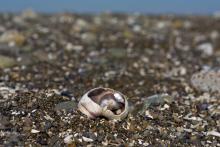
Scientists from NOAA's Northwest Fisheries Science Center (NWFSC) developed publicly searchable database of nearly 3,000 Puget Sound species to study whether species having calcium carbonate shells are more or less vulnerable to ocean acidification. Their findings published in the journal Elementa question previous assumptions that shell-building organisms are more vulnerable.
The Salish Sea Model is a computer model used to predict spatial and temporal patterns related to water circulation in the Salish Sea. It was developed at the United States Department of Energy's Pacific Northwest National Laboratory with funding from the Environmental Protection Agency. It is housed at the University of Washington Center for Urban Waters which is affiliated with the Encyclopedia of Puget Sound.
By Pacific Northwest National Laboratory, Washington Department of Ecology and the U.S. Environmental Protection Agency
The Orange Sea Pen, also called the Fleshy Sea Pen or Gurney’s Sea Pen, resembles a colorful autumn tree waving in the “breeze” of moving water currents. Article courtesy of the Washington Department of Ecology's Eyes Under Puget Sound series.
By Dany Burgess & Angela Eagleston, Environmental Assessment Program, Washington Department of Ecology
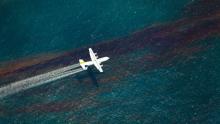
A 2017 report from the University of Washington summarizes current scientific knowledge on chemical oil spill dispersants and their potential impacts on shoreline habitats in San Juan County, Washington.
By William King and Megan N. Dethier, University of Washington Friday Harbor Laboratories, Friday Harbor, WA
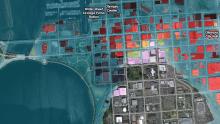
Planning for rising seawater in Puget Sound has often focused on public property such as roads, buildings and utilities. Now local governments are looking more closely at private property despite regulations based on traditional flooding history.