

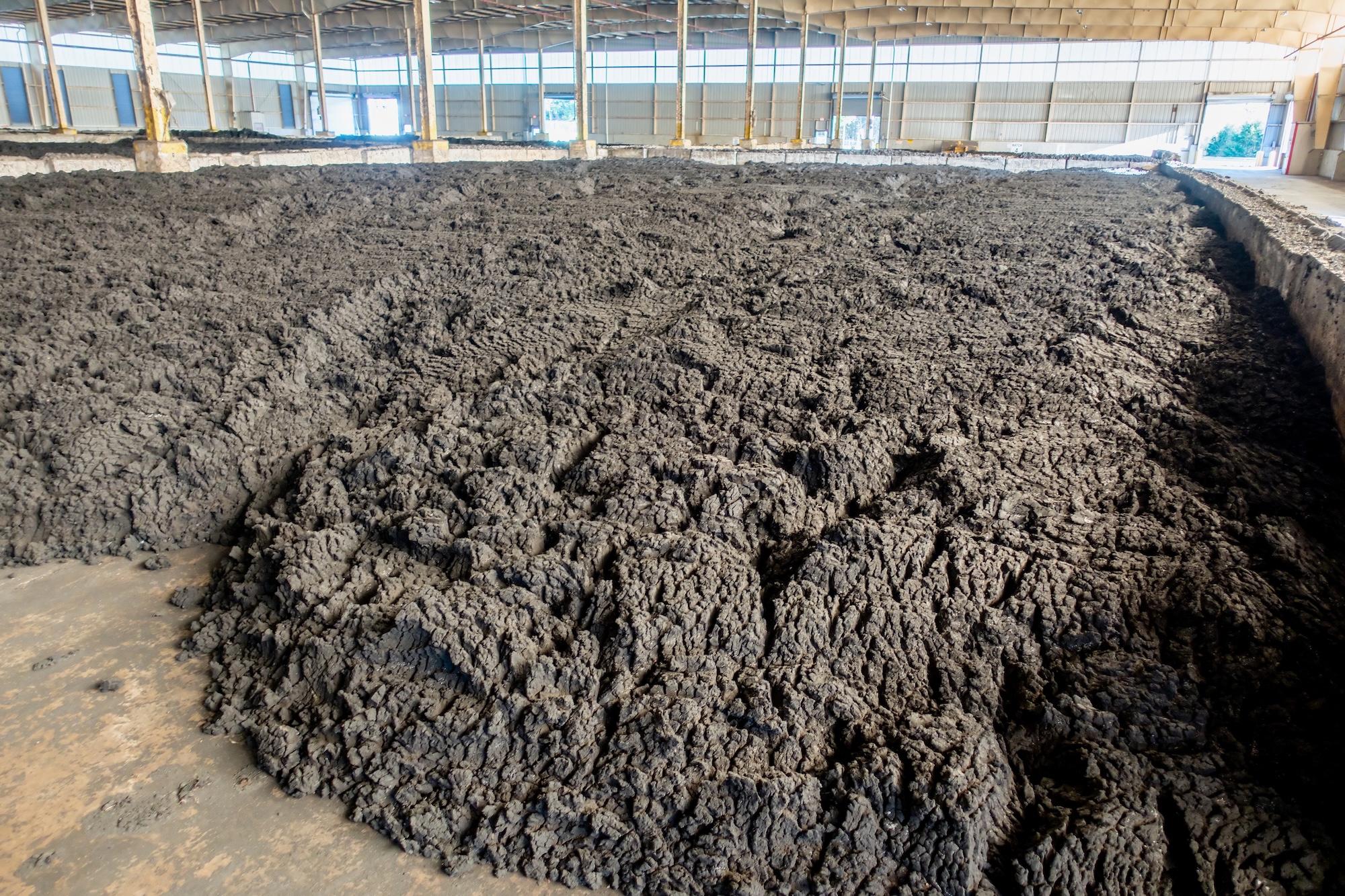
At her home in Cle Elum, UW School of Forest Resources research associate professor Sally Brown grows a lush array of produce including leeks, onions, and strawberries. Her garden beds are extra productive, she says, thanks to TAGRO, a line of soil supplements produced with biosolids from Tacoma’s municipal wastewater treatment plant.
Brown has been passionate about biosolids — essentially, a pasteurized and dehydrated form of human manure — since the early 1990s, after working as a chef and a wholesale local produce distributor in New York City got her interested in strengthening connections between cities and their surrounding landscapes. Using human waste as fertilizer “has been done for centuries, and it has kept soils healthy for centuries,” she says.

In fact, modern wastewater treatment has only improved the practice, she argues, noting that other common fertilizers like cow and chicken manure have been linked to outbreaks of disease-causing bacteria like E. coli. “That doesn't happen with human waste, because it's regulated and treated.”
But over the past decade, biosolids have become a focus of concern due to contamination with per- and polyfluoroalkyl substances (PFAS), a class of nearly 15,000 “forever chemicals” tied to health risks for humans and other species. In January 2025, the Environmental Protection Agency (EPA) released a draft risk assessment stating that PFAS in sewage sludge, the precursor to biosolids, could endanger human health. Even low parts-per-billion levels of two of the chemicals, perfluorooctanoic acid (PFOA) and perfluorooctane sulfonic acid (PFOS), could be harmful, the agency concluded.
Some researchers, like Brown, say the benefits of biosolids-based fertilizers outweigh the risks from low levels of chemicals that are, after all, ubiquitous in everyday life. “In general, what comes into the wastewater plant is a reflection of what's in our houses,” she says. “You know, you are what you eat. Well, this is the corollary.”
In a January 2025 statement issued as part of the state’s policymaking process for biosolids management, the Washington Department of Ecology sounded similar themes: “The presence of PFAS in biosolids reflects the mass production and use in consumer products that individuals interact with regularly. Once contaminants reach the Wastewater treatment plant, they have already passed through people’s bodies, homes, and businesses,” the agency said.
Others say greater caution is warranted. As well as PFAS, biosolids may contain other contaminants of emerging concern with as-yet poorly understood risks. “A lot of chemicals with problematic properties tend to end up in biosolids,” says University of Washington Tacoma professor of civil and environmental engineering Ed Kolodziej, who helped identify the link between a chemical in runoff from car tires known as 6PPD-quinone and sudden deaths of spawning coho salmon. “PFAS are simply the latest example of that. And there will be ones in the future.” [Kolodziej is affiliated with our parent group the Center for Urban Waters.]
As the promise of the circular economy bumps up against the strictures of the precautionary principle, local governments and wastewater treatment managers are in a bind. Concerns about PFAS may make it more difficult for wastewater treatment facilities to get rid of biosolids — produced at a rate of roughly 37 pounds per person per year, and a commodity that already requires delicate marketing. But getting PFAS out of biosolids relies on emerging technologies that are expensive and uncertain, imposing an additional budgetary strain on authorities struggling to upgrade treatment plants to deal with nutrients in wastewater effluent.
The PFAS Cycle
Biosolids and effluent are the two main products of wastewater treatment plants. While the fate of effluent, or treated water, is pretty straightforward — it gets discharged into waterways or sometimes recycled for uses such as irrigation — biosolids are trickier to deal with.
Sometimes biosolids are incinerated, an energy- and emissions-intensive process. Sometimes they’re landfilled, an expensive prospect, if a landfill willing to accept them can even be found. Or they can be used as fertilizer for gardens, agricultural fields, and even forestry operations. In principle this last option is a win-win: selling biosolids defrays some of the costs of wastewater treatment, while farmers get an effective fertilizer at low cost. About 40% of biosolids produced each year nationwide are used as fertilizer, although they are applied to only about 1% of cultivated land annually.

PFAS in biosolids could pose a health risk via any of these three methods of disposal, the 2025 EPA risk assessment noted. In other words, even if they are not used as fertilizer, they are potentially a toxic problem.
PFAS came into wide use in the 1940s. The water-, heat-, and oil-resistant chemicals have myriad applications, and today are found in hundreds of everyday products ranging from cosmetics and cookware to clothing, carpet, and containers for takeout food.
In the 2000s, scientists developed methods to measure PFAS at very low concentrations — on the order of parts-per-billion, equivalent to a few drops of water in an Olympic-sized swimming pool. Since then, the chemicals have been linked to a wide variety of health risks, including cancers, immune system dysfunction, endocrine disruption and decreased fertility, low birth weight in newborns, and liver and thyroid abnormalities. Given the widespread use of the chemicals, routes of exposure are legion, and almost everyone living in the U.S. has detectable levels of PFAS in their blood.
Concern about PFAS in biosolids first arose in the mid-2010s when they were detected in milk from a Maine dairy farm where sewage sludge had been used as fertilizer for many years. Wastewater is far from the only route by which PFAS enter the environment. Still, hundreds of everyday actions, such as washing a Teflon skillet, flossing one’s teeth, or rinsing out a to-go cup, can result in tiny amounts of the chemicals entering the wastewater stream. Effluent may contain PFAS, but because the chemicals repel water — which after all is one of the properties that makes them so useful — they tend to attach themselves to particles and primarily wind up in the biosolids fraction.
The carbon-fluorine bonds characteristic of PFAS are extremely strong, so the chemicals degrade very slowly. Once in the environment they may persist for hundreds or even thousands of years, and can biomagnify, or increase in concentration as they go up the food chain. The level of PFAS in the environment “just builds and builds and just moves from one sphere to the other,” says UW civil and environmental engineering professor Jessica Ray, who is working on novel methods to both separate and destroy the chemicals in water. “So, land, water, air, and that cycle repeats until we slowly chip away at the problem.”
Water is a promising compartment to target for PFAS removal because “you can treat a finite volume of water to remove a certain type of contaminant,” Ray says. This is in contrast to much more diffuse airborne PFAS, for example. She is working on multiple new strategies to address PFAS water contamination, including a variation on activated carbon, a technology widely used in both drinking water and wastewater treatment. She has sought UW funding to take the next step towards commercialization of the approach.
The best place to apply such PFAS-removal technology is an open question. Ray favors treating drinking water, because it represents “the most direct exposure pathway to humans.” In addition, drinking water supplies are cleaner; it’s more challenging to filter tiny concentrations of PFAS out from the myriad substances found in wastewater. But even if PFAS are removed from drinking water, as long as they are in widespread use in households and businesses, new PFAS contamination will constantly be washed down the drain, enter wastewater treatment plants, and find its way into biosolids.
Water quality series | |
|---|---|
 | This article was funded in part by King County in conjunction with a series of online workshops and research exploring Puget Sound water quality issues affecting wastewater management. Its content does not necessarily represent the views of King County or its employees. |
Monitoring Exposure
Responding to concerns about PFAS contamination, Maine banned land application of biosolids in 2022 and Connecticut in 2024; several other states have considered legislation to restrict their use. A handful of other states regulate allowable levels of PFAS in biosolids or require regular testing.
There are no federal regulations around PFAS in biosolids, and the EPA’s January 2025 action represented the first time the agency had acknowledged they could pose a risk.
Some stakeholders criticized the EPA exposure scenarios as unrealistic, saying the agency’s conclusions about risk are therefore overblown. The agency extended a public comment period on the draft until August 15, 2025 but has not issued any update since. The risk assessment is only an initial step towards possible federal regulation of PFAS levels in biosolids, which would occur via a separate process.
In Washington, Governor Bob Ferguson signed a bill in 2025 that will require wastewater treatment plants to measure the levels of PFAS in biosolids on a quarterly basis starting in January 2027 through June 2028, and report the results to the Department of Ecology. Gathering these data could be a first step to regulating PFAS levels in biosolids at the state level.
Even before the bill’s passage, efforts to assess PFAS in biosolids had already begun. In 2024, the Department of Ecology sampled biosolids from 44 wastewater treatment plants around the state, finding PFOS levels under 60 parts per billion and PFOA under 20 parts per billion at all locations. “Most states with established PFAS regulations would allow land application of the majority (70%) of these biosolids without any restrictions” the agency wrote in a 2025 report on the study.
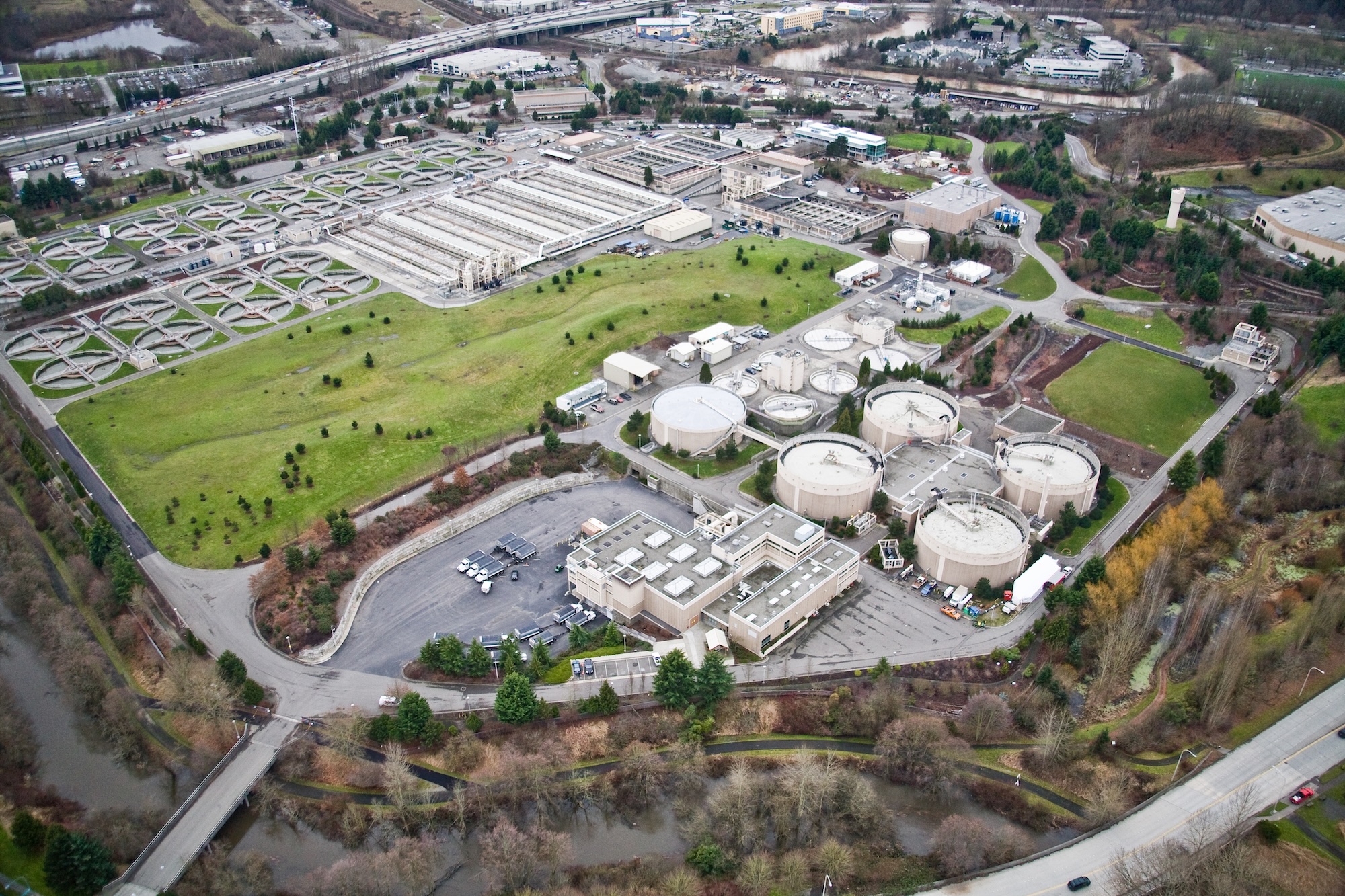
From October 2023 through August 2024, King County monitored 40 different PFAS chemicals in influent, effluent, and biosolids at three regional wastewater treatment facilities and in leachate from Cedar Hills landfill. The analysis revealed PFAS levels mostly comparable to treatment plants in the San Francisco Bay Area, a similarly sized urban area without major industrial sources of PFAS.
“It wasn't surprising, as much as kind of a relief, to know that we're in the average range of what you would see for a municipal wastewater system,” says Erika Kinno, Resource Recovery Policy and Research Supervisor in the King County Wastewater Treatment Division who managed the sampling effort for the county.
Biosolids from South Treatment Plant have somewhat elevated PFAS levels, possibly because Cedar Hills Regional Landfill leachate is routed directly to that plant.
The research team also compared the levels of one type of PFAS chemical, PFOS, in biosolids to Michigan state standards. Based on a 2022 study from the Department of Ecology, King County reported that biosolids from South Plant and Brightwater were below Michigan’s 20 nanograms per gram cutoff for “elevated” levels, but West Point biosolids had a PFOS level of 27.4. They noted that this may be due to large volumes of urban stormwater, which is known to contain high PFOS levels, processed through this plant.
The concentration of PFOS considered by EPA to be harmful to aquatic life is 36 times greater than the average PFOS concentration in King County effluent.
The county plans further studies to find out more about the reasons behind the higher PFAS and PFOS levels in specific locations.
Emerging Technologies
Meanwhile, some wastewater treatment facilities are beginning to adopt nascent technologies to remove or destroy PFAS in wastewater or biosolids.
In 2017, the City of Edmonds made the decision to replace its wastewater treatment plant’s aging diesel incinerator for biosolids with a technology known as fluid lift gasification (FLG), pioneered by Pennsylvania-based renewable energy company Ecoremedy.
FLG treats biosolids at high temperatures in an oxygen-poor environment, producing a man-made alternative to natural gas called syngas that can be used to fuel the process itself. The setup thus has the potential for substantial savings on fuel, money, and carbon emissions compared to the conventional incineration approach.
Depending on the processing temperature, FLG yields a sterile, sand-like material that can be used in concrete and other products, or biochar — an amendment that improves moisture retention and other soil qualities but is not a nutrient-dense traditional fertilizer. Either way, the high temperatures break the carbon-fluorine bonds in PFAS and, while small amounts of the chemicals are emitted into the atmosphere, the physical products are PFAS-free, according to an independent analysis.
Edmonds represents the first real-world test of the technology at city scale, and adapting the process to the day-to-day variations of municipal wastewater treatment has proved tricky. The system was scheduled to go online in 2022, but did not do so until late 2023, and Edmonds has not provided updates on when the system may be fully operational.
Other potential solutions are also under development. With support from an EPA grant and in collaboration with the UW Center for Urban Waters, the City of Tacoma piloted a two-step process to remove PFAS from municipal wastewater, as described in a November 2025 presentation. [Salish Sea Currents’ publisher the Puget Sound Institute is affiliated with the Center for Urban Waters.] First, a technique known as foam fractionation is used to concentrate PFAS, which are difficult to remove from wastewater because they are found at extremely low levels in a complex mix of chemicals. Next, the concentrated material is subjected to hydrothermal alkaline treatment (HALT), which uses a combination of high temperature, high pressure, and high pH to break apart carbon-fluorine bonds.
While the debate continues about exactly how much risk PFAS in biosolids pose and the best way to manage that risk, there’s wide agreement about one thing: the source of the problem is way, way upstream from wastewater treatment plants. Wastewater treatment doesn’t produce PFAS or add them to wastewater; instead, “it's a check-in point for us that is reflective of how chemicals are used in our society,” Kinno says.
The ultimate solution, then, also lies far upstream. “The really great way” to solve the PFAS problem, says Brown, “is stop putting them in everything.”
But to reduce or eliminate use of PFAS and adopt a more cautious approach to introducing new chemicals into the environment, will require a major cultural shift. “In the U.S. particularly, but also to some degree globally, we're not willing to make hard decisions at the front of the chemical pipeline,” Kolodziej says. “So, we end up spending a lot of time and effort and money on the end of the pipe fixing the problem.”
This article was funded in part by King County in conjunction with a series of online workshops and research exploring Puget Sound water quality issues affecting wastewater management. Its content does not necessarily represent the views of King County or its employees.