Salish Sea

The Salish Sea extends across the U.S.-Canada border, and includes the combined waters of the Strait of Georgia, the Strait of Juan de Fuca, Puget Sound Basin and the San Juan Islands.

Overview

The boundaries of Puget Sound and the Salish Sea are not always consistently defined by scientists and government agencies. This article clarifies the distinctions between oceanographic and watershed-based definitions of these geographic areas. 

Water Resource Inventory Areas (WRIA). Map: Kris Symer. Data source: WAECY.

Related Articles

The revival of an Indigenous aquaculture practice has come to the southern Salish Sea. Clam gardens could help First Nations in British Columbia and Washington state address issues of climate change and food sustainability. 

Scientists are using computer models to address complex issues in the Salish Sea like the rise of harmful algal blooms and the movement of toxic PCBs. LiveOcean, Atlantis and the Salish Sea Model are three systems that are changing the game for ecologists and other researchers.

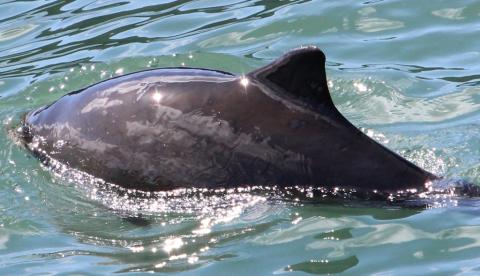
Harbor porpoises declined dramatically in the Salish Sea in the 1970s but their populations have since rebounded, increasing by more than 10% per year in recent decades. A 2020 report for the Encyclopedia of Puget Sound examines harbor porpoise status and trends, natural history and recent policy considerations for the species.

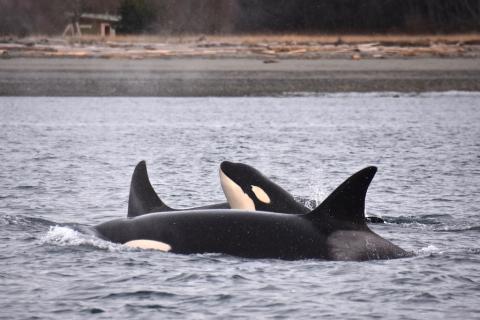
Officially known as West Coast transients but increasingly referred to as Bigg’s killer whales, these marine mammal-eating orcas (Orcinus orca) are spending increasing time in the Salish Sea to consume their marine mammal prey including harbor seals, Steller sea lions, and harbor and Dall’s porpoise. They range from Southeast Alaska to California, but over the last 15 years more members of the population are spending increasing time in the inland waters of Washington State and British Columbia (Houghton et al. 2015, Shields et al. 2018). They have no predators (except perhaps occasionally other Bigg’s killer whales - see Towers et al. 2018), but are at risk from anthropogenic effects, including toxics and noise pollution (Ford et al. 2007).

The first comprehensive guide to the fishes of the Salish Sea is the culmination of more than 40 years of research by University of Washington authors Ted Pietsch and Jay Orr. The new three-volume set includes descriptions and illustrations for every fish species known to have been documented here, all gathered from an exhaustive search of libraries, aquariums, fish collections and even one restaurant.

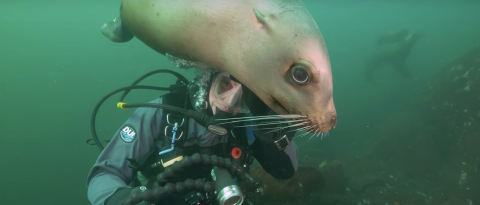
A new video series follows local scientists into the water, capturing the adventure behind the research. "Salish Sea Wild" is entering its second season and we interviewed the series host and producers. Among our burning questions: What's it like to have a Steller sea lion chew on your head?