Sewage and fecal pollution

In Puget Sound, fecal pollution comes from both point-source origins such as combined sewer overflows and direct marine effluent discharge as well as non point-source origins such as surface water runoff, both of which increase with rainfall and river and stream discharge. In addition to serving as an indicator of pathogens, fecal bacterial pollution can also be an indicator of nutrient loading because sewage often contains high levels of nitrogen and phosphorous. Both point source (failing septic systems) and non-point sources (landscape features) contribute to fecal bacterial levels in Puget Sound. 

Source: Puget Sound Science Review

Overview

Fecal bacteria are found in the feces of humans and other homeothermic animals. They are monitored in recreational waters because they are good indicators of harmful pathogens that are more difficult to measure. 

Related Articles

The Pathogens Prevention Reduction and Control agreement between the Environmental Protection Agency and the Washington State Department of Health focuses on the prevention and reduction of pathogen pollution in Puget Sound through the management of human and animal waste. The primary objectives of the agreement include restoring shellfish growing areas, avoiding shellfish closures, and protecting people from disease.

Scientists are using computer models to address complex issues in the Salish Sea like the rise of harmful algal blooms and the movement of toxic PCBs. LiveOcean, Atlantis and the Salish Sea Model are three systems that are changing the game for ecologists and other researchers.

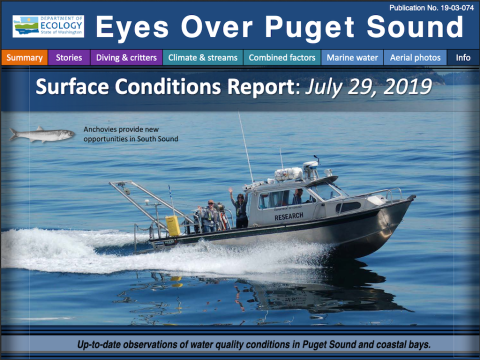
In July, the recent trends of warm, dry conditions lessened; however, river flows remain low. Extensive macroalgae drifted through South and Central Sound and washed up on beaches. Macroalgae growth is fueled by excessive nutrients and sunshine. When it washes onto the beach, it is called beach wrack, and it can be a health risk to beachgoers because of bacteria it can harbor. From our aerial photography, we saw that Southern Hood Canal looks tropical because of a bloom of coccolithophores coloring the water turquoise. Schools of fish congregate in South Sound and southern Hood Canal. Jellyfish are abundant in Quartermaster Harbor.

A 2019 report from the Puget Sound Ecosystem Monitoring Program presents an overview of selected recent monitoring and research activities focused on toxic contaminants in the Salish Sea. 

The federal Clean Water Act of 1972 was designed as a logical step-by-step approach to clean up the nation's waterways. Most people acknowledge that the law has been effective in reducing pollution, but industrial and environment groups tend to be on opposite sides when discussing whether regulations and permits adequately protect water quality. These 10 elements of the Clean Water Act (CWA) focus on how the law applies to Puget Sound.

A report from the Washington State Department of Health outlines results from a series of projects funded by the U.S. Environmental Protection Agency's National Estuary Program in 2011. These projects addressed pathogen pollution in Puget Sound through the management of human and animal waste. Restoring shellfish growing areas, avoiding shellfish closures, and protecting people from disease served as the primary objectives.