

When is low dissolved oxygen problematic for species?
Low oxygen is only problematic when the oxygen level drops below certain thresholds. Those thresholds vary a great deal by species, but let's just take humans as an example. As you read this, maybe on your laptop in your home, or maybe in your office, you probably have plenty of oxygen in your room. Far more than you may actually need. Now let's say there is a 10% reduction in that oxygen. Maybe your room suddenly gets really crowded, and there are a lot of people competing for air. Because you started at a place where there is plenty of oxygen, you're probably not even going to notice that 10% reduction. It isn’t enough to push oxygen levels low enough to a point where your body starts having trouble.
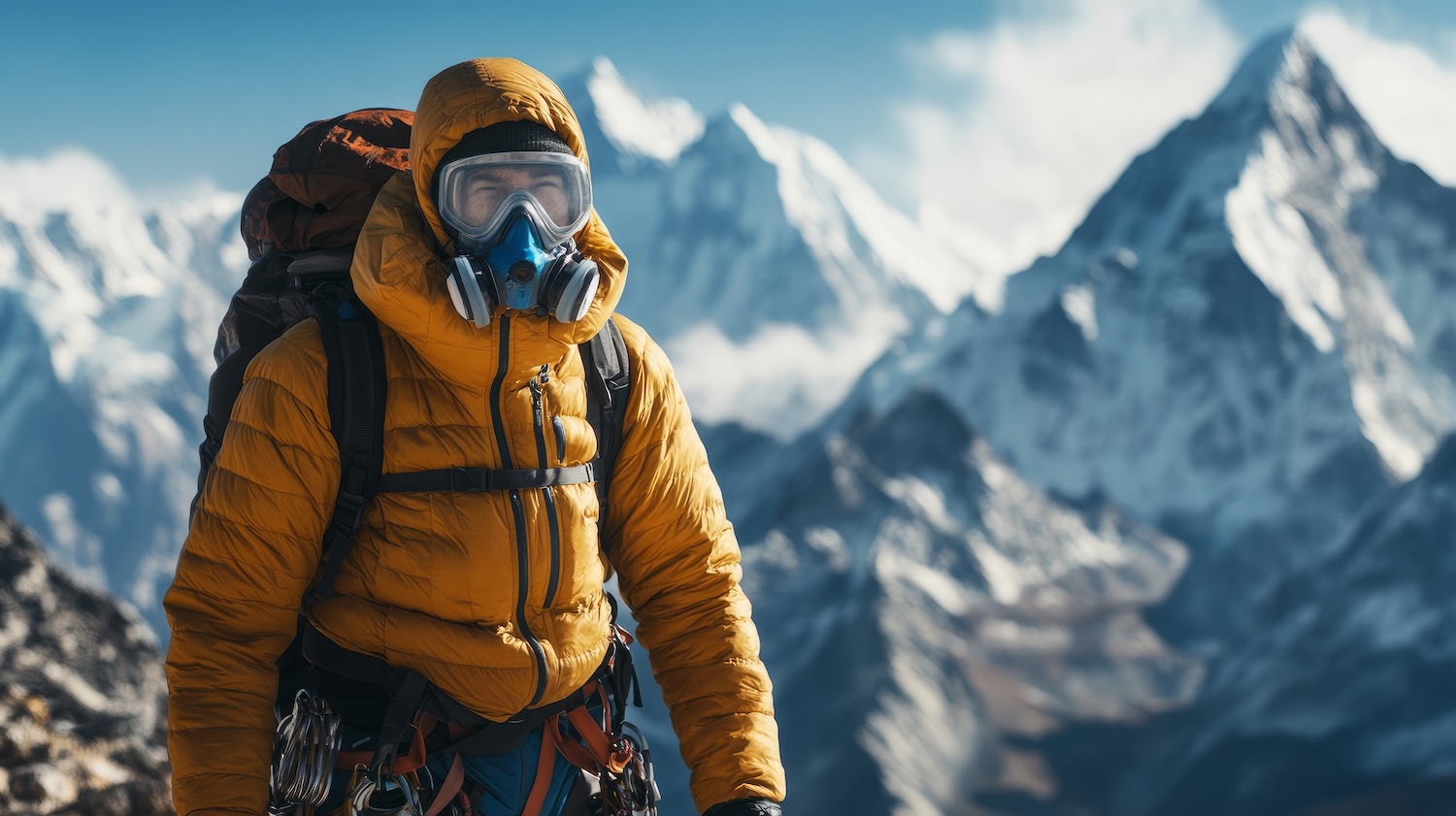
However, let's pretend that instead of reading this in the comfort of your office or in your home, you are halfway up Mount Everest. I have never climbed Mount Everest, but I suspect right around halfway up is probably where oxygen is getting really, really limiting. There may be just barely enough for you to be able to move and still maintain all your cognitive functions. Now, if there's a 10% reduction in that environment, that's a huge problem for you. So, when you start thinking about reductions, think about whether it is going to pass some threshold beyond which an organism is going to have challenges. What sort of challenges will it have coping with that new oxygen level?
How do species respond to low oxygen levels?
Organisms have a range of responses available to them to try to cope with thresholds of low oxygen. Typically, they can move, acclimate, or in the worst-case scenario, they may die.
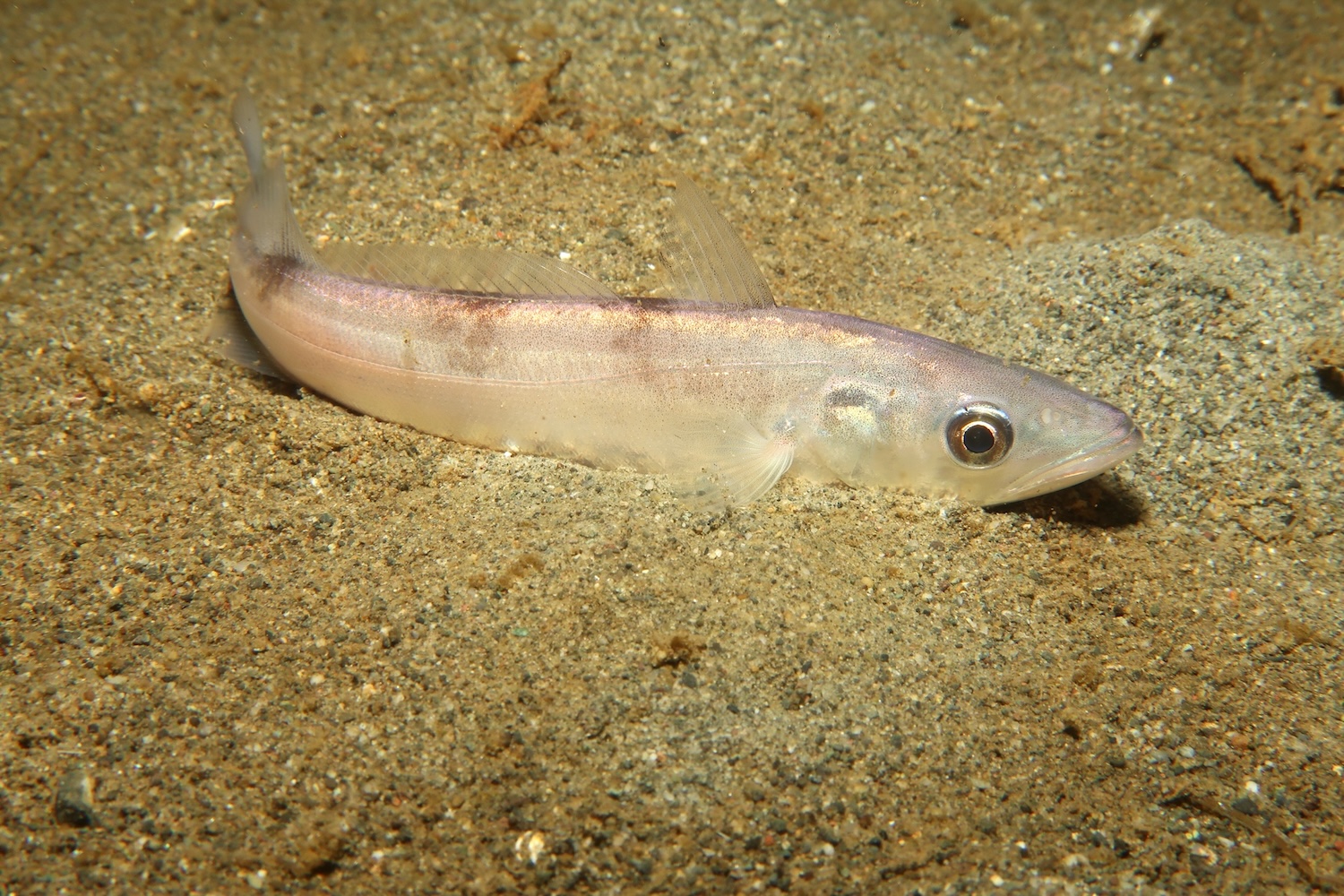
The first response is an obvious one: If an animal has the capacity to move, it will move. In Hood Canal, for example, typically what happens is oxygen becomes very depleted towards the end of the summer. This happens most often at the deepest parts of the waterway’s southern end. Organisms may leave Hood Canal in one of two ways. They might just go north to try to get out of that whole region. And we do see some evidence that in fish. Or they simply might change how deep they are living. Crabs, for example, will move up into the shallows to try to avoid an area that has very, very low oxygen.
This is not to say that just because a species can move that there won’t be a bad outcome. Presumably they were in that spot in the first place because that's where they wanted to be. Studies show that such a distribution shift can change a species’ ability to find food or avoid predators, but it doesn't mean that they will simply die because the oxygen was below their threshold. They're going to do things to try to minimize their exposure.
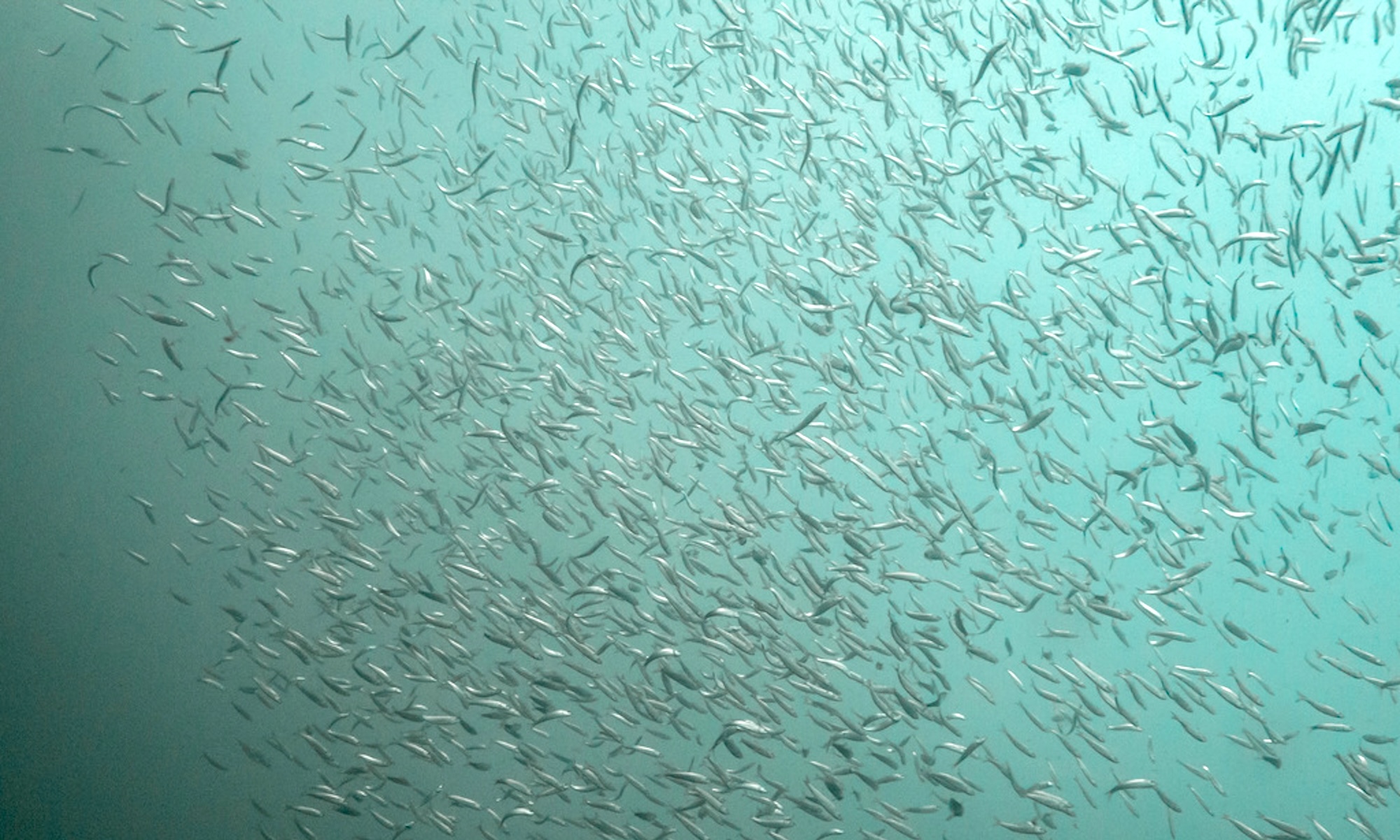
Species may also acclimate to their surroundings. Herring and other animals can adopt physiological changes to cope with this new level of oxygen. It might be the structure of the gill itself will change to make it more efficient at pulling oxygen out of the water. The blood composition itself will change to enable it to be more effective at grabbing that oxygen than delivering it on to the rest of the fish tissue. Over many, many generations, you might start see evolution so particular species of fish, or perhaps a segment of a particular species of fish that lives in a particular environment, might start evolving the capacity to deal with low dissolved oxygen.
The last response is the one that we want to avoid: death. Death can happen when animals are unable to adopt any of those other coping mechanisms. And in fact, when we look at some of the fish kill events or any type of killing of marine life that happened due to low dissolved oxygen, it's often happening because the change in oxygen happened extremely abruptly, like in a matter of hours. In those cases, organisms didn't have the capacity to move or mount some sort of physiological ability to deal with that new condition.
Does it matter when and where oxygen is depleted?
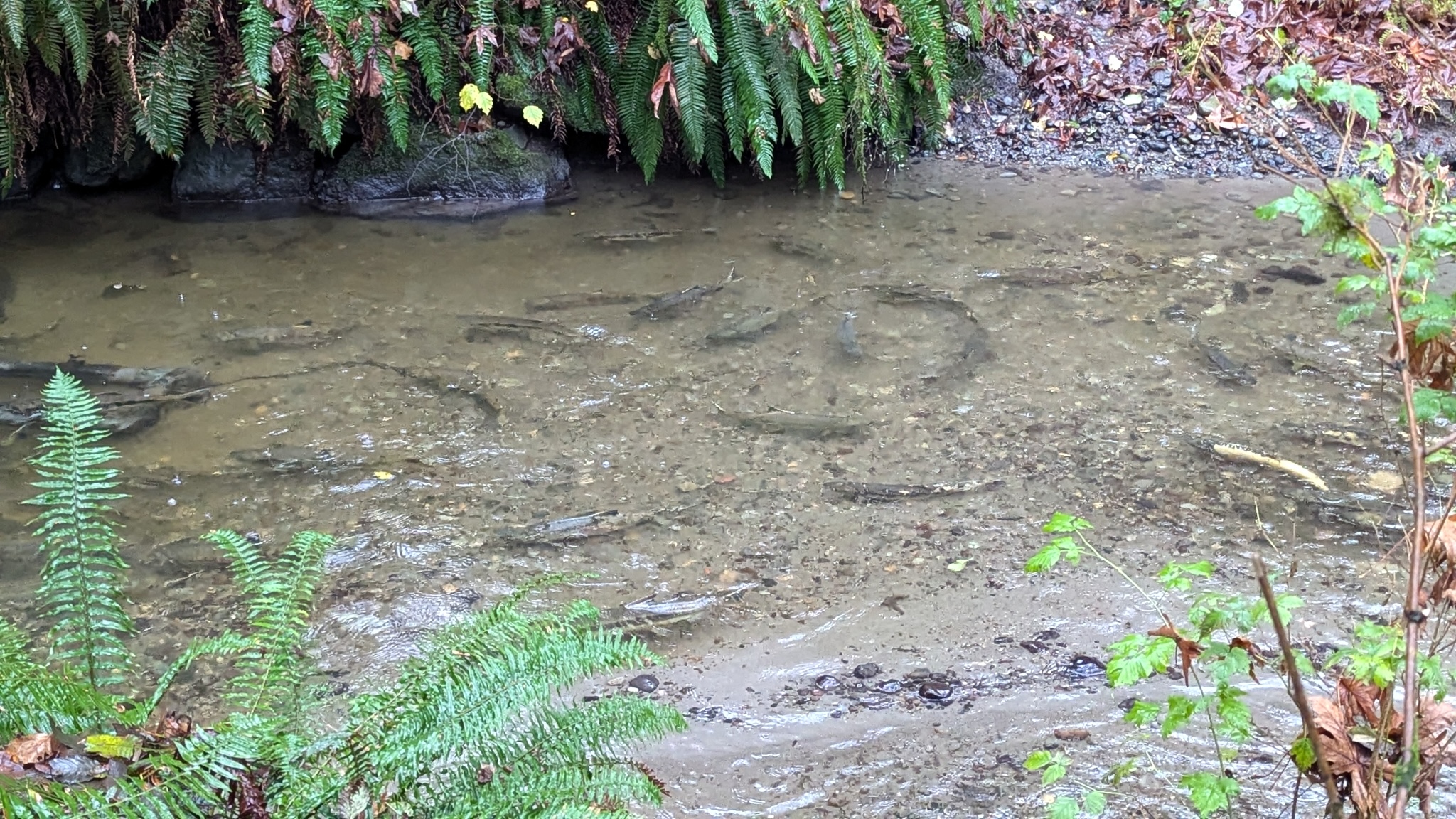
Imagine a salmon wandering into Carkeek Creek to spawn. In most years, it's depositing and burying its eggs in the stream bed, so those eggs are living in the bottom of the creek in late autumn and winter. During that time, water needs to pass over the eggs and deliver fresh oxygen to them. Otherwise, they're going to suffocate. The overall amount of oxygen that's in Carkeek Creek in that period of time really, really matters to the survivorship of those eggs. The timing here is critical, because if there's a very low oxygen that happens in, say, July, that is not going to impact eggs that are only present much later in the year.
Now let's take salmon again, in this case migrating out into Puget Sound. While these salmon are in Puget Sound, they are inhabiting very shallow water. Very shallow water is typically extremely well oxygenated. For these salmon that are hanging out in the top, say, 15 or 20, feet of water, it really doesn't matter at all that at hundreds of feet below them resides really, really, low oxygen water, because they're not there. The spatial overlap of where the organism is and where the oxygen is low is incredibly important. We're not going to see a mass die-off of salmon that are at the surface because the bottom water is depleted in oxygen. And similarly, if there would happen to be perhaps a rapid intrusion of deep water with low dissolved oxygen into the surface waters, that would not be problematic for salmon if it happened after the salmon had already migrated through. So again, the time and place where oxygen passes those thresholds is incredibly, incredibly important.
Watch Dr. Essington's video explanation of how low dissolved oxygen might affect aquatic species.