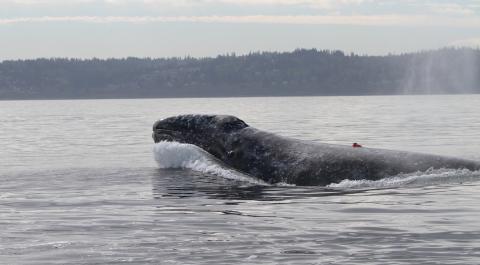
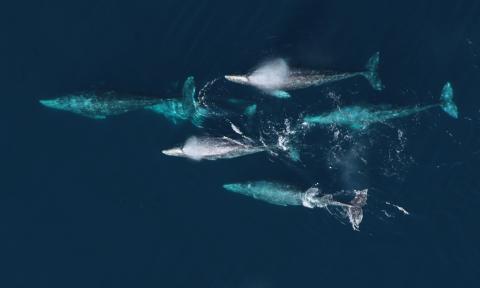
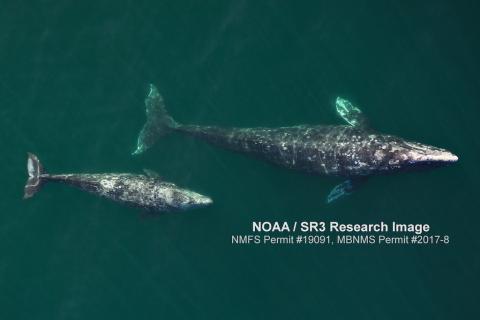
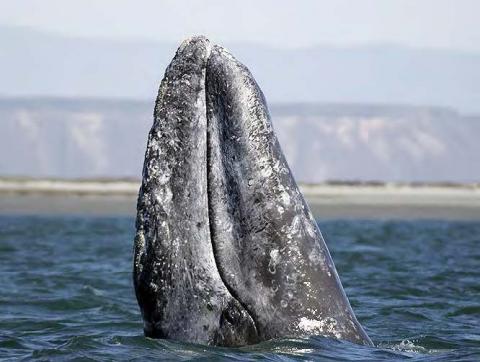
Gray whales are among the more commonly sighted large whale species in the Salish Sea and along the coast of the Pacific Northwest, but a clearer understanding of the multiple ways they use our waters has only come into focus in recent years. Gray whales were historically mostly known for their annual migrations past the Washington Coast including the entrance to the Salish Sea: southbound in December on route to their wintering grounds in Baja California, Mexico and northbound in March to May returning to their primary feeding grounds in Arctic waters.
In general, gray whale use of the Salish Sea and coastal waters falls into several broad groups or categories as follows:
- Overall Eastern North Pacific migrating group. This is the major portion of the gray whale population that migrates past the Pacific Northwest.
- Migration stragglers. In spring and sometimes in December particularly in years with high mortality, gray whales wander into the Salish Sea. These whales are often in poor nutritional condition and may already be in a debilitated state and end up in unusual areas.
- Sounders gray whales. This is a small group of annually-returning gray whales that break off from the migration and feed in spring in northern Puget Sound documented starting in 1990.
- Pacific Coast Feeding Group. These approximately 250 gray whales appear to be a distinct unit that largely do not appear to migrate further north and feed in the Pacific Northwest from spring to fall.
Western gray whales. While most of the whales migrating past the Pacific Northwest are part of the eastern North Pacific population, many gray whales from the small endangered western population that feed in waters off Russia also appear to migrate past our coast.
--Source: Encyclopedia of Puget Sound
Overview