The Pacific Whale Watch Association (PWWA) is a community of ecotourism professionals with a shared commitment to education, conservation, and responsible wildlife viewing in Washington state and British Columbia. The 2023 PWWA annual report summarizes wildlife sightings and sentinel actions logged by members throughout the year. Sentinel actions are protective measures taken by professional whale watchers, such as warning vessels near whales or removing marine debris.
Background
Average annual flow rate can be affected by changes in precipitation. Analysis of historical precipitation data suggests that significant trends in historical rainfall patterns associated with climate change in the Pacific Northwest are not detectable (Hamlet et al. 2005, Mote et al. 2005, Hamlet and Lettenmaier 2007, Hamlet et al. 2007). Climate change modeling sug...
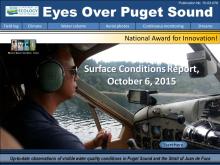
January air temperatures and precipitation were above normal as El Nino conditions prevail. This winter our snowpack is in much better shape, though we’ve lost some snow from the stint of warm weather. More rain and higher river flows have lowered salinities in Puget Sound and coastal bays. Nonetheless, water temperatures in Puget Sound remain at record-breaking highs. Jellyfish patches are numerous in finger inlets of South Sound and signs of phytoplankton blooms are visible in coastal bays. When conditions limit flying, Ecology’s research vessel gets the job done.
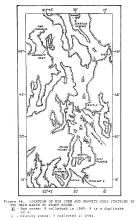
Toxicant pretreatment planning study technical report C1: Presence, distribution and fate of toxicants in Puget Sound and Lake Washington was published in October 1984.
By E. A. Crecelius, J. T. Gunn, P. Hamilton, W. Hom, R. D. Muench, S. P. Pavlou, G. P. Romberg, R. F. Shokes, J. Vinelli
A 2014 report describes a study of socio-cultural values associated with blueback salmon in the Quinault Indian Nation. The blueback salmon (Oncorhynchus nerka) is a unique strain of sockeye that returns primarily to the Quinault river system.
By Kelly Biedenweg and Sophia Amberson of the University of Washington; Justine James of the Quinault Indian Nation.
Puget Sound is starting to normalize in response to fall conditions with cooler air temperatures, rain, and recovering river flows. We are seeing fewer algal blooms, jellyfish, and macro-algae as salinities become more normal. Yet warm waters persist and El Nino and the Blob are likely to affect Puget Sound throughout the winter. The Nisqually River fared better through the drought than other rivers and best management practices have been improving its water quality. EOPS and ferry monitoring gain recognition with a national award for innovation!
As coastal and regional conditions gradually normalize in response to a fading Blob and increased rain, the big question remains. Will the snow in the mountains stay there or come down prematurely and lower salinity in Puget Sound like last winter? Cascade snowpack is currently below normal. The El Niño at the equator is still brewing! Major rivers transport large amounts of suspended sediments and soil into Puget Sound, also seen in our ferry sensor data. Our flight team gets in the pool for safety training.
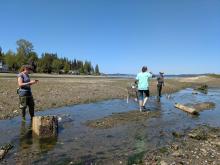
Crab Team members maintain a massive surveillance program to track the population’s advance, while researchers probe the inner workings of the invasive species.