

Within days of the reported finding that 6PPD-Q was responsible for unusual deaths among coho salmon, environmental advocates were calling on government officials to take charge and figure out how to get the dangerous chemical out of tires.
When the Washington Legislature convened a month later, in January 2021, lawmakers began discussing the problem. And before adjournment in April, they provided $195,000 for an “assessment of potential hazards of 6PPD and alternatives.” That rapid assessment (pdf), conducted by the Department of Ecology, was released as a “technical memo,” in November 2021 — less than a year after the initial discovery was reported.
The first list of possible alternatives outlined in the memo focused on preservative compounds closely related to 6PPD. Most of these were labeled “chemicals of high concern,” as described in the GreenScreen for Safer Chemicals database, which is based on published toxicity data. At that time, little was known about whether the alternative chemicals would transform to a more toxic quinone form when exposed to ozone, as occurs with 6PPD. And none had undergone direct experimentation with coho salmon.
That first assessment cast a dark shadow on the entire class of compounds called para-phenylenediamines, or PPDs, which are related to 6PPD. Many are still in doubt, but at least one of the PPD compounds, CCPD, has survived as a proposed alternative. The chemical company LANXESS has reported further testing on CCPD, helping the chemical to maintain a position alongside other potential alternatives.
Following that initial funding, the Washington Legislature continued to support 6PPD investigations in 2022 with a $2.7 million investment. In turn, Ecology continued to fund research projects and to gather information with the goal of producing a 6PPD Action Plan to address the overall problem. A progress report (pdf) on the continuing work in October 2024 summarized known information about the effects of 6PPD. It also provided recommendations for further study of alternatives as well as strategies for filtering toxic tire chemicals from road runoff. Ecology officials are waiting for additional information before completing the action plan.
Earlier in 2024, the Legislature declared tires containing 6PPD as a “priority product” under the 2019 Safer Products for Washington law, an approach used to investigate and ban products that present chemical hazards to the public. The legal designation of “priority product” allowed Ecology to focus more rapidly on alternatives while avoiding a slower, more deliberative process for determining whether tires should or should not be considered.
Since the law’s inception in 2019, the Safer Products program has restricted specific toxic chemicals in 13 product categories, including laundry detergents, drink can linings, TVs and electronics, carpets, vinyl flooring, and stain-resistant household chemicals, among others.
When it comes to 6PPD, it appears that the Safer Products program will not be able to impose restrictions on tires in the same way as was done with those earlier products, said Craig Manahan, an Ecology toxicologist working on alternatives analyses for 6PPD.
“Those other products all have alternatives that are in use right now, whereas 6PPD (in tires) does not,” Manahan said, noting that every tire on the market today contains the same troublesome chemical, 6PPD.
Under the law, before Ecology can regulate a hazardous chemical in any product, the agency must identify one or more similar products that do not contain the chemical. Such alternatives must be deemed “feasible and available,” as the law states, meaning that the product must serve a similar function to the product it is replacing and that consumers must be able to buy it at a reasonable cost.
Considering that tires without 6PPD do not even exist on the open market, it is not likely that Ecology will propose to ban the chemical in tires when the agency releases a draft of its “Regulatory Determinations Report,” scheduled for November. Ecology could require reporting on the use of chemicals in tires, as allowed by law, but such details have yet to be revealed.
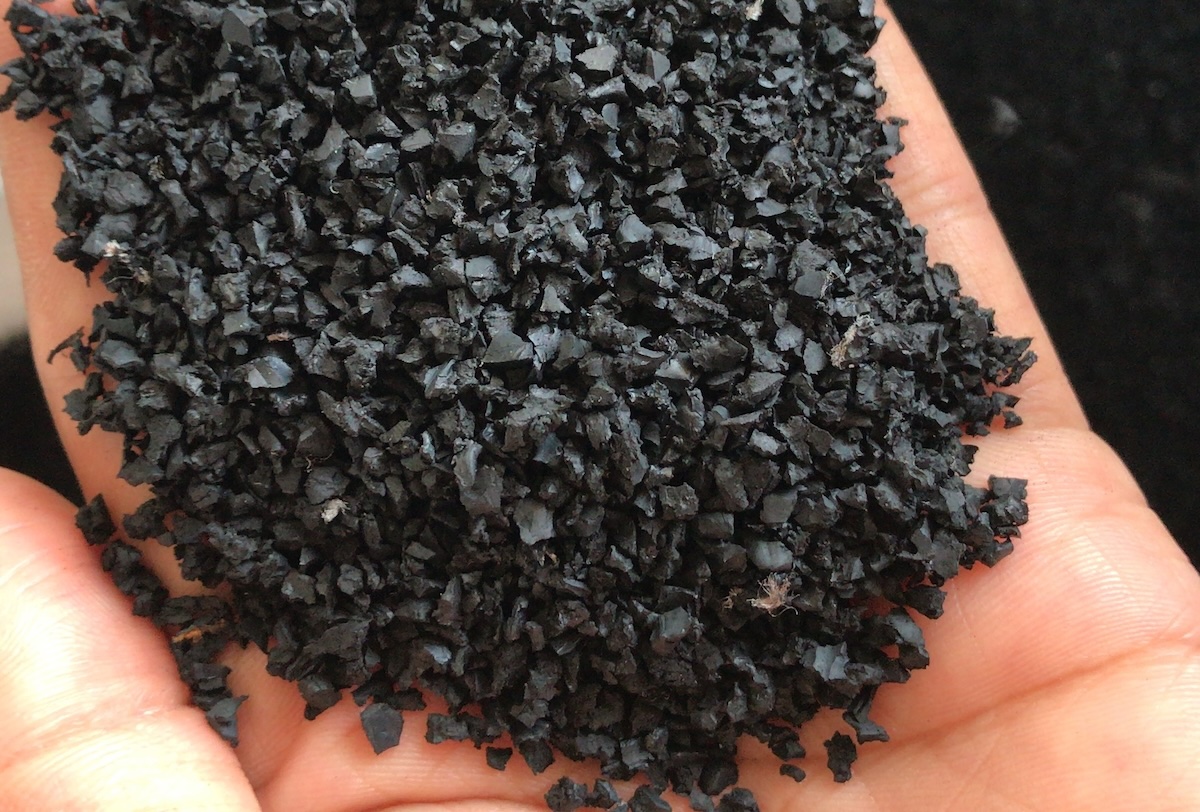
During the 6PPD evaluation process, Ecology experts reviewed other products containing 6PPD for their potential hazards. They determined that artificial turf containing ground-up tires — called crumb rubber — could be a source of 6PPD exposure for people who play on such fields, as explained in a technical memo.
Crumb rubber is a common infill component of artificial turf, used to keep the plastic blades of grass in an upright position while holding the underlying mat in place. It turns out that the plastic grass itself may contain toxic PFAS compounds, called forever chemicals, so Ecology is looking at that issue as well. Besides the risks to people, the agency is considering the exposure to aquatic creatures from rainwater that drains off fields made of artificial turf.
While tires sans 6PPD may be unavailable in today’s market, infill materials other than crumb rubber do exist, which opens the door to regulating artificial turf under Safer Products. Cork, sand, coconut fiber, olive pits and wood particles have been used for infill, according to a technical report (pdf) by Ecology, which is examining the risks and costs of such alternatives. Consequently, the agency could propose a ban on artificial turf made with crumb rubber — and potentially plastic grass containing PFAS — depending on available alternatives.
Knowing the limitations of the Safer Products law, a group of legislators proposed an outright ban on 6PPD in tires during this year’s legislative session. As proposed, the ban would go into effect in nine years. That should be enough time for tire manufacturers to find and replace the chemical, supporters argued, noting that the Legislature could extend the deadline if alternatives were not available by then.
The legislation, House Bill 2421, was strongly endorsed by environmental groups, although some said nine years is too long for action and wanted to shorten the deadline.
In legislative committees, the bill received support from most Democrats and opposition from most Republicans. After passing the House Environment and Energy Committee and then the Finance Committee, it died for lack of action in the Rules Committee and never reached the full House.
The idea that the Legislature should ban 6PPD in tires came on suddenly to many lawmakers, the sponsors said, acknowledging the difficulties of selling the idea during a short legislative session dominated by budget difficulties. Supporters said they anticipate greater success in 2027, when they intend to push harder to get the bill across the finish line.
Laurie Valeriano, executive director of Toxic-Free Future, an environmental group, said the law is essential to increase the urgency to get a replacement for 6PPD as soon as possible.
“It is taking far too long to get viable alternatives tested,” she said. “We understand that it takes time, but we need the legislation to establish a deadline.”
Manufacturers tend to cling to the status quo for as long as they can, Valeriano said, based on experience with other toxic products. For example, she noted, a ban on PFAS in firefighting foams faced strong opposition, even though the fluorinated chemicals were contaminating groundwater and drinking-water wells in many locations.
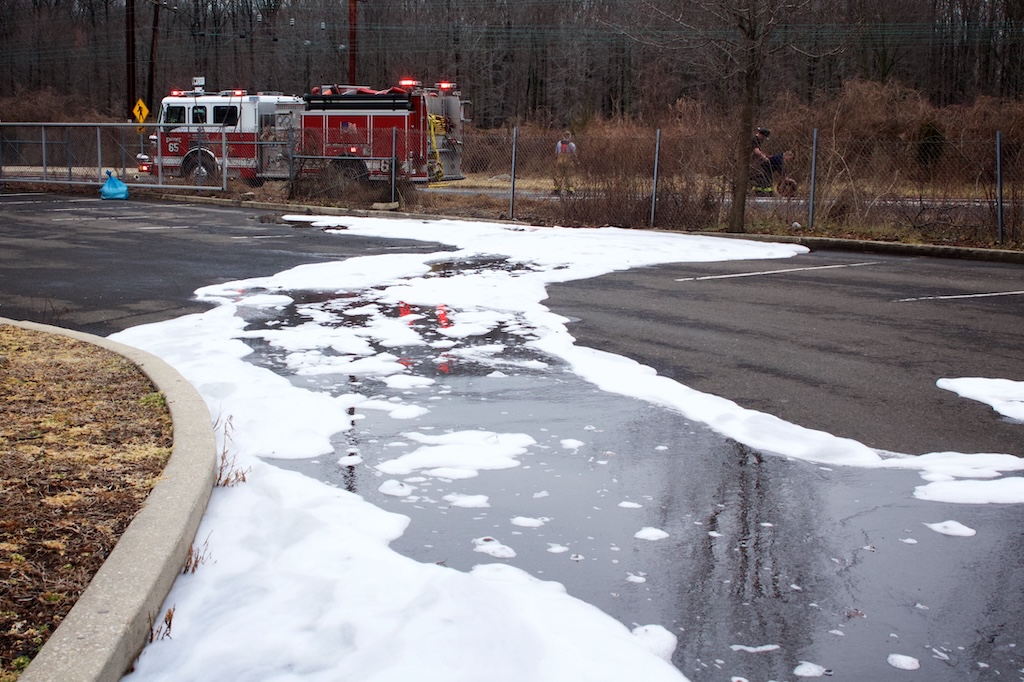
A primary objection to Senate Bill 6413 by some fire-fighting groups, airport officials and chemical industry representatives was that PFAS-free foams did not perform as well, especially under high-hazard conditions, such as aircraft fires.
Lawmakers pushed ahead by approving the ban on firefighting foam in 2018 with exceptions for specific high-hazard conditions. It took effect immediately for use in training firefighters and then for non-exempted uses in 2020. Based on state and federal actions, PFAS foams continue to be phased out across the country.
According to Valeriano, Washington has been a true leader in limiting the use of toxic chemicals. The outcome, she added, has been to reduce risks to human health and the environment — not only in this state but throughout the nation.
“We need a policy to drive change,” Valeriano said. “I have heard a thousand reasons not to make important decisions, like banning 6PPD, but the bottom line is that the health of people and salmon have to matter.”
Meanwhile, California is moving through its own process of analyzing 6PPD in tires and searching for alternatives. In 2023, the California Department of Toxic Substances Control (DTSC) declared tires containing 6PPD a “priority product” under the state’s Safer Consumer Products program.
A major difference with the Washington law is that California mandates that an alternatives analysis be conducted by the tire manufacturers themselves. In Washington, Ecology takes on such studies or approves contracts for needed research.
In July 2025, DTSC proposed adding “PPD derivatives” to the “candidate chemicals list,” allowing close relatives of 6PPD to be considered for future restrictions while preventing unwarranted substitutions for 6PPD without a complete hazard evaluation. PPD, or para-phenylenediamine, is the core chemical structure from which 6PPD is derived. This class of chemicals shares various properties.
The U.S. Tire Manufacturers Association organized a consortium of 36 tire and chemical companies to address the 6PPD issue. In 2024, the consortium submitted to DTSC a list of five potential alternatives, later amended to seven. These chemicals are undergoing an official Stage 2 analysis to determine feasibility as a replacement for 6PPD.
In a progress report last August, the consortium reported that 24 potential alternatives are still under consideration, although the number may have changed since then. One or more of those 24 proposed alternatives were received from companies under a confidentiality agreement, according to USTMA documents.
The Stage 2 report is expected to update information about toxicity and performance of the various alternatives, as well as their technical and economic feasibility. Each alternative is to be compared with 6PPD and other alternatives, with the companies finally proposing actions to address the problem, as described on the USTMA website.
The alternative analysis reports originally were due on Aug. 19 of this year, but an extension was recently granted to give tire manufacturers until Oct. 1, 2029.
“After reviewing the current state of potential alternatives, DTSC has determined that additional time is needed for the identification, evaluation, and implementation of safer alternatives,” states a letter to tire manufacturers. “The extension reflects the unique nature of this product-chemical combination and the level of information needed to support a safer alternative decision…
“DTSC expects continued progress and reporting during the extended period. Additional details regarding progress reporting expectations, interim milestones, and submission procedures will follow.”
At the federal level, the Environmental Protection Agency is reviewing whether 6PPD should be banned from tires under the Toxic Substances Control Act. In 2023, the EPA granted a petition for review by the Puyallup and Port Gamble S’Klallam tribes in Washington state and the Yurok Tribe in California. In 2024, the agency began a formal solicitation for information about 6PPD and 6PPD-Q and developed an action plan to coordinate EPA activities. The agency is not required to meet a regulatory deadline for action.
Meanwhile, a lawsuit (PDF) remains underway against 13 major tire manufacturers, who are alleged to have violated the federal Endangered Species Act by producing a product harmful to marine species listed as “threatened” or “endangered.” The case was brought by Earthjustice on behalf of the Institute for Fisheries Resources and the Pacific Coast Federation of Fishermen’s Associations. A bench trial was held in January. So far, no final ruling has been issued.
Up Next: Players in the race for 6PPD alternatives
 | With a worldwide market valuation somewhere around $1 billion a year for the single chemical 6PPD, tire companies and their chemical suppliers are working overtime to find a safe and effective replacement for the tire additive. View the next article in the series. |
View the full series: Seeking alternatives to 6PPD