Water quality

Puget Sound is unique in the lower 48 Unites States because of its fjord-like physiography, inland extent, wide range of depths, and urbanized watersheds and shorelines. Limited exchange of seawater between sub-basins within Puget Sound can result in long residence times, potentially increasing the susceptibility of biota to contamination introduced through human activities. The varied habitats within Puget Sound support multiple life history stages of many species, potentially exposing sensitive life stages to contamination. There are multiple water quality concerns in Puget Sound:

  • Levels of toxic contaminants in biota that live or feed in Puget Sound.
  • The eutrophication of marine waters, producing hypoxic and anoxic regions.
  • Wastewater contamination, principally from combined sewer overflows or septic systems
  • Harmful algal blooms, which introduce toxins that enter the food web
  • Acidification of marine waters, and the adverse ecological effects that result.

Degradation of water quality in Puget Sound occurs through three primary mechanisms. The first is through the introduction of toxic contaminants, primarily comprising manufactured synthetic chemicals, but also including compounds that occur naturally that are concentrated in the local environment to toxic levels via human activities. The second is through human-caused changes in naturally occurring chemicals, compounds, or physical parameters (e.g., temperature, turbidity, nutrients, pH). The third is through introduction of new diseases or pathogens, or through other activities that cause an unnatural increase in disease organisms.

Sources:

Puget Sound Science Review


Overview

A 2023 report from the Puget Sound Ecosystem Monitoring Program presents an overview of selected recent monitoring and research activities focused on toxic contaminants in the Salish Sea. 

Cover of 2022 Salish Sea toxics monitoring synthesis: A selection of research

Related Articles

Researchers are trying to determine which chemicals in stormwater are contributing to the deaths of large numbers of coho salmon in Puget Sound. It has prompted a larger question: What exactly is in stormwater, anyway?

After a dry and sunny summer extending well into October, air temperatures are cooler than normal and precipitation has increased allowing rivers to regain strength. Despite a dry summer, Puget Sound is fresher this year than the past 17 years. As of September, warmer temperatures remained in South Sound. In October, surface water in the Straits however began to cool and the influence of rivers can be seen in our ferry data. Leaves drift on the water in South Sound and smaller blooms are confined to inlets as the productive season winds down. Meet our new intern and discover if Puget Sound really has sea spiders.

Formaldehyde is often used to control parasites on hatchery salmon and trout. The U.S. Environmental Protection Agency and the Washington State Department of Ecology conducted a joint study of formaldehyde concentrations in effluent from hatcheries in the Pacific Northwest. 

Warm air temperatures, abundant sunshine, and drier conditions persisted. River flows are lower in the north. Puget Sound waters are still fresher than in the past 17 years from the combination of abundant spring rain and weak upwelling bringing less salty water from the ocean. July upwelling was stronger, however. Warmer water temperatures are notable in parts of Central Sound, accompanied by large rafts of drifting macroalgae. Diverse blooms in colors of green, orange and red-brown are present in many inlets. Jellyfish abundance is lower this year. Find out how we assess if the benthos is changing.

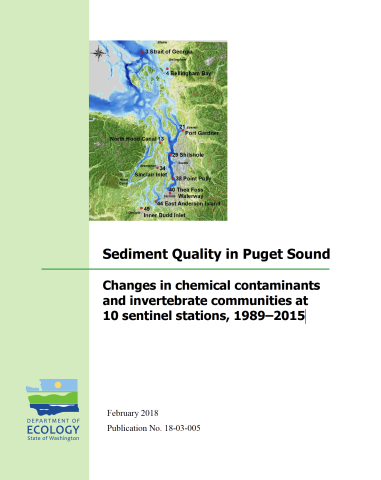
A new study shows a surprising decline in some toxic chemicals in Puget Sound fish, while levels of PCBs increased in some cases. Scientists say the study shows that banning toxic chemicals can work, but old contaminants remain a challenge as they continue to wash into Puget Sound.

Toxic chemicals have been showing up in Puget Sound fish for more than a century, but consistent testing over the past 30 years has helped to reveal some unusual patterns of pollution.