Water quality

Puget Sound is unique in the lower 48 Unites States because of its fjord-like physiography, inland extent, wide range of depths, and urbanized watersheds and shorelines. Limited exchange of seawater between sub-basins within Puget Sound can result in long residence times, potentially increasing the susceptibility of biota to contamination introduced through human activities. The varied habitats within Puget Sound support multiple life history stages of many species, potentially exposing sensitive life stages to contamination. There are multiple water quality concerns in Puget Sound:

  • Levels of toxic contaminants in biota that live or feed in Puget Sound.
  • The eutrophication of marine waters, producing hypoxic and anoxic regions.
  • Wastewater contamination, principally from combined sewer overflows or septic systems
  • Harmful algal blooms, which introduce toxins that enter the food web
  • Acidification of marine waters, and the adverse ecological effects that result.

Degradation of water quality in Puget Sound occurs through three primary mechanisms. The first is through the introduction of toxic contaminants, primarily comprising manufactured synthetic chemicals, but also including compounds that occur naturally that are concentrated in the local environment to toxic levels via human activities. The second is through human-caused changes in naturally occurring chemicals, compounds, or physical parameters (e.g., temperature, turbidity, nutrients, pH). The third is through introduction of new diseases or pathogens, or through other activities that cause an unnatural increase in disease organisms.

Sources:

Puget Sound Science Review


Overview

A 2023 report from the Puget Sound Ecosystem Monitoring Program presents an overview of selected recent monitoring and research activities focused on toxic contaminants in the Salish Sea. 

Cover of 2022 Salish Sea toxics monitoring synthesis: A selection of research

Related Articles

The Puget Sound Ecosystem Monitoring Program has released its seventh annual Marine Waters Overview. The report provides an assessment of marine conditions for the year 2017 and includes updates on water quality as well as status reports for select plankton, seabirds and fish.

The federal Clean Water Act of 1972 was designed as a logical step-by-step approach to clean up the nation's waterways. Most people acknowledge that the law has been effective in reducing pollution, but industrial and environment groups tend to be on opposite sides when discussing whether regulations and permits adequately protect water quality. These 10 elements of the Clean Water Act (CWA) focus on how the law applies to Puget Sound.

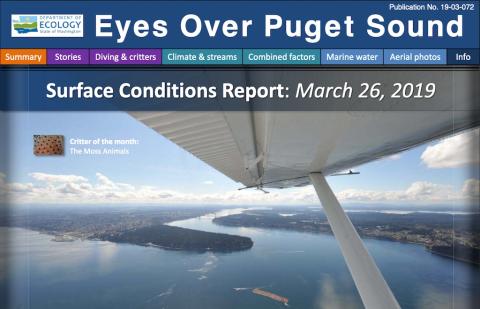
This fall, elevated air temperatures, lower precipitation, and lower river flows generally persisted; this aligned with fall and winter climate predictions. Following a warm summer, October water temperatures dropped back to optimal ranges for many fish. Puget Sound water has cleared and visibility has increased as the productive season ends making it easier to document jellyfish and schools of fish in the inlets of South Sound. While these flights generate a lot of attention, the majority of our monitoring in Puget Sound is now done via boat!

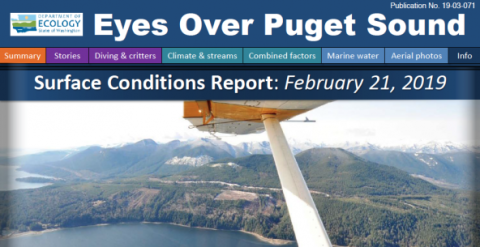
Air temperatures have remained high with precipitation and river flows below normal, extending the summer’s unusual conditions. Water temperatures were warmer in August, perhaps too warm for bull kelp and some salmon species in South Sound. In contrast, Hood Canal, North Sound, and the San Juan Islands provide optimal growth temperatures for herring and salmon. Many terminal inlets of Puget Sound are experiencing extensive red-brown blooms. Jellyfish patches are developing in South Sound finger Inlets and remnants of floating macroalgae occur in the nearshore areas of South Sound and in Useless Bay. At times floating organic material we see from the air ends up on the shoreline were our BEACH team documents it.

New research shows that warmer and more acidic oceans could lead to shorter embryos and higher respiration in Pacific herring.

Researchers are analyzing the harmful effects of creosote-treated wood pilings on Pacific herring and shellfish in Puget Sound. Studies show that piling removal projects can ease the impacts, but only if carefully done.