Water quality

Puget Sound is unique in the lower 48 Unites States because of its fjord-like physiography, inland extent, wide range of depths, and urbanized watersheds and shorelines. Limited exchange of seawater between sub-basins within Puget Sound can result in long residence times, potentially increasing the susceptibility of biota to contamination introduced through human activities. The varied habitats within Puget Sound support multiple life history stages of many species, potentially exposing sensitive life stages to contamination. There are multiple water quality concerns in Puget Sound:

  • Levels of toxic contaminants in biota that live or feed in Puget Sound.
  • The eutrophication of marine waters, producing hypoxic and anoxic regions.
  • Wastewater contamination, principally from combined sewer overflows or septic systems
  • Harmful algal blooms, which introduce toxins that enter the food web
  • Acidification of marine waters, and the adverse ecological effects that result.

Degradation of water quality in Puget Sound occurs through three primary mechanisms. The first is through the introduction of toxic contaminants, primarily comprising manufactured synthetic chemicals, but also including compounds that occur naturally that are concentrated in the local environment to toxic levels via human activities. The second is through human-caused changes in naturally occurring chemicals, compounds, or physical parameters (e.g., temperature, turbidity, nutrients, pH). The third is through introduction of new diseases or pathogens, or through other activities that cause an unnatural increase in disease organisms.

Sources:

Puget Sound Science Review


Overview

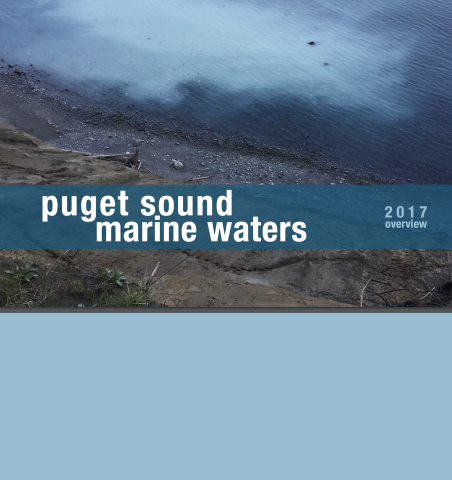
A 2023 report from the Puget Sound Ecosystem Monitoring Program presents an overview of selected recent monitoring and research activities focused on toxic contaminants in the Salish Sea. 

Cover of 2022 Salish Sea toxics monitoring synthesis: A selection of research

Related Articles

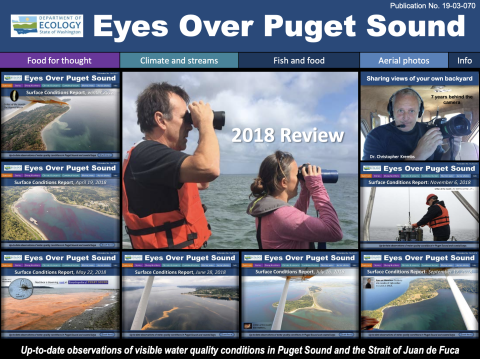
During June, near normal air temperatures and continued low precipitation have resulted in highly variable freshwater inputs to Puget Sound. A large Noctiluca bloom extends across the South Central Basin of Puget Sound. Coccolithophores are blooming in Hood Canal. Macroalgae is drifting as mats on the water in Port Madison, South Central Basin, and South Sound. They are also piling up on beaches in South and Central Puget Sound and Whidbey Basin. Juvenile fish are migrating out of the estuaries and meeting a complex thermal habitat. New infrared images tell the story. Meet our ocean acidification expert, Stephen Gonski.

Rainfall in May was extremely low: The third lowest amount ever recorded. Rivers are responding differently depending upon whether they received water from rain or snow, which is melting rapidly. With projected drier and warmer conditions, can the remaining snowpack maintain healthy streamflows this summer? Seawater is already getting saltier than normal in response to the lack of rain. We see algal blooms in many colors. What is that orange stuff out there? It’s a Noctiluca bloom and organic material drifting at the surface stretching from South to Central Sound and Whidbey Basin.

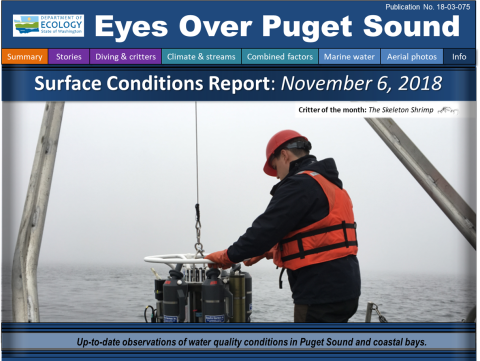
State agencies tracking pollution levels in Puget Sound have discovered traces of oxycodone in the tissues of native bay mussels (Mytilus trossulus) from Seattle and Bremerton area harbors. The findings were presented at the 2018 Salish Sea Ecosystem Conference in Seattle. 

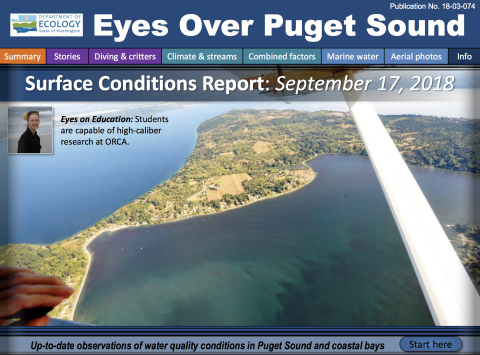
By March, regional impacts of large-scale climate patterns normalized, and air temperatures, precipitation, and coastal downwelling were below normal. April brought abundant rain and rivers responded. With La Niña returning to ENSO-neutral conditions, will the favorable snowpack maintain beneficial streamflows through summer? In 2018, water conditions in Puget Sound are mostly expected, except in Hood Canal where conditions only changed recently. Many rivers and field drainage ditches release sediment. A strong red-brown bloom is present in Sinclair Inlet, a bright- brown bloom in Padilla Bay (Joe Leary Slough), and a bright green bloom in Bellingham Bay. It is colorful out there! You might see our team on the water sampling sediments this month.

Large-scale climate patterns and local weather patterns are returning to more normal conditions. La Niña helped build a favorable snowpack, projected to persist well into spring due to cooler weather. As a consequence, stream flows are largely normal. In Puget Sound, we see again normal water conditions and observe early spring blooms in Central Sound, northern Hood Canal, and Whidbey Basin. Herring are spawning in Admiralty Reach and further north. Salmon Bay in Seattle continues to have frequent oil sheens on the water.

A 2018 report from the Washington State Department of Ecology presents results from 27 years of sampling sediments and benthic invertebrates at 10 long-term stations throughout the greater Puget Sound area every year from 1989 through 2015.