Water quality

Puget Sound is unique in the lower 48 Unites States because of its fjord-like physiography, inland extent, wide range of depths, and urbanized watersheds and shorelines. Limited exchange of seawater between sub-basins within Puget Sound can result in long residence times, potentially increasing the susceptibility of biota to contamination introduced through human activities. The varied habitats within Puget Sound support multiple life history stages of many species, potentially exposing sensitive life stages to contamination. There are multiple water quality concerns in Puget Sound:

  • Levels of toxic contaminants in biota that live or feed in Puget Sound.
  • The eutrophication of marine waters, producing hypoxic and anoxic regions.
  • Wastewater contamination, principally from combined sewer overflows or septic systems
  • Harmful algal blooms, which introduce toxins that enter the food web
  • Acidification of marine waters, and the adverse ecological effects that result.

Degradation of water quality in Puget Sound occurs through three primary mechanisms. The first is through the introduction of toxic contaminants, primarily comprising manufactured synthetic chemicals, but also including compounds that occur naturally that are concentrated in the local environment to toxic levels via human activities. The second is through human-caused changes in naturally occurring chemicals, compounds, or physical parameters (e.g., temperature, turbidity, nutrients, pH). The third is through introduction of new diseases or pathogens, or through other activities that cause an unnatural increase in disease organisms.

Sources:

Puget Sound Science Review


Overview

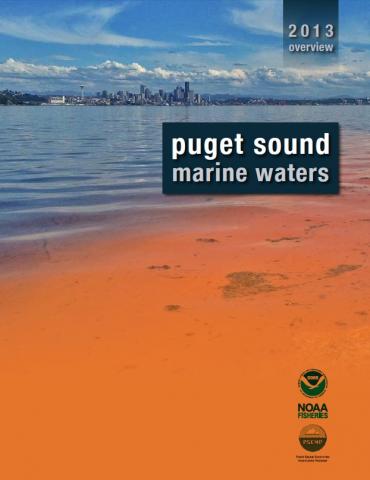
A 2023 report from the Puget Sound Ecosystem Monitoring Program presents an overview of selected recent monitoring and research activities focused on toxic contaminants in the Salish Sea. 

Cover of 2022 Salish Sea toxics monitoring synthesis: A selection of research

Related Articles

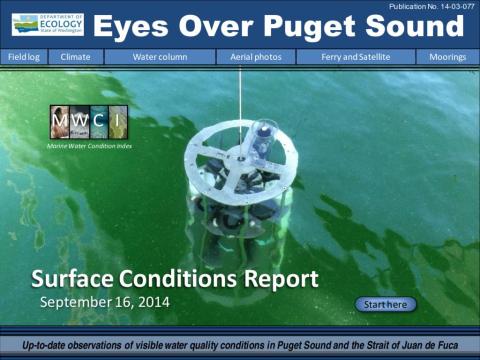
Sunshine and warm temperatures return after last week’s intense rain. The Puyallup and Nisqually Rivers are flowing high. Red-brown blooms and numerous patches of jellyfish remain strong in South Sound, Sinclair and Dyes Inlets, and Bellingham Bay, with brown-green blooms in Whidbey Basin. Macro-algae surface debris is very high in South and Central Sound. Hood Canal remains cooler but Puget Sound-wide temperatures are now warmer and less salty. Sea surface temperatures are above 15 °C, conditions favorable for some pathogens, and harmful algae blooms. Read about super colonies of by-the-wind sailors washing up on our shores.

Scientists say eelgrass, an unassuming flowering plant found just off shore in Puget Sound, is vital to the health of the ecosystem. They also say the plant is declining. New and increasingly urgent efforts to restore it brought a group of researchers to the 2014 Salish Sea Ecosystem Conference.

A 2014 article in the journal Northwestern Naturalist shows how Harbor Seal tissues can reflect regional and temporal trends in contaminants in Puget Sound.

Warmer and sunnier days result in higher than normal river flows from the Skagit and Nisqually. Biological activity in the water column is high. Abundant organic surface debris in Hood Canal, Padilla Bay, and many Inlets. Red-brown blooms in South Sound, Discovery Bay, and regions of Bellingham Bay. Different blooms in Skagit Bay, Padilla Bay, and Sinclair Inlet. Jelly fish are numerous in all southernmost South Sound Bays. Hood Canal remains cold but Puget Sound-wide temperatures are now warmer and less salty. Data from the Victoria Clipper and our sampling in the Strait provides important information on water exchange with the ocean.

This paper appears in the July 2014 issue of the journal Coastal Management, which focuses on the role of social sciences in Puget Sound ecosystem recovery.

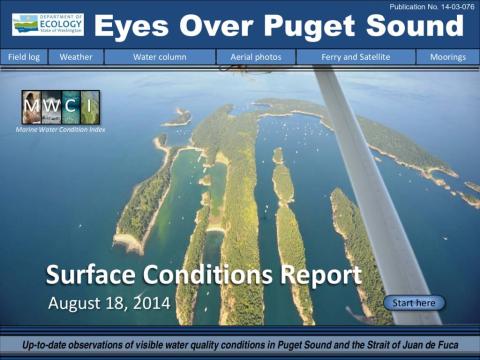
Onshore winds have been keeping the Puget Sound lowlands cool and cloudy, but sunlight and warmer temperatures are returning. Large organic mats of surface debris in Hood Canal, Padilla Bay, and Lay Inlet; many are macro-algae. Strong red-brown blooms in Discovery Bay, East Sound, and parts of Georgia Basin. Sediment-rich water north of San Juan Islands. Jelly fish are increasing in numbers. Colder, saltier conditions in early 2014 and lower oxygen in Whidbey Basin, Central, and South Sound continue. Hood Canal remains unusually cold. At our Mukilteo mooring, temperatures are similar to last year, but salinity and dissolved oxygen follow the Puget Sound-wide trend. Guest feature on phytoplankton monitoring, plus an in-depth look at our mooring program. Our technology now hitching a ride on the state ferries!