Water quality

Puget Sound is unique in the lower 48 Unites States because of its fjord-like physiography, inland extent, wide range of depths, and urbanized watersheds and shorelines. Limited exchange of seawater between sub-basins within Puget Sound can result in long residence times, potentially increasing the susceptibility of biota to contamination introduced through human activities. The varied habitats within Puget Sound support multiple life history stages of many species, potentially exposing sensitive life stages to contamination. There are multiple water quality concerns in Puget Sound:

  • Levels of toxic contaminants in biota that live or feed in Puget Sound.
  • The eutrophication of marine waters, producing hypoxic and anoxic regions.
  • Wastewater contamination, principally from combined sewer overflows or septic systems
  • Harmful algal blooms, which introduce toxins that enter the food web
  • Acidification of marine waters, and the adverse ecological effects that result.

Degradation of water quality in Puget Sound occurs through three primary mechanisms. The first is through the introduction of toxic contaminants, primarily comprising manufactured synthetic chemicals, but also including compounds that occur naturally that are concentrated in the local environment to toxic levels via human activities. The second is through human-caused changes in naturally occurring chemicals, compounds, or physical parameters (e.g., temperature, turbidity, nutrients, pH). The third is through introduction of new diseases or pathogens, or through other activities that cause an unnatural increase in disease organisms.

Sources:

Puget Sound Science Review


Overview

A 2023 report from the Puget Sound Ecosystem Monitoring Program presents an overview of selected recent monitoring and research activities focused on toxic contaminants in the Salish Sea. 

Cover of 2022 Salish Sea toxics monitoring synthesis: A selection of research

Related Articles

A list of over 1800 benthic infaunal invertebrates is now available on the Encyclopedia of Puget Sound. The list was prepared as part of the Washington State Department of Ecology’s Marine Sediment Monitoring Program (MSMP).  This program, initiated in 1989, is one component of the Puget Sound Ecosystem Monitoring Program, a collaborative effort dedicated to monitoring environmental conditions in Puget Sound. 

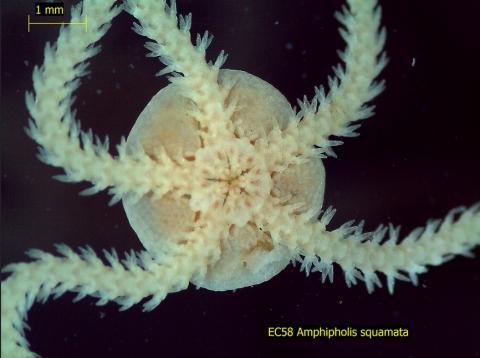
Benthic infaunal invertebrates, often referred to as benthos, are tiny animals, including worms, clams, snails, shrimp, crabs, brittle stars, and many others, that live in the sand and mud at the bottom of Puget Sound.  Benthos are an essential link in

Several research groups in the region are investigating biological markers and/or impacts of Contaminant of Emerging Concern (CEC) exposure in different organisms.  An abstract describing each study is included below.  Also included are links or contact details for further information about each project.

Several studies have been performed to determine the occurrence of selected Contaminants of Emerging Concern (CECs) in the environment.

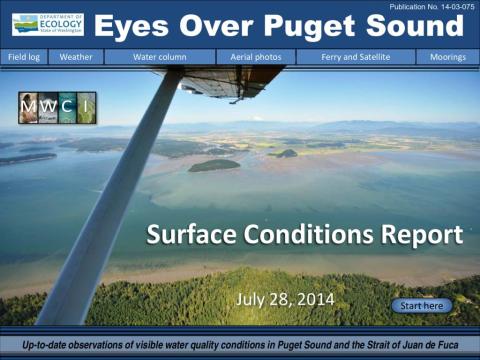
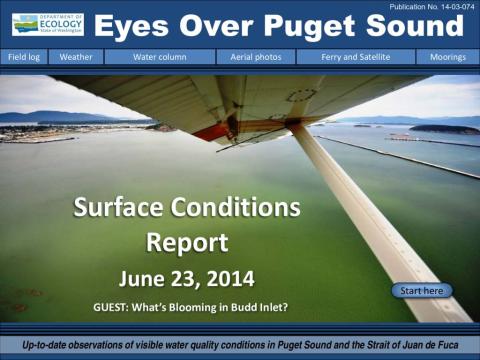
The weather changed from cool, cloudy and southerlies, to sunny warm conditions and light northerly winds on Mother’s Day. At the water surface, blooms and large debris lines occur in Bellingham, Padilla, and Samish Bays, Hood Canal, East Sound, and the Straits, as well as the finger inlets of South Sound. Large amounts of sediment-laden water from Port Susan are flowing into Central Basin. Turquoise water mixing to the surface in places around the San Juan Islands. After some trouble-shooting of the hardware and communication system, we will resume collecting Victoria Clipper data next week. Meet Eyes Under Puget Sound: Sediment Monitoring Program at Ecology.

Although overall eelgrass abundance appears to be stable in Puget Sound, some local areas are showing declines. A 2014 report from the Washington State Department of Natural Resources looks at the potential impact of increased nitrogen on eelgrass health.   

The Puget Sound Model was designed and built by the University of Washington School of Oceanography in the early 1950s to simulate the tides and currents of Puget Sound. A series of videos produced by the Encyclopedia of Puget Sound describes its construction and operation.