

All Articles
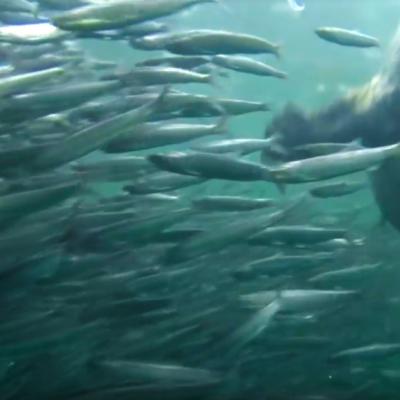
Could anchovies and other fish take pressure off salmon and steelhead?
A recent influx of anchovies into Puget Sound may have saved some steelhead from predators, but researchers seek more evidence to prove the connection. Our series on the Salish Sea Marine Survival Project continues with a look at these and other potential impacts from predators on the region's salmon and steelhead.
Equity and social science integration at the 2018 Salish Sea Ecosystem Conference
A new study looks at social science and equity integration within the proceedings of the 2018 Salish Sea Ecosystem Conference. The study was produced on behalf of the Puget Sound Partnership for the Encyclopedia of Puget Sound.
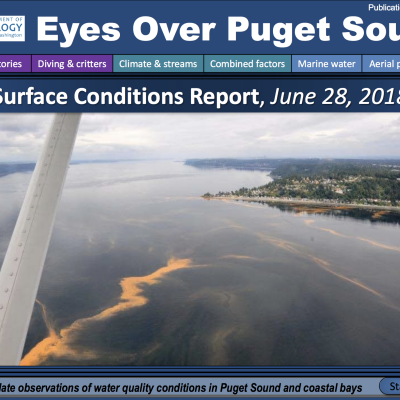
Eyes Over Puget Sound: Surface Conditions Report – June 28, 2018
During June, near normal air temperatures and continued low precipitation have resulted in highly variable freshwater inputs to Puget Sound. A large Noctiluca bloom extends across the South Central Basin of Puget Sound. Coccolithophores are blooming in Hood Canal. Macroalgae is drifting as mats on the water in Port Madison, South Central Basin, and South Sound. They are also piling up on beaches
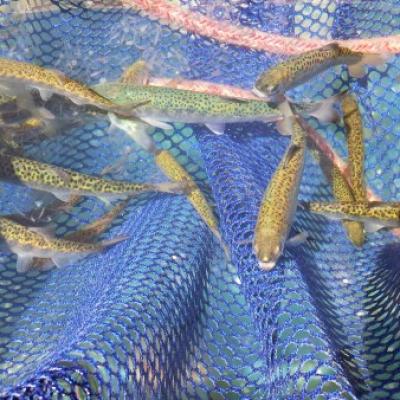
Size means survival for young salmon
Getting bigger faster can help save juvenile Chinook salmon from a gauntlet of hungry predators ranging from birds and marine mammals to larger fish. We continue our series on the Salish Sea Marine Survival Project with a look at what helps salmon grow and prepare for life in the open ocean.
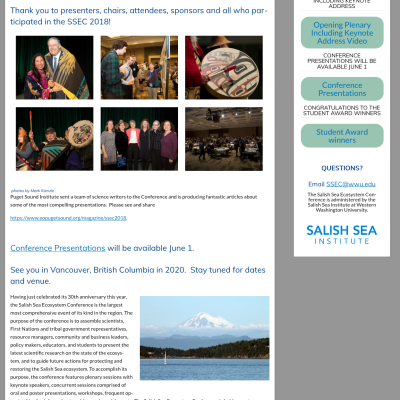
2018 Salish Sea Ecosystem Conference
The 2018 Salish Sea Ecosystem Conference took place April 4-6 at the Washington State Convention Center in Seattle, WA. It featured 588 presentations across 17 topic areas.
Opening the black box: What’s killing Puget Sound’s salmon and steelhead?
An intensive research program in the U.S. and Canada is studying why so few salmon in the Salish Sea are returning home to spawn. They are uncovering a complex web of problems involving predators, prey and other factors that put salmon at risk as they migrate to the ocean. We begin a four-part series on the Salish Sea Marine Survival Project, including new findings presented at the 2018 Salish Sea
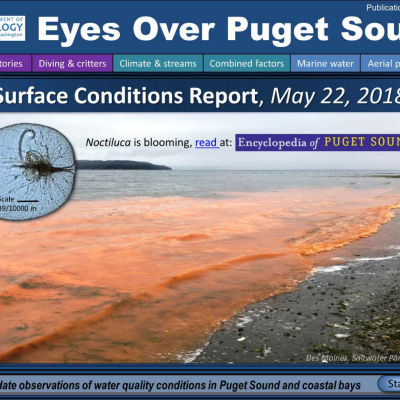
Eyes Over Puget Sound: Surface Conditions Report – May 22, 2018
Rainfall in May was extremely low: The third lowest amount ever recorded. Rivers are responding differently depending upon whether they received water from rain or snow, which is melting rapidly. With projected drier and warmer conditions, can the remaining snowpack maintain healthy streamflows this summer? Seawater is already getting saltier than normal in response to the lack of rain. We see
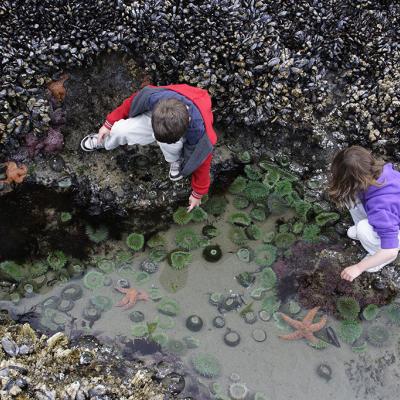
New book helps kids discover the Salish Sea
Kids around the region are learning about the Salish Sea thanks to a new book that is being offered — in many cases free of cost — to Washington schools and libraries. Explore the Salish Sea by Joe Gaydos and Audrey Benedict inspires the next generation to appreciate and perhaps someday protect the environment close at hand.
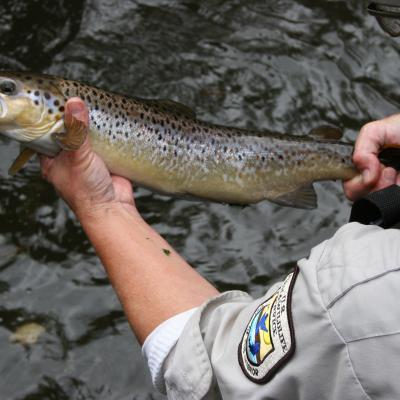
Despite WA ban on farmed salmon, BC impacts may flow across border
A high-profile salmon escape led to a ban on salmon farms in Washington earlier this year. But just across the border, scientists say salmon farms in British Columbia expose migrating fish from Puget Sound to potential maladies like parasites, bacteria and dangerous viruses. They say simply getting rid of salmon farms in Washington does not put the potential impacts to rest.
Pathogens prevention reduction and control 1-4 (PC-00J32601): Final report
A report from the Washington State Department of Health outlines results from a series of projects funded by the U.S. Environmental Protection Agency's National Estuary Program in 2011. These projects addressed pathogen pollution in Puget Sound through the management of human and animal waste. Restoring shellfish growing areas, avoiding shellfish closures, and protecting people from disease served