

All Articles
![Sucralose, an artificial sweetener, is a good tracer of wastewater. It is present at low levels throughout the Puget Sound [1].](/sites/default/files/styles/article_landing_page_image/public/topical_article/images/cec_fig1.png?itok=Nj3qNp7N "Sucralose, an artificial sweetener, is a good tracer of wastewater. It is present at low levels throughout the Puget Sound [1].")
Contaminants of emerging concern (CECs) in the waters of the Pacific Northwest
Contaminants of Emerging Concern (CECs) range from pharmaceuticals, personal care products and food additives to compounds used in industrial and commercial applications. These compounds are not typically removed from wastewater and are flushed into waterways throughout the world in significant amounts. This article describes how scientists are measuring the presence of these contaminants along
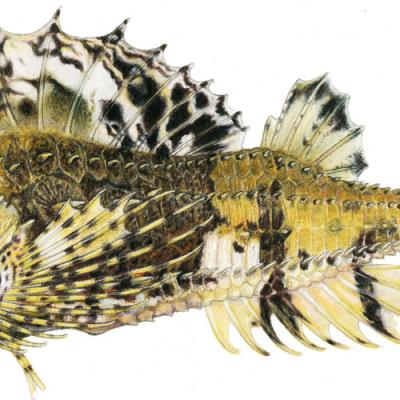
List of Salish Sea fish grows to 253 species
Researchers updating a 1980 fish catalog have found evidence of 37 additional fish species in the Salish Sea. This information, accompanied by hundreds of detailed illustrations, is seeding a new reference book expected to gain wide use among scientists, anglers and conservationists. [Editor's note: As of 2019, the list of Salish Sea fishes has grown to 260 species.]
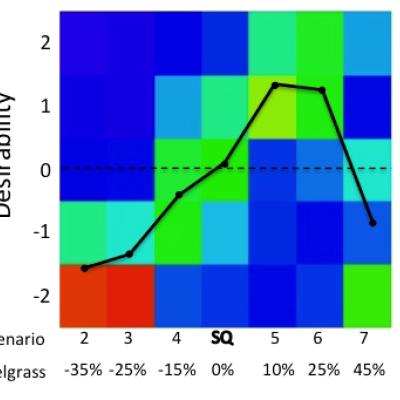
Developing conservation targets in social-ecological systems
A 2015 paper in the journal Ecology and Society looks at interdisciplinary approaches to developing conservation targets in Puget Sound.
Evaluating sense of place as a domain of human well-being for Puget Sound restoration
This report communicates findings of a social science study conducted between July 2013 and December 2014 on a focal domain of human well-being: sense of place.
Eyes Over Puget Sound: Surface Conditions Report – October 6, 2015
Puget Sound is starting to normalize in response to fall conditions with cooler air temperatures, rain, and recovering river flows. We are seeing fewer algal blooms, jellyfish, and macro-algae as salinities become more normal. Yet warm waters persist and El Nino and the Blob are likely to affect Puget Sound throughout the winter. The Nisqually River fared better through the drought than other
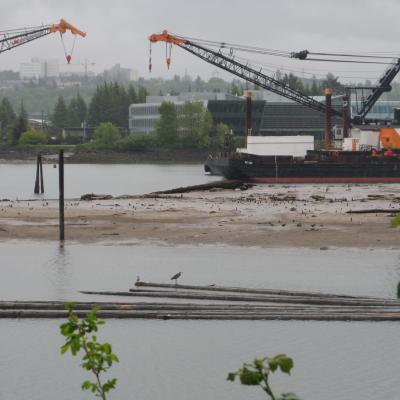
Persistent contaminants in Puget Sound: Overcoming a toxic legacy
The Lower Duwamish Waterway in Puget Sound was designated a Superfund cleanup site in 2001. Its legacy of contamination predates World War II and the waterway continues to pollute Puget Sound through stormwater runoff.

Puget Sound Fact Book
The Puget Sound Fact Book brings together statistics and other information about the health and makeup of the Puget Sound ecosystem. Areas of focus include climate change, geography, water quality, habitats, human dimensions and regional species. The fact book was prepared for the Encyclopedia of Puget Sound with funding from the Environmental Protection Agency and the Puget Sound Partnership.
- Climate change
- Fishes
- Forage fish
- Geography
- Healthy human population
- Human quality of life
- Invertebrates
- Mammals
- Marine habitat
- Ocean acidification
- Overviews
- Physical environment
- Puget Sound Fact Book
- Salmonids
- Shellfish
- Shoreline armoring
- Social science
- Species and food webs
- Species of concern
- Stormwater
- Tribes
- Water quality
- Water quantity
- Estuaries
- Nearshore habitat
- Freshwater habitat
- Terrestrial habitat
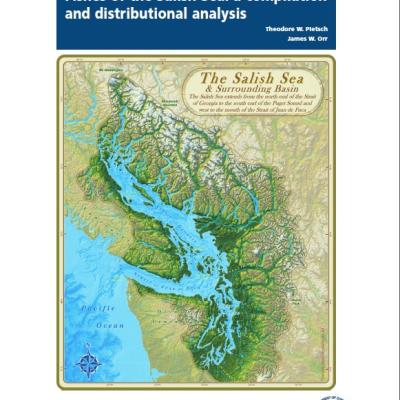
Fishes of the Salish Sea: a compilation and distribution analysis
A 2015 NOAA report creates an updated and comprehensive list of the fishes of the Salish Sea.
The Values of Place: Recreation and Cultural Ecosystem Services in Puget Sound
Coastal recreation, tourism, and ethical or existence values are among the most important ecosystem service (ES) benefits identified by Puget Sound stakeholders (Iceland et al, 2008). The ecosystem services (ES) concept has become the leading framework to understand and communicate the human dimensions of environmental change. This report focuses on economic, social and cultural values
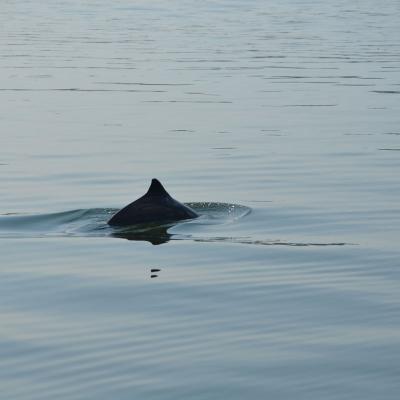
Harbor porpoise in the Salish Sea
In the 1940s, harbor porpoise were among the most frequently sighted cetaceans in Puget Sound, but by the early 1970s they had all but disappeared from local waters. Their numbers have since increased, but they remain a Species of Concern in the state of Washington. This in-depth profile looks at harbor porpoise in the Salish Sea, and was prepared by the SeaDoc Society for inclusion in the