

All Articles
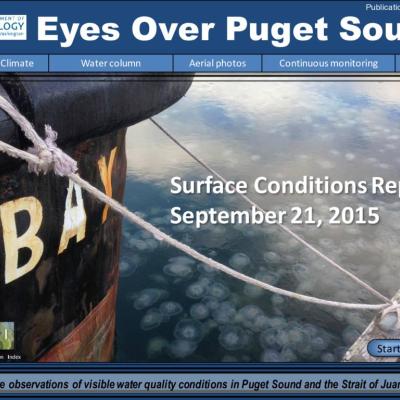
Eyes Over Puget Sound: Surface Conditions Report – September 21, 2015
Air temperatures are warm and Puget Sound continues to show record high water temperatures. Some rain has returned to our region, yet river flows remain unusually low. Puget Sound is saltier than normal allowing oxygen-rich surface waters to more easily mix to greater depths. Lower oxygen was measured only in the Coastal Bays, Hood Canal, and South Sound. Large jellyfish aggregations continue in
Tribes of the Puget Sound and Salish Sea regions
The following list includes Native American tribes and First Nations of the Salish Sea region.
The 2014 Puget Sound Pressures Assessment
The Puget Sound Pressures Assessment is an effort to better understand the pressures on the Sound’s freshwater, marine-nearshore, and terrestrial resources and identify the critical ecosystem vulnerabilities that should be addressed to ensure sustainable long-term protection and recovery.
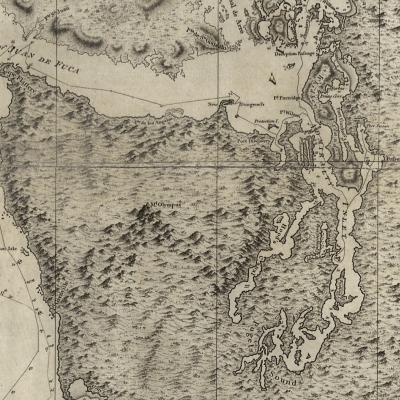
Puget Sound: A uniquely diverse and productive estuary
Puget Sound is the second largest estuary in the contiguous United States. Today, we understand that estuaries — where freshwater and saltwater merge — are among the most productive places for life to exist.
2014 Puget Sound Marine Waters Overview
A report from NOAA and the Puget Sound Ecosystem Monitoring Program provides an overview of 2014 marine water quality and conditions in Puget Sound from comprehensive monitoring and observing programs.
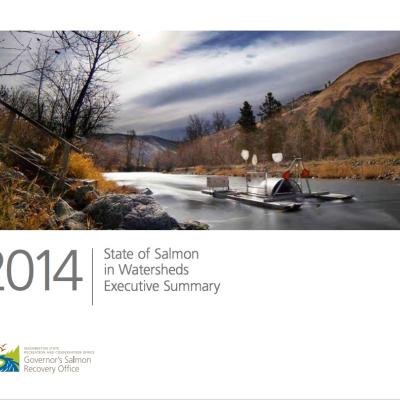
2014 state of salmon in watersheds executive summary
This report documents how Washingtonians have responded to the challenges of protecting and restoring salmon and steelhead to healthy status. It also serves as a tool to summarize achievements, track salmon recovery progress through common indicators, and identify data gaps that need to be filled.
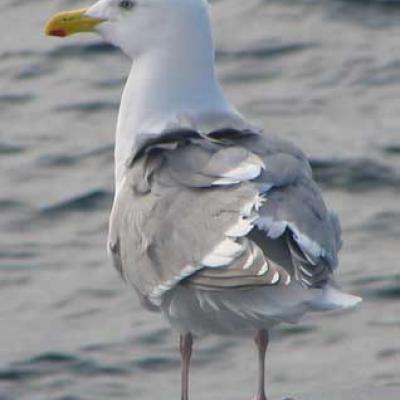
Evidence shows that gulls are shifting their diets from marine to terrestrial sources
A 2015 article in the journal Environmental Science and Technology presents additional isotopic evidence that glaucus-winged gulls in the Salish Sea are shifting their diets from marine to terrestrial sources due to human impacts. Scientists hypothesize that declining forage fish may be the cause.
Puget Sound Water Quality Conference Proceedings
The Puget Sound Water Quality Conference was held in Seattle, Washington, on September 30 and October 1, 1983. It included prominent speakers from the Puget Sound region, other parts of the United States, and Canada.
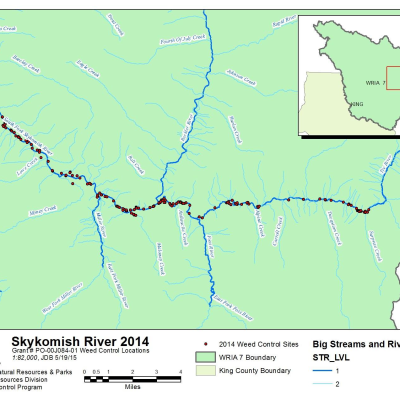
Protection and enhancement of riparian buffers in WRIA 7 through restoration and stewardship
The final report on a knotweed removal and native plant project from grant PO-00J08401 to King County DNR for the grant entitled: Protection and enhancement of the riparian buffers in WRIA 7 through restoration and stewardship.
![All scenarios project warming for the 21st century. The graph shows average yearly temperatures for the Pacific Northwest relative to the average for 1950-1999 (gray horizontal line). The black line shows the average simulated temperature for 1950–2011, while the grey lines show individual model results for the same time period. Thin colored lines show individual model projections for two emissions scenarios (low: RCP 4.5, and high: RCP 8.5)[ ], and thick colored lines show the average among models projecti](/sites/default/files/styles/article_landing_page_image/public/topical_article/images/TempChangeGraph.png?itok=5LWmvROv "All scenarios project warming for the 21st century. The graph shows average yearly temperatures for the Pacific Northwest relative to the average for 1950-1999 (gray horizontal line). The black line shows the average simulated temperature for 1950–2011, while the grey lines show individual model results for the same time period. Thin colored lines show individual model projections for two emissions scenarios (low: RCP 4.5, and high: RCP 8.5)[ ], and thick colored lines show the average among models projections for each scenario. Bars to the right of the plot show the mean, minimum, and maximum change projected for each of the four emissions scenarios for 2081-2100, ranging from a very low (RCP 2.6) to a high (RCP 8.5) scenario. Note that the bars are lower than the endpoints from the graph, because they represent the average for the final two decades of the century, rather than the final value at 2100. Figure source: Climate Impacts Group, based on climate projections used in the IPCC 2013 report.")
Future scenarios for climate change in Puget Sound
The University of Washington Climate Impacts Group has been analyzing the potential effects of climate change in Puget Sound. The projections below represent some of their most recent reporting about expected conditions in the region over the next 50 to 100 years. Support for this article was provided by the Puget Sound Partnership.