

All Articles
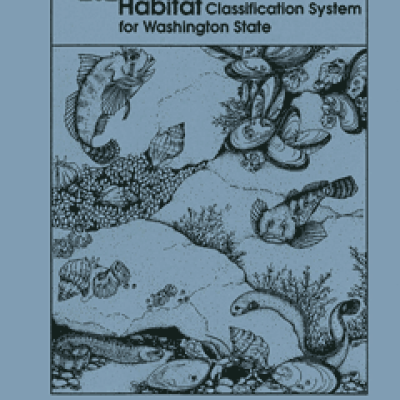
Defining and describing Puget Sound shore types
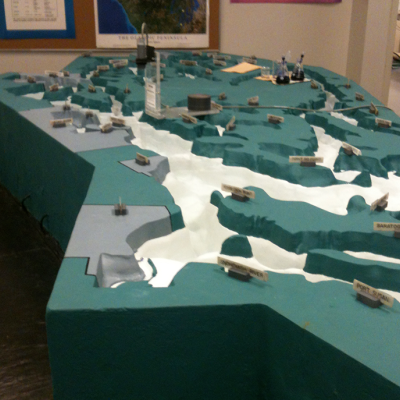
The Puget Sound Model
The Puget Sound Model was designed and built in the early 1950s at the University of Washington School of Oceanography as a research and teaching tool for understanding Puget Sound circulation patterns.
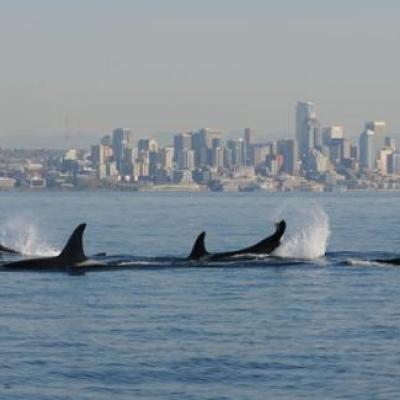
Reducing the risk of PCBs in sediments
A 2014 paper in the journal Water Research sheds new light on a novel ‘in place’ treatment option that effectively lowers risk by reducing the activity of PCBs in sediment.
Water Undone: The Efforts to Save the Puyallup River Watershed
A 2010 video by the University of Washington Tacoma describes efforts to protect and restore the Puyallup watershed.
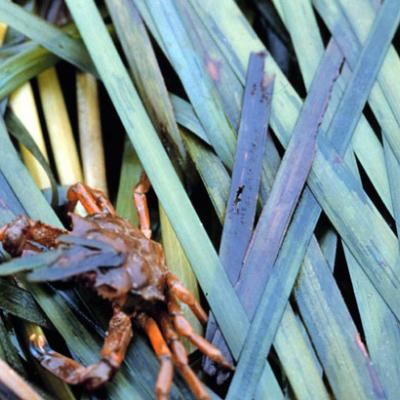
Host demography influences the prevalence and severity of eelgrass wasting disease
A paper in the February 2014 journal Diseases of Aquatic Organisms examines the effect of leaf age on wasting disease in eelgrass across sites in the San Juan Archipelago. Co-author: Encyclopedia of Puget Sound topic editor Joe Gaydos.
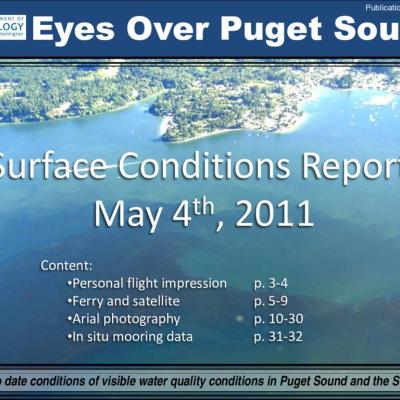
Eyes Over Puget Sound: Surface Conditions Report - May 4, 2011
Multiple algal blooms in South Sound and Main Basin. Ferry and satellite images confirm center of algae bloom in the Main Basin and indication of a bloom in Carr Inlet. Oxygen levels are increasing on moorings. Oil sheen in Colvos Passage.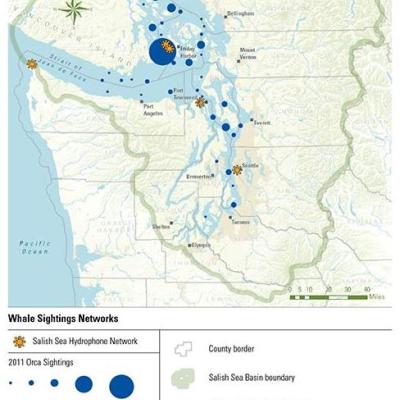
Salish Sea Hydrophone Network and Orca Network
The Salish Sea Hydrophone Network and Orca Network are two citizen science projects dedicated to furthering our understanding of abundance, distribution, behavior, and habitat use by the endangered population of Southern Resident Killer Whales, also called orcas. The Hydrophone Network lets the public listen for orcas through their computers and phones, while the Orca Network gathers and
Development of Puget Sound Benthic Indicators
A Washington State Department of Ecology report establishing benthic indicators for Puget Sound. Benthic macrofauna are known to be good indicators of the status of marine environments, and benthic indices are often used as an assessment tool.

The IEA framework in the Puget Sound Partnership Biennial Science Work Plan
The 2009-2011 Biennial Science Work Plan specifies the use of the IEA framework by the Puget Sound Partnership "to refine indicators, assess risks, and evaluate strategies, integrating marine, nearshore, and terrestrial efforts."
Salish Sea Natural Area Conservation Plan
The Salish Sea Natural Area Conservation Plan is a project of the Natural Areas Conservation Program (NACP) established in 2007 by the Canadian government, which helps non-profit, non-government organizations protect sensitive areas. The process involves selecting biodiversity targets and determining measures of conservation success.