Marine habitat

The Marine System encompasses all coastal areas not appreciably diluted by freshwater (surface salinities seldom falling below 30 ppt), including open coastal areas, straits, and euhaline inland waters.  It can extend from the outer edge of the continental shelf to (1) the landward limit of tidal inundation or wave splash or (2) the seaward limit of the Estuarine System.

Source:

Dethier, M.N. 1990. A marine and estuarine habitat classification system for Washington State. Natural Heritage Program, WA DNR, Olympia, WA. 60 pp.

Overview

Each year, the Puget Sound Ecosystem Monitoring Program releases the annual Puget Sound Marine Waters Overview report. The latest report combines a wealth of data from comprehensive monitoring programs and provides a concise summary of what was happening in Puget Sound’s marine waters during 2022. The report represents the collective effort of 84 contributors from federal, tribal, state, and local agencies, academia, nonprofits, and private and volunteer groups.

Image of a sailboat on the water at sunset.Text overlay reads: Puget Sound Marind Waters 2022 Overview.

Related Articles

Occasionally, our magazine includes reports and essays from guest writers on the subject of Puget Sound ecosystem recovery. Biologist and author Eric Wagner has this look at an ongoing harbor seal survey at the mouth of the Stillaguamish River. Wagner says the study hinges on a basic question: Who is eating the salmon? 

Puget Sound Restoration Fund has launched a network to track declining kelp populations in the Salish Sea. The three-year initiative aims to support and standardize underwater monitoring to improve kelp conservation in the region.

Low air temperatures, rain, and late snow accumulation pushed back the discharge of meltwater to Puget Sound this season. The water temperature in Puget Sound was mostly at expected levels, but cooler in South Sound by May. Central Sound saw more oxygenated conditions. This year, La Niña weather made flying for aerial photography challenging, but by June, sunny days made up for it, revealing a high number of schooling fish, unusually low tides, and a glimpse of macroalgae to come. Internal waves in Central Basin and Puget Sound, and the beauty of Puget Sound from the air, are a reminder of the unique place we live in.

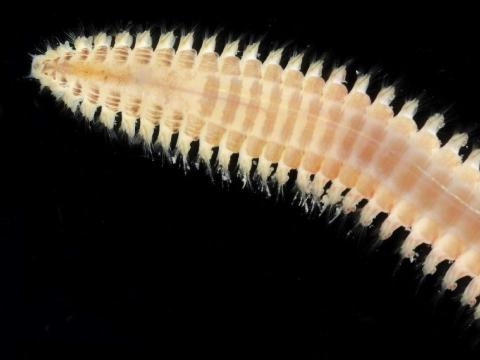
With their square heads and antennae that look a bit like pointy ears, it makes sense why the catworms, or marine segmented worms in the family Nephtyidae, would be named after cats. But their antennae are more like a cat’s sensory whiskers than ears, allowing them to feel their way through the mud as they crawl and burrow. Nephtyids are strong diggers, and can even hold their own in the water, rapidly wiggling their smooth, pale bodies in order to swim.

The Washington State Department of Ecology’s Marine Sediment Monitoring Program, initiated in 1989, is one component of the Puget Sound Ecosystem Monitoring Program, a collaborative effort dedicated to monitoring environmental conditions in Puget Sound. The Marine Sediment Monitoring Team collects sediments from the bottom of Puget Sound twice a year and tests them to determine their physical, chemical, and biogeochemical characteristics; and to determine the condition of the invertebrate communities that live in them.  They report their findings in agency reports and story maps, and in Eyes Under Puget Sound (EUPS) blog posts.

Research on the sounds and feeding behavior of Puget Sound's southern resident orcas is providing new insight into how the whales respond to underwater noise. A recent online conference brought together some of these findings along with discussions on how to reduce the impacts of noise from vessel traffic.