Eutrophication

Eutrophication of water bodies occurs when high levels of nutrients fuel high rates of primary production and accumulation of algal biomass, either as macroalgae or phytoplankton. Some ecosystems are naturally eutrophic, but in others human activity causes ecosystems to undergo transformations into a eutrophic state. This is termed cultural eutrophication, and is the primary concern in evaluating the status of marine waters of Puget Sound.

Source: Puget Sound Science Review
Related Articles

This study compared recent and historical data to determine the presence of any significant changes in nutrient and oxygen concentrations subsequent to METRO discharge, examined seasonal cycles in water properties, and examined the flux of nutrients within the study area.

Hypoxia, defined as dissolved oxygen (DO) concentrations less than 2 mg / L, has become widespread throughout estuaries and semi-enclosed seas throughout the world (Diaz 2001). 

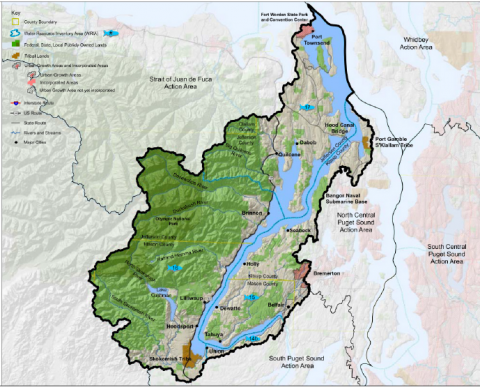
An independent review conducted by the Puget Sound Institute (PSI) is featured in findings by the Environmental Protection Agency and the Washington State Department of Ecology that there is currently “no compelling evidence” that humans are the cause for recent trends in declines in dissolved oxygen in Hood Canal.