Invasive species

It is estimated that at least nine non-native species of marine plants and 83 species of marine animals have been introduced into Puget Sound. Some of these were intentionally introduced, such as the Pacific oyster and Manila clam, to substitute for the loss of native shellfish species. Other animals have arrived through ship ballast water and other accidental introductions.

Sources:

Sound Science 2007

Addition resources:

Encyclopedia of Puget Sound list of invasive speciesWashington Invasive Species CouncilUSGS non-indigenous aquatic speciesWA Noxious Weeds Control BoardWDFW prohibited aquatic animals species list

Overview

Non-native species are those that do not naturally occur in an ecosystem. A non-native species is considered invasive when it is capable of aggressively establishing itself and causing environmental damage to an ecosystem. Plants, animals, and pathogens all can be invasive. 

The invasive tunicate Styela clava. Photo: WDFW

Related Articles

The Washington Invasive Species Council evaluated more than 700 invasive species in and around Washington, considering their threats to the state’s environment, economy, and human health. They included terrestrial plants and animals, aquatic plants and animals (both freshwater and saltwater), insects and diseases. In the end, the council listed 50 “priority species” for action, including five marine animals and two marine plants, along with one virus that infects fish. 

A July 2016 report from the University of Washington Puget Sound Institute summarizes and reviews 10 EPA-funded projects focusing on Puget Sound's marine and nearshore environments. The projects were conducted between 2011-2015 with support from the EPA's National Estuary Program.  The report is an analysis of findings on invasive species, toxics, oil spill, and integrated risk assessment.

Competition occurs when individuals of different species struggle to obtain the same resource in an ecosystem (such as food or living space). Adaptations, such as physical mutations and behavior modifications, can help an organism outcompete its competitors. 

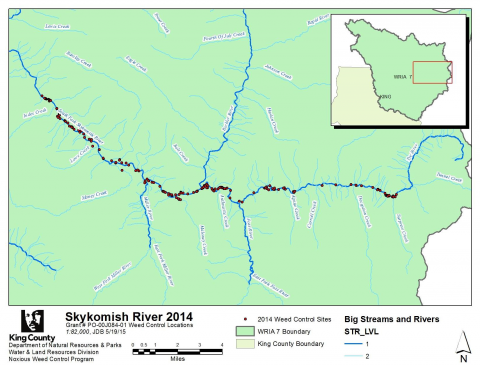
The final report on a knotweed removal and native plant project from grant PO-00J08401 to King County DNR for the grant entitled: Protection and enhancement of the riparian buffers in WRIA 7 through restoration and stewardship.

The baseline assessment summarizes the status and trends of 15 priority invasive species, as identified by the Washington Invasive Species Council, within the Puget Sound Basin.

This is the sixth Puget Sound Update, a report for residents of the region about the overall health of Puget Sound. The conclusions in the Update are based mainly on scientific results of the Puget Sound Ambient Monitoring Program (PSAMP).