Species of concern

Species of concern are native species, sub-species or ecologically significant units that warrant special attention to ensure their conservation. The number of species of concern within the Salish Sea is used by the US Environmental Protection Agency and Environment Canada as a transboundary ecosystem indicator (called "Marine Species at Risk"). 

Source

Zier, Jacqlynn and Gaydos, Joseph K. (2016). The growing number of species of concern in the Salish Sea suggests ecosystem decay is outpacing recovery. Proceedings of the 2016 Salish Sea Ecosystem Conference, April 13-15, 2016
Vancouver, BC. 17 pgs.

Overview

The number of species of concern in the Salish Sea is growing at an average annual rate of 2.6%, according to a report published in the proceedings of the 2016 Salish Sea Ecosystem Conference in Vancouver, B.C.

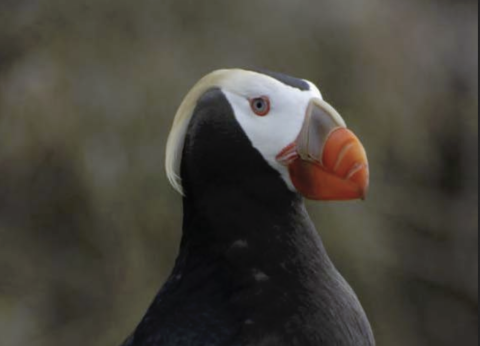
The Tufted Puffin is among 125 species of concern found in the Salish Sea. Photo: Peter Hodum.

Related Articles

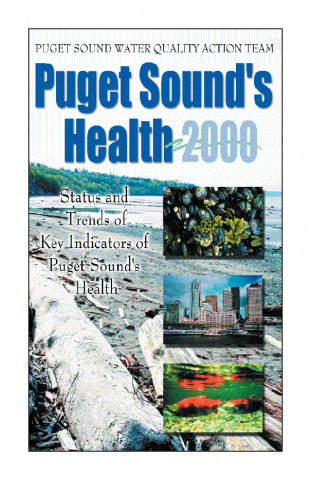
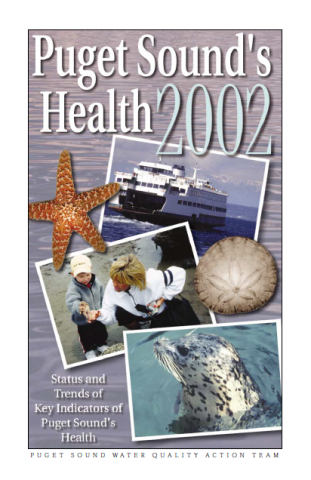
This is the Puget Sound Water Quality Action Team's third report on key indicators of Puget Sound's Health. We prepared the report in response to the Washington State Legislature's request to evaluate efforts to protect Puget Sound. The report includes updated information on the 17 indicators presented in 2000 as well as information on two new indicators.

King County conducted physical and biological monitoring between 2010 and 2013 in the Lake Washington/Cedar/Sammamish (WRIA 8) watershed using common survey protocols and a probabilistic survey design. Hydrologic monitoring was also conducted at several locations to supplement physical and biological monitoring. 

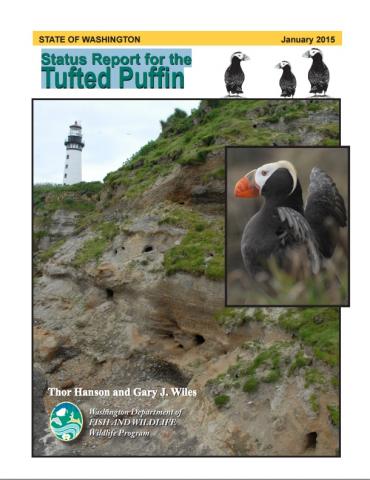
With its striking plumage and brilliant orange bill, the Tufted Puffin is an iconic seabird well known to native peoples, fishermen, and coastal communities throughout its range in the temperate and sub-arctic North Pacific. Though pelagic in winter, puffins gather on islands and headlands during spring and summer to breed and raise their young. They are members of the auk family, with stocky bodies adapted to “flying” underwater as they dive in pursuit of a wide range of fish and invertebrate prey. Nesting Tufted Puffins range up to 100 km from their breeding colonies to forage for their nestlings, and are famed for carrying 20 or more small fish at one time, neatly lined up and carried crosswise in their large, brightly colored bills.

A 2015 report from the Washington Department of Fish and Wildlife reviews information relevant to the status of the tufted puffin in Washington and addresses factors affecting this status. 

A study in the Journal of Comparative Physiology shows that muscle development necessary for diving can take several years to mature in harbor porpoises. Scientists argue that this may make immature harbor porpoises more vulnerable than adults to impacts from boat traffic or other disturbances. 

A 2015 paper in the journal Marine Policy examines surveys of Puget Sound anglers to provide baseline information related to rockfish conservation.