

Find content specifically related to plants of the Puget Sound and Salish Sea ecosystems. For checklists and descriptive accounts of individual species, visit our species library.
Additional resources:
Find content specifically related to plants of the Puget Sound and Salish Sea ecosystems. For checklists and descriptive accounts of individual species, visit our species library.
Additional resources:
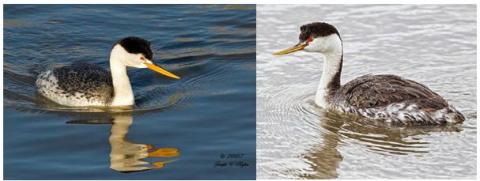
This article was originally published by the Washington Department of Fish and Wildlife as part of its annual report Threatened and Endangered Wildlife in Washington.
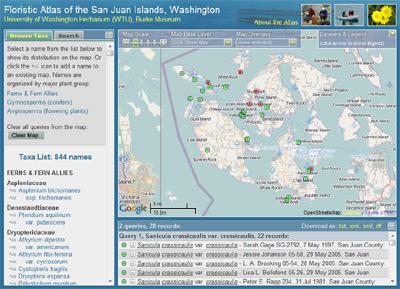
The Floristic Atlas of the San Juan Islands was created by the University of Washington Herbarium and provides a tool for mapping and comparing the distributions of vascular plant species within the San Juan Islands of Washington.

A botanist believes Coast Salish tribes once favored small islands in the San Juan archipelago for growing camas, an important food staple. Her studies may also show the vulnerability of these relic gardens to climate change as sea levels rise.

Puget Sound has over 4,000 km (2,500 miles) of shorelines, ranging from rocky sea cliffs to coastal bluffs and river deltas. The exchange of water, sediment, and nutrients between the land and sea is fundamental to the formation and maintenance of an array of critical habitat types.

Ecosystem services are the “outputs” and experiences of ecosystems that benefit humans, and are generated by the structure and function of natural systems, often in combination with human activities. The Millennium Ecosystem Assessment, a global effort to catalog and assess ecosystem status and functions, offers a useful classification scheme.
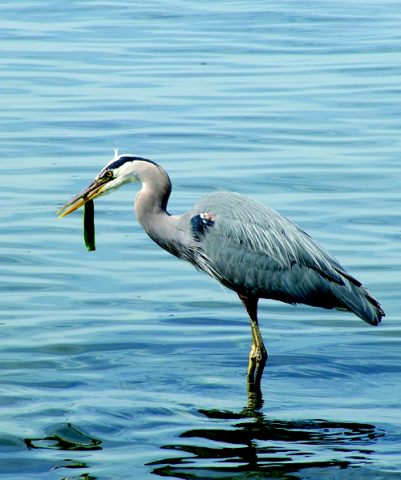
Puget Sound hosts more than 100 species of seabirds, 200 species of fish, 15 marine mammal species, hundreds of plant species, and thousands of invertebrate species. These species do not exist in isolation, but rather interact with each other in a variety of ways: they eat and are eaten by each other; they serve as vectors of disease or toxins; they are parasitic; and they compete with each other for food, habitat, and other resources.