

Find content specifically related to plants of the Puget Sound and Salish Sea ecosystems. For checklists and descriptive accounts of individual species, visit our species library.
Additional resources:
Find content specifically related to plants of the Puget Sound and Salish Sea ecosystems. For checklists and descriptive accounts of individual species, visit our species library.
Additional resources:
The Washington Marine Resources Advisory Council has released an addendum to the 2012 report Ocean Acidification: From Knowledge to Action. The original report established a statewide strategy for addressing ocean acidification in Washington. The addendum identifies updates based on emerging science and management practices and is intended to be a companion to the 2012 report.
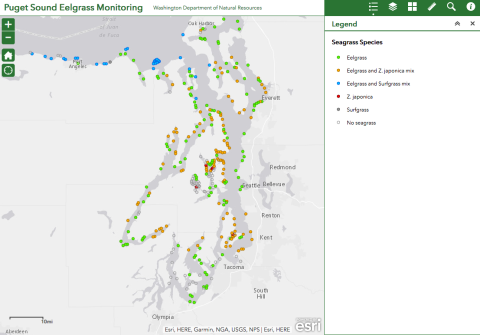

Scientists want to know why eelgrass is on the decline in some areas of Puget Sound and not others. The answer will affect future strategies for protecting one of the ecosystem’s most critical saltwater plants.

The Puget Sound Ecosystem Monitoring Program (PSEMP) is an independent program established by state and federal statute to monitor environmental conditions in Puget Sound.
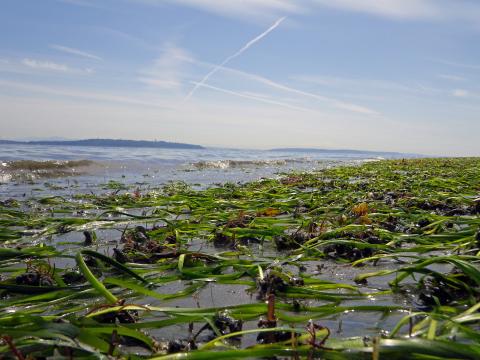
Eelgrass, a marine plant crucial to the success of migrating juvenile salmon and spawning Pacific herring, is stable and flourishing in Puget Sound, despite a doubling of the region’s human population and significant shoreline development over the past several decades. [Story reprinted from UW Today.]

The number of species of concern in the Salish Sea is growing at an average annual rate of 2.6%, according to a report published in the proceedings of the 2016 Salish Sea Ecosystem Conference in Vancouver, B.C.