Geography

We use geography to locate, organize, and describe places on the earth. This site focuses on the Puget Sound and broader Salish Sea regions of Washington state and British Columbia, which may be spatially mapped and subdivided using a variety of physical, political, or human factors.  The information on this site is generally limited to the Salish Sea waters and the surrounding land basin draining into those waters.

Overview

The boundaries of Puget Sound and the Salish Sea are not always consistently defined by scientists and government agencies. This article clarifies the distinctions between oceanographic and watershed-based definitions of these geographic areas. 

Water Resource Inventory Areas (WRIA). Map: Kris Symer. Data source: WAECY.

Related Articles

There are many ways of defining the boundaries of the Puget Sound watershed. Hydrologic unit codes (HUCs) are nationally standardized divisions that are often used by conservation agencies and national organizations.

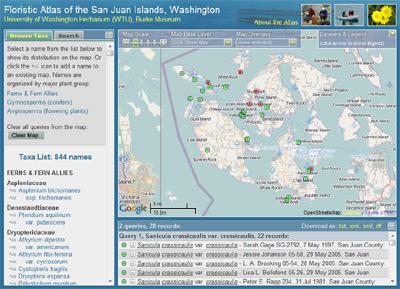
The Floristic Atlas of the San Juan Islands was created by the University of Washington Herbarium and provides a tool for mapping and comparing the distributions of vascular plant species within the San Juan Islands of Washington. 


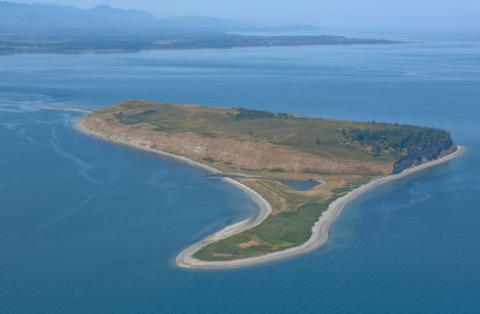
Protection Island, a National Wildlife Refuge in the Strait of Juan de Fuca, provides important habitat for seabirds and marine mammals.

Learn more about demographics in Whatcom County, Washington.  The U.S. Census Bureau published the following quick facts.

Learn more about demographics in Thurston County, Washington.  The U.S. Census Bureau published the following quick facts.

Learn more about demographics in Snohomish County, Washington.  The U.S. Census Bureau published the following quick facts.