Ecosystem-based management

The National Ocean Council defines Ecosystem-Based Management (EBM) as "an integrated approach to resource management that considers the entire ecosystem, including humans, and the elements that are integral to ecosystem functions. EBM is informed by science to conserve and protect our cultural and natural heritage by sustaining diverse, productive, resilient ecosystems and the services they provide, thereby promoting the long-term health, security, and well-being of our Nation." —National Ocean Council (2011)

Additional Information:
2012 Puget Sound Action Agenda

Related Articles

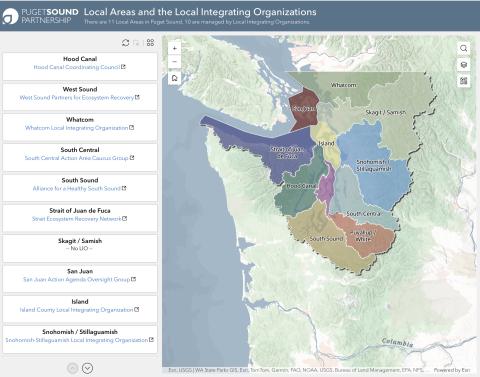
Local Integrating Organizations (LIOs) are local forums that bring people together to protect and restore the ecosystem through locally specific strategies and actions. LIOs provide a venue for stakeholders and partners to identify and develop locally driven recovery strategies.
The Puget Sound Science Update represents the state‐of‐the‐science supporting the work of the Puget Sound Partnership to restore and protect the Puget Sound ecosystem. The content of the Puget Sound Science Update was developed following a process modeled after the rigorous peer‐review process used by the Intergovernmental Panel on Climate Change (IPCC), in which small author groups produced draft assessment reports synthesizing existing, peer‐reviewed scientific information on specific topics identified by policy leaders. These drafts were peer‐reviewed before the final reports were posted.
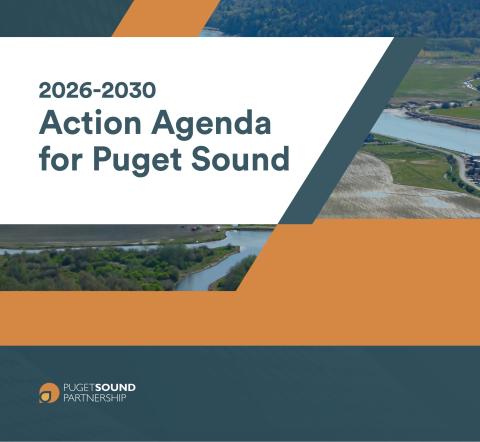
The 2026-2030 Action Agenda was approved by the Puget Sound Partnership's Leadership Council on June 3rd, 2026. After adopting the plan, the Leadership Council submitted it to the EPA and requested that the Action Agenda be approved as the Comprehensive Conservation Management Plan for the Puget Sound National Estuary Program.

The past, present and future of natural conditions in the United States are described in a new report, which has traveled a bumpy road to its current draft form, now out for public review and comment.

“The Nature Record,” originally titled the “National Nature Assessment,” was launched in 2022 as a government project — the first of its kind. The effort involved more than 160 leading scientists from throughout the country, representing wide-ranging fields of study related to the natural environment.

After President Donald Trump ended the project during the first week of his second term in 2025, the effort

The Puget Sound Water Quality Management Plan was Washington State’s long-term strategy for protecting and restoring Puget Sound. This report was released in 2000 and also served as the federally approved Comprehensive Conservation and Management Plan for Puget Sound under Section 320 of the federal Clean Water Act.
Priority Science to Support Puget Sound Recovery: A Science Work Plan for 2025-2029 describes the information, learning, and interaction needed to support the coordinated efforts to recover, protect, and improve the resilience of the Puget Sound ecosystem.