

All Articles
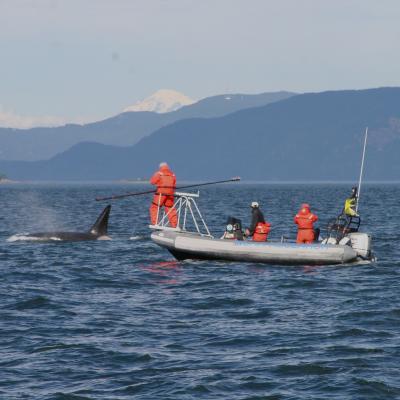
When should medical experts intervene to save a killer whale?
The death of a young female orca in September has sparked a discussion of how and whether scientists should step in with medical care for distressed animals in the wild. Medical intervention has become routine for some endangered mammals, but scientists say Puget Sound’s resident orcas present a series of unique challenges and ethical questions. In part one of our two-part series The Orca Docs we
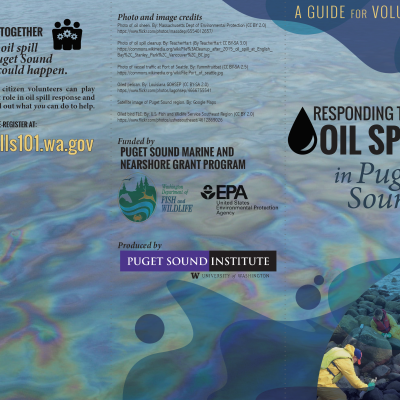
Responding to oil spills in Puget Sound: A guide for volunteers
A guide from the Washington Department of Fish and Wildlife provides information for volunteers in the event of an oil spill in Puget Sound. It was produced by the University of Washington Puget Sound Institute with support from the Environmental Protection Agency.
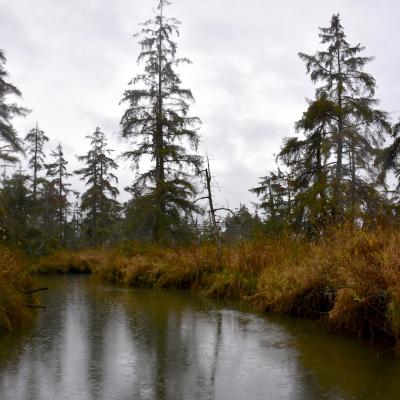
Tidal forests offer hope for salmon
Can scientists bring back the lost tidal forests of Puget Sound? It could take generations, but restoring this rare habitat will pay big dividends for Puget Sound’s salmon.
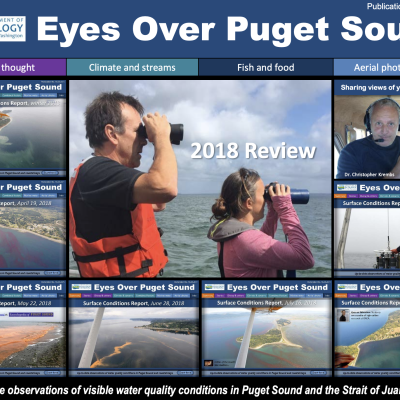
Eyes Over Puget Sound: 2018 Year in Review
In 2018, water temperatures were slightly warmer than normal. Aerial photos revealed many spawning herring and baitfish as well as algal blooms. We also saw abundant macro-algae, a persistent Noctiluca bloom, and countless red blooms. Were these observations related to the cool, wet spring followed by a warm, dry, and sunny summer? Or did the neutral boundary conditions in the Pacific Ocean also
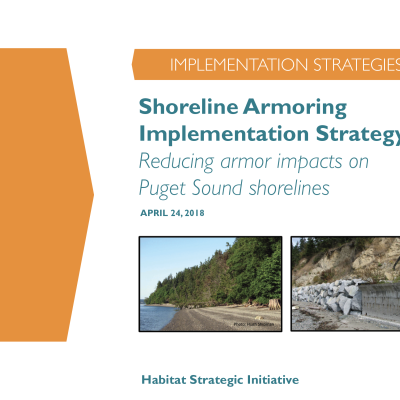
Shoreline Armoring Implementation Strategy: Reducing armor impacts on Puget Sound shorelines
A 2021 report published by Washington Department of Fish and Wildlife and Washington Department of Natural Resources describes a regional strategy to reduce shoreline armoring in the Puget Sound region.
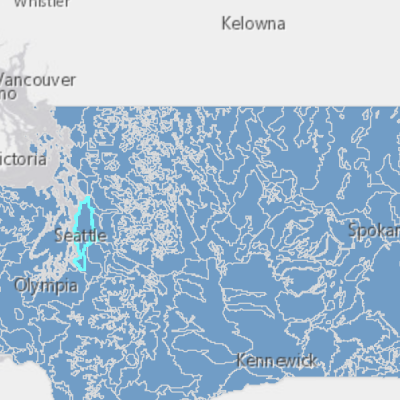
Ecoregion data from the Washington State Department of Ecology
Ecoregions by state were extracted from the seamless national shapefile. Ecoregions denote areas of general similarity in ecosystems and in the type, quality, and quantity of environmental resources. They are designed to serve as a spatial framework for the research, assessment, management, and monitoring of ecosystems and ecosystem components.
The 2018/2022 Action Agenda for Puget Sound
The Puget Sound Action Agenda is a shared plan for Puget Sound recovery resulting from a collaboration by state and federal agencies, tribal governments, local governments, business and environmental groups, and others.
2017 Puget Sound Marine Waters Overview
The Puget Sound Ecosystem Monitoring Program has released its seventh annual Marine Waters Overview. The report provides an assessment of marine conditions for the year 2017 and includes updates on water quality as well as status reports for select plankton, seabirds and fish.
Assessment and management of Salish Sea herring
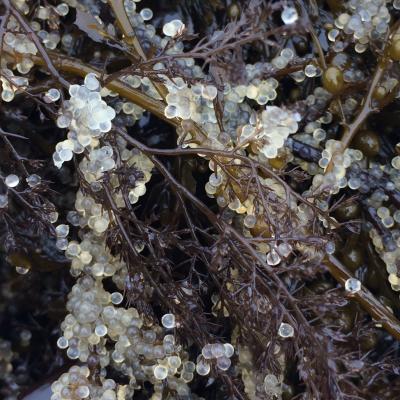
A 2018 report published by the University of Washington Puget Sound Institute and the Washington Department of Fish and Wildlife brings together an assessment of key science and other knowledge related to herring recovery in the Salish Sea. The report was produced with support from the SeaDoc Society and received input from a cross-border team from state and federal agencies, universities and area
Ten things to understand about the Clean Water Act
The federal Clean Water Act of 1972 was designed as a logical step-by-step approach to clean up the nation's waterways. Most people acknowledge that the law has been effective in reducing pollution, but industrial and environment groups tend to be on opposite sides when discussing whether regulations and permits adequately protect water quality. These 10 elements of the Clean Water Act (CWA) focus