Nutrients

Nutrient pollution is caused by excess nitrogen and phosphorus in the air and water. Nitrogen and phosphorus are nutrients that are natural parts of aquatic ecosystems. Nitrogen is also the most abundant element in the air we breathe. Nitrogen and phosphorus support the growth of algae and aquatic plants, which provide food and habitat for fish, shellfish and smaller organisms that live in water. But when too much nitrogen and phosphorus enter the environment - usually from a wide range of human activities - the air and water can become polluted. Nutrient pollution has impacted many streams, rivers, lakes, bays and coastal waters for the past several decades, resulting in serious environmental and human health issues, and impacting the economy.

-- Source: U.S. Environmental Protection Agency

Overview

A 2025 report from the University of Washington Puget Sound Institute compiles a series of articles and overviews describing the impacts of nutrients on dissolved oxygen in Puget Sound.
Report cover

Related Articles

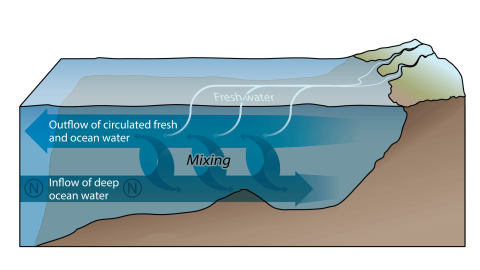
Water circulation in Puget Sound is important for flushing out nutrients and affects dissolved oxygen. This overview describes Puget Sound's two-layer circulation process where fresher surface water flows out to sea while saltier ocean water flows in along the bottom. Dissolved oxygen in Puget Sound basins varies by location and season, and is influenced by ocean water entering at the Strait of Juan de Fuca.
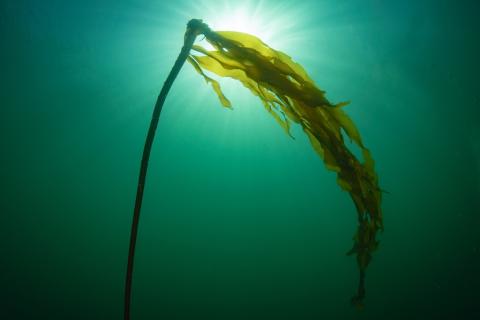
This overview describes how nitrogen in the marine environment changes depending on oxygen levels and can be lost from the system as nitrogen gas. In spring and summer, nitrogen near the surface of the Salish Sea may become low enough to limit primary production, and organic carbon that settles into sediments can reduce dissolved oxygen.
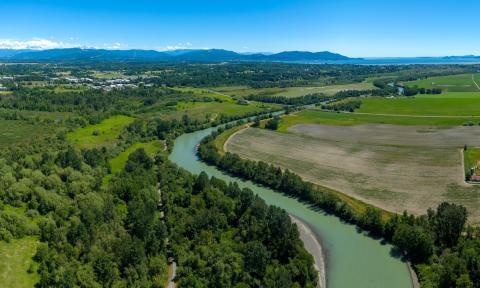
A state plan calls for reductions in nutrients across 163 distinct watersheds in Puget Sound, including non-point-source pollution. Agencies and restoration practitioners are looking at ways to measure the problem and hope to work with a broad slew of landowners and other partners to help control it. This article is part of an occasional series on nutrient pollution in Puget Sound.
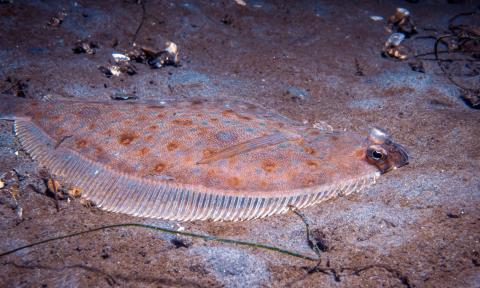
A new report from the Puget Sound Institute and the University of Washington School of Aquatic and Fishery Sciences examines a species-level approach to oxygen risks in Puget Sound. Case studies of Dungeness crabs, English sole, and Chinook salmon provide new details on when and where individual species may be most vulnerable. Funding for this article is provided in part by King County.
The Washington State Department of Ecology is responding to new legal rulings and public concerns with changes in planning and potentially future enforcement. We continue our occasional series on water quality and wastewater management in Puget Sound. Funding for the series is provided in part by King County.
Increasing concerns surround PFAS in products from wastewater treatment plants. How great a risk do they pose, and are there feasible approaches to removing them? We continue our occasional series on water quality and wastewater management in Puget Sound. Funding for the series is provided in part by King County.